If you are going to insulate the pipes in your crawl space before winter, the order matters. Some pipes are far more likely to freeze than others, and starting with the vulnerable ones gives you the most protection for the least effort. In the Lowcountry, where most homes sit over vented crawl spaces rather than heated basements, those open vents are exactly what puts certain pipes at risk. Here is how to prioritize.
Why Crawl-Space Pipes Freeze Here
A crawl space sits between your heated home and the cold ground, and in most Lowcountry homes it is vented to the outside air. Those foundation vents are useful for moisture control in the warm months, but during a cold snap they let frigid air pour in and wrap around your pipes. Because the space has little insulation and no heat source of its own, it can drop nearly to the outdoor temperature, and any water sitting in an exposed pipe can freeze and burst. The pipes closest to that incoming cold air freeze first, and those are the ones to protect first.
The Priority Order
First: Pipes Near the Vents and Exterior Walls
Start with the pipes that sit closest to the foundation vents and along the exterior walls of the crawl space. These get the direct blast of cold air coming through the vents and lose heat fastest. They are the most likely to freeze in the first hours of a hard freeze, so they are the top priority for insulation.
Second: The Longest Exposed Runs
Next, insulate the long horizontal runs of pipe stretched across the open crawl space, far from any warmth radiating down from the heated floor above. The more pipe exposed to cold air, the more surface area losing heat, so these long runs are a high priority even when they are not right next to a vent.
Third: Both Hot and Cold Lines
A mistake people make is insulating only the cold water lines. Hot water lines freeze too when the water sits unused overnight, and a frozen hot line bursts just the same. Insulate both. The hot lines also lose expensive heat to the cold crawl space, so wrapping them saves energy as a bonus.
Do Not Stop at the Pipes
Insulating the pipes helps, but the bigger win in a vented crawl space is stopping the cold air from getting in around them. Close the foundation vents for the winter to block the incoming cold, and seal gaps and cracks in the foundation walls and around the rim with caulk or expanding foam so drafts cannot reach the pipes. Insulation slows heat loss, but if freezing air keeps flooding the space, even wrapped pipes can eventually freeze in a long cold spell. Sealing the space is what makes the insulation effective.
What to Use
For the pipes themselves, foam pipe sleeves are the easiest option. They are split tubes that slip over the pipe, and you size them to the pipe diameter for a snug fit, then tape the seams and joints so there are no gaps. For a more complete solution, insulating the crawl space itself, sealing and insulating the walls and rim, keeps the whole space closer to the home’s temperature and protects every pipe at once. That is the durable fix for a home that freezes up every hard winter.
The Lowcountry Reality
Our freezes are infrequent, which is exactly why crawl-space pipes here catch people off guard. The insulation that homeowners in cold climates install as a matter of course often gets skipped in the Lowcountry, so when the rare cold snap arrives, unprotected crawl-space pipes are among the first things to burst. Prioritizing the vulnerable pipes and sealing the vents before winter is cheap protection against a burst that can flood the crawl space and the floor above.
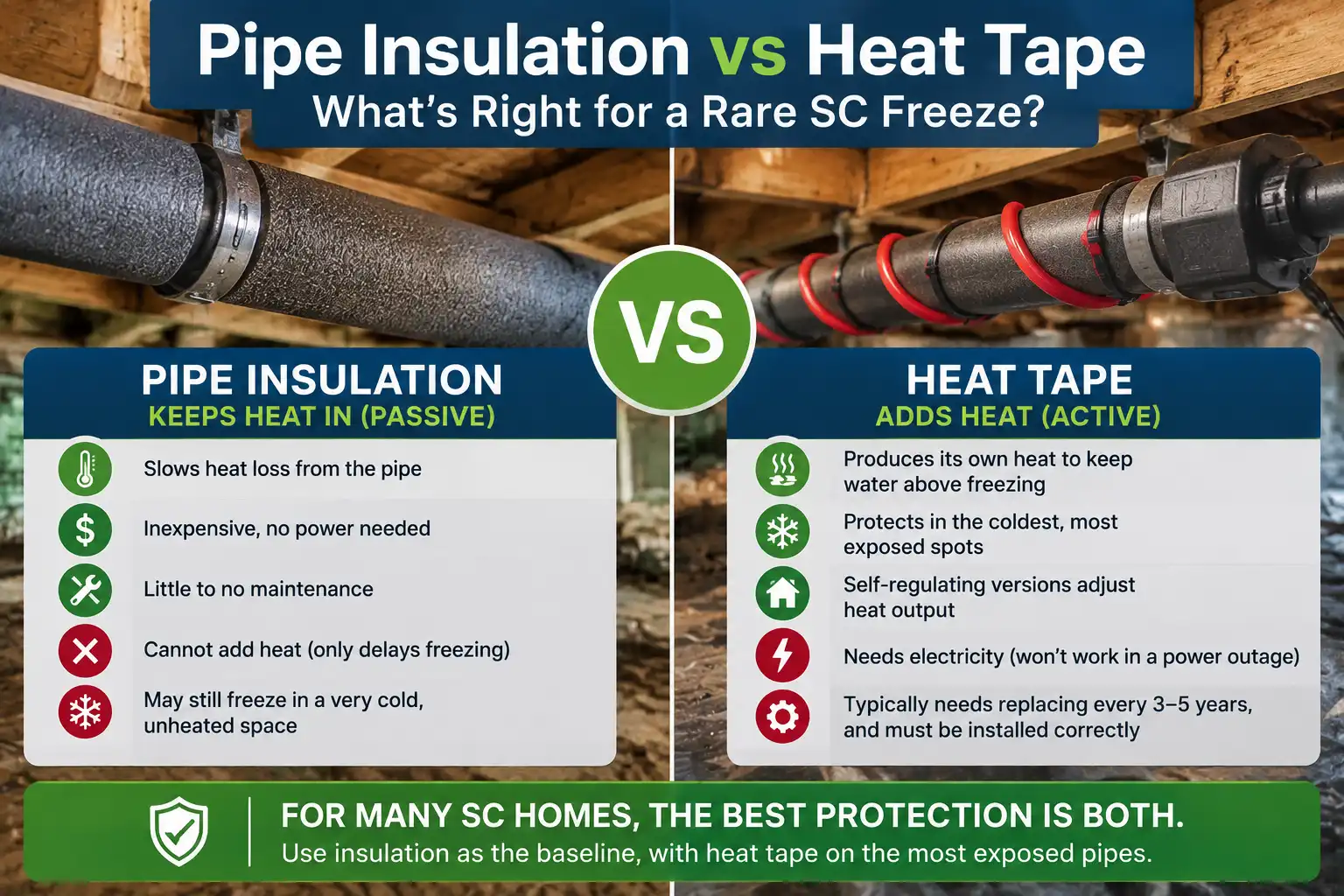
For pipes that stay exposed to real cold even after insulating, adding active heat may be worth it, and comparing pipe insulation with heat tape helps you decide. Professional pipe insulation service in Goose Creek insulates the vulnerable runs, seals the crawl space, and gets your home ready before the forecast turns cold, rather than after a pipe has already burst.