South Carolina homeowners don’t spend much time thinking about frozen pipes. Hard freezes in Goose Creek are uncommon, winters here are mild by most standards, and the kind of sustained below-freezing temperatures that affect northern states rarely show up in the Lowcountry forecast. But that’s exactly the problem. Because freezes are rare, most homes in this area aren’t built or maintained with freeze protection in mind. When a cold snap does arrive, it tends to hit pipes that were never designed to handle it.
The result is burst pipes and water damage that catches homeowners off guard. This guide covers why pipes freeze here even in a mild climate, where the highest-risk locations are in a typical Goose Creek home, and what to do before cold weather arrives.
Why Mild-Climate Pipes Are Actually More Vulnerable
In states where hard winters are the norm, homes are built with freeze prevention in mind. Pipes run through insulated interior walls, service lines are buried below the frost depth, and crawl spaces are sealed or heavily insulated.
In South Carolina, that pressure doesn’t exist in the same way. Pipes run through crawl spaces that are vented and unheated because moisture control in the Lowcountry matters more than freeze protection in most winters. Service lines are buried shallower because the frost depth here is minimal. Outdoor faucets are sometimes standard bibs rather than frost-free models because they work fine for 90 percent of winters.
When an unusual cold snap does push temperatures below freezing for 24 to 48 hours, the pipes that are vulnerable here are often more exposed than pipes in colder climates. A Michigan house at 15 degrees might be fine. A Goose Creek house at 25 degrees might have burst pipes in the crawl space because nothing down there was designed for that temperature.
The Highest-Risk Locations in Goose Creek Homes
Not every pipe in a home is equally at risk. The pipes that freeze first are the ones exposed to the coldest air for the longest time.
Crawl Space Pipes
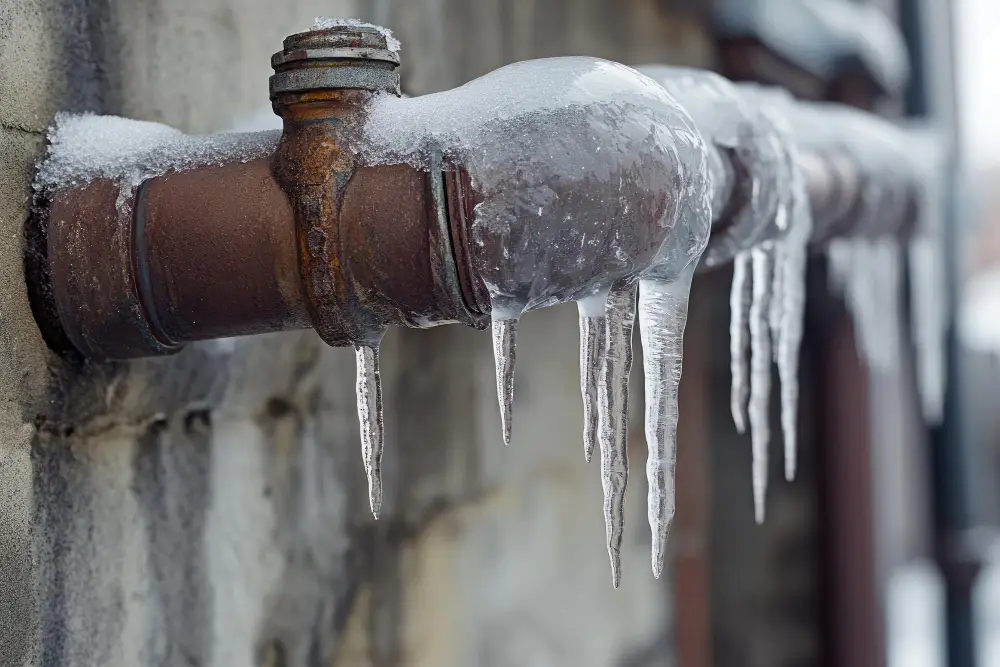
The crawl space is the highest-risk location in most homes in this area. Supply lines running under the floor are exposed to outside air through vents, gaps in the foundation, and the uninsulated nature of the crawl space itself. When temperatures drop fast and stay there, the air in an uninsulated crawl space approaches outside temperature quickly. Pipes in that environment can freeze within a few hours of a hard drop.
Pipes in Exterior Walls
Supply lines that run through exterior walls without adequate insulation around them are vulnerable to extended cold spells. If the wall cavity has no insulation between the pipe and the outside, cold air works its way in over time. This is more common in older homes built before insulation standards tightened.
Outdoor Faucets & Hose Bibs
An outdoor faucet with a hose still connected is one of the most common sources of freeze damage in this area. Frost-free hose bibs drain the exterior pipe section when turned off, which keeps water from sitting in the exposed portion. But that drain-back only works if there’s no hose attached. A hose left on creates backpressure that prevents the drain-back, leaving standing water exactly where it can freeze.
Pipes Near the Foundation Edge
Short sections of supply pipe that run near the foundation slab edge or through foundation walls sit in a zone where cold air from outside and cold ground temperature combine. These sections are easy to overlook, but they are often the first to freeze.
What to Do Before a Freeze Event
Prevention is considerably less expensive than repair. Here’s what matters most.
Disconnect the hoses from every outdoor bib before cold weather. This is the single most effective step for most Goose Creek homeowners. A frost-free bib with no hose attached drains automatically and rarely causes problems even in cold weather. The same bib with a hose left on is a liability.
Know where your main shutoff valve is and confirm it works. If a pipe does burst, shutting off the main quickly limits how much water enters the home. Find the valve before you need it, and test that it opens and closes fully. Old gate valves sometimes corrode to the point where they can’t fully close, and if yours won’t close completely, have it replaced with a ball valve while conditions are normal.
Let faucets drip during hard freezes. Running water doesn’t freeze as easily as standing water. On nights when temperatures are forecast below 28 degrees Fahrenheit for more than four hours, letting the faucets served by exterior wall pipes drip slowly keeps water moving and reduces freeze risk.
Keep the home heated above 55 degrees Fahrenheit when away. Turning the thermostat down while traveling during a cold spell is a common cause of freeze damage. A home that drops to 45 degrees overnight may be fine for one night and have burst pipes by the second.
If You Think a Pipe Is Already Frozen
A faucet that produces nothing when everything else in the house works normally is a sign that a specific supply line has frozen. Acting quickly at this stage can prevent a burst.
Turn off the main water supply as a precaution. Open the affected faucet so that pressure has somewhere to go as the ice thaws. If you can access the suspected freeze point, apply warm air with a hair dryer starting at the faucet end and working back toward the cold section. Do not use open flames near pipes or in wall or crawl space cavities.
If you can’t locate the freeze point or the pipe has already burst, turn off the main supply and call a licensed plumber. A burst pipe behind a wall or under the floor requires professional access to repair, and the longer water sits in the surrounding building materials, the more extensive the damage becomes.
The Case for Insulating Before Winter
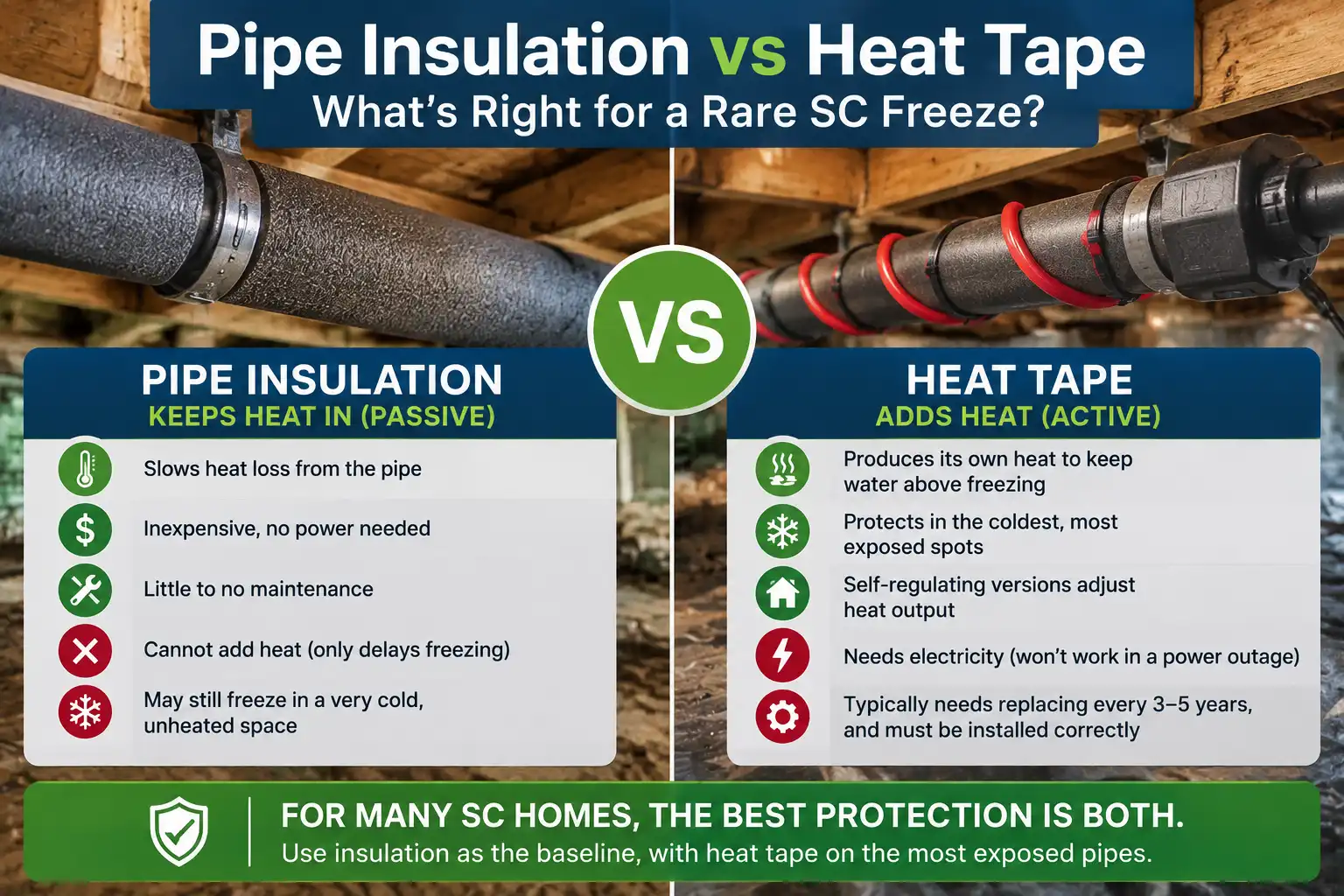
The most reliable protection for high-risk pipes in a Goose Creek home is proper insulation installed before temperatures drop. Foam tube sleeves on crawl space pipes, fiberglass wrap around pipe penetrations through foundation walls, and frost-free hose bib upgrades are all low-cost measures relative to the cost of repairing a burst pipe and the water damage that follows.
Getting a plumber in to assess the vulnerable sections of the home’s supply system in early fall is a step most homeowners skip because they’ve never had a freeze problem before. In a mild climate, that logic holds most years. The year it doesn’t hold is the one that causes the damage.
Frozen pipes in South Carolina are rare enough that most homeowners never deal with one. They’re common enough that it’s worth spending a small amount of time and money making sure yours won’t be the exception.