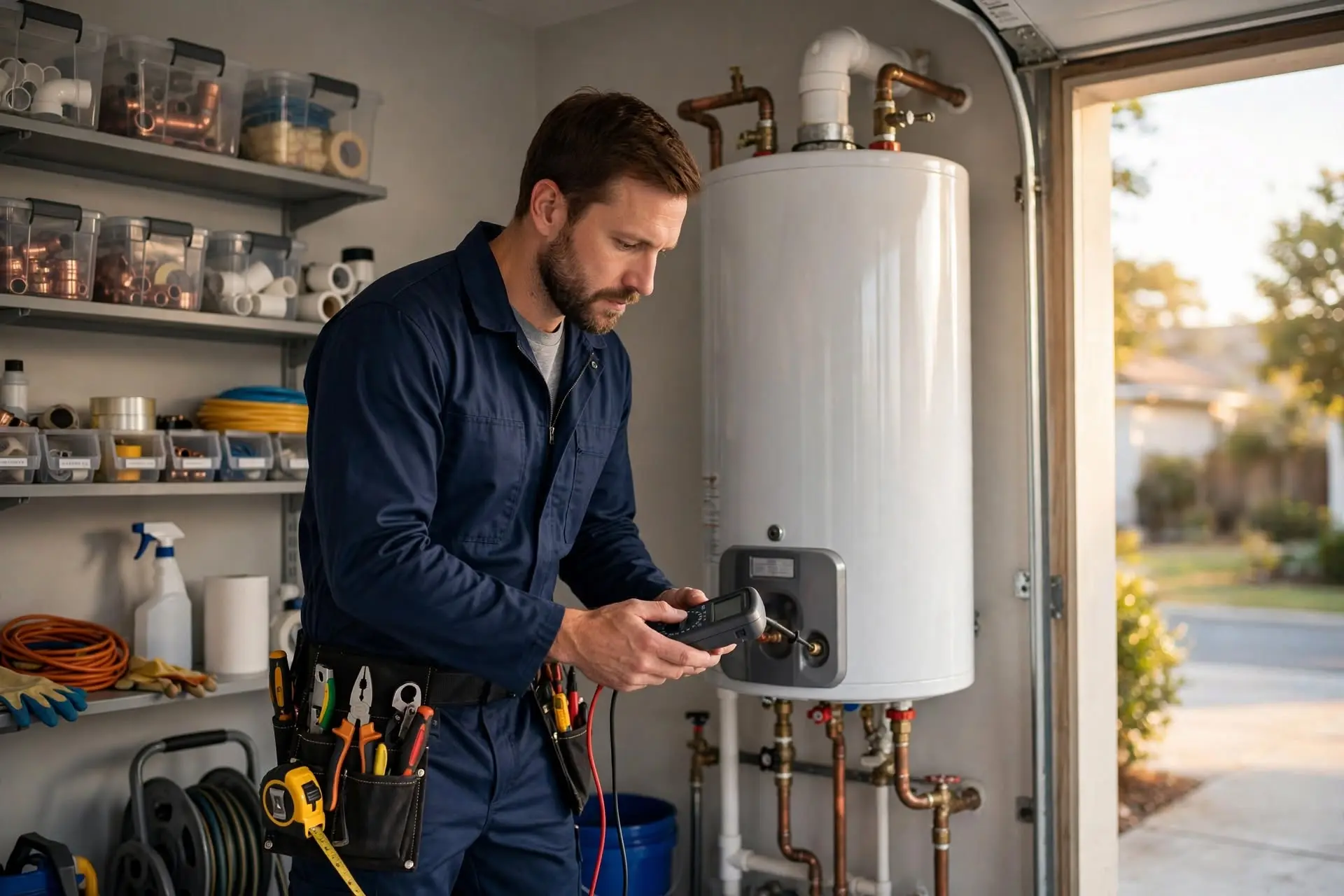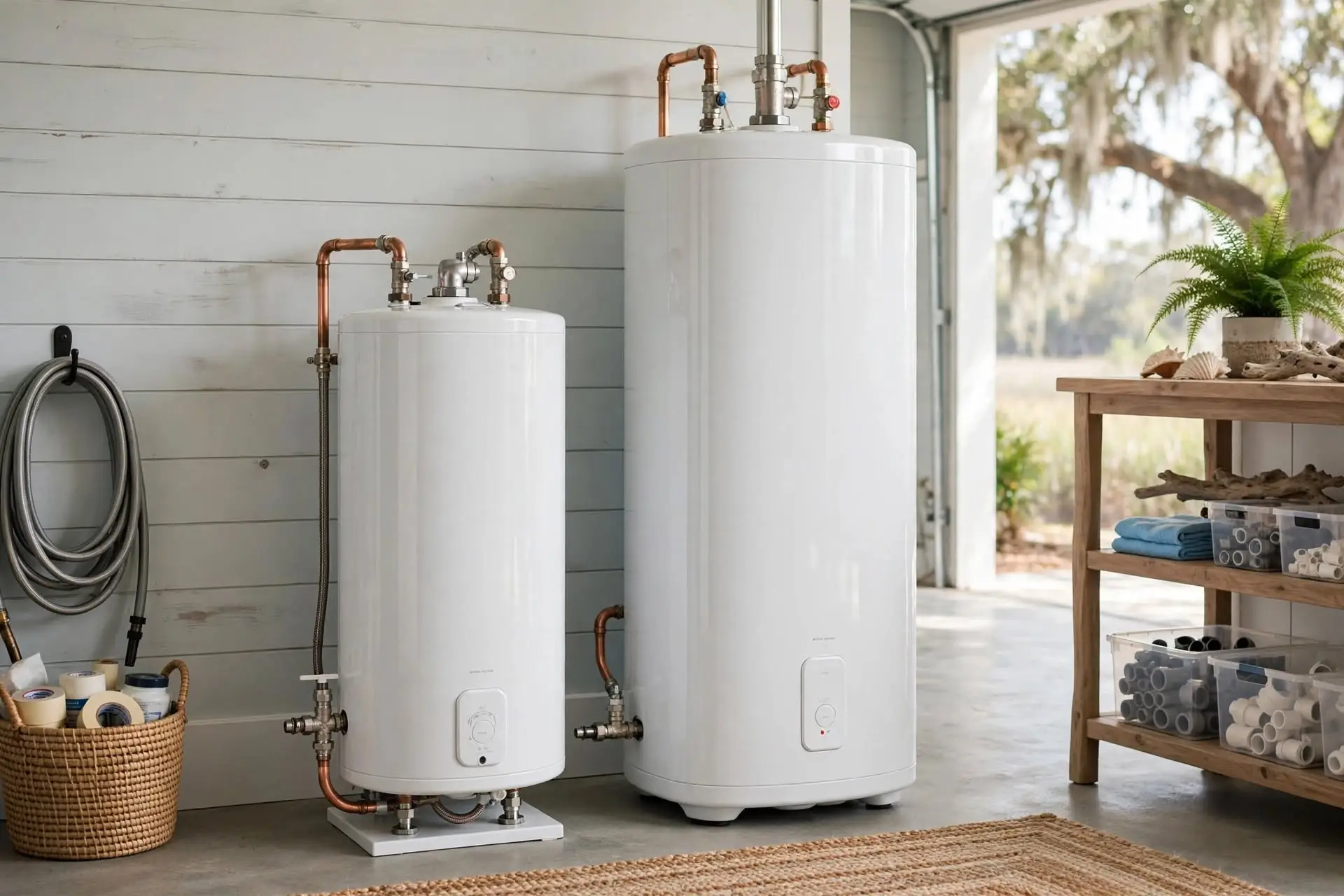
When a water heater needs replacing, most homeowners default to matching whatever size was already in the house. That works often enough, but it misses the chance to get the sizing right for how the household actually uses hot water today. The 40 versus 50 gallon decision is the most common sizing question for tank water heaters, and the right answer depends on more than the number of people in the home.
This guide walks through how to think about the decision for a home in Goose Creek and the surrounding Lowcountry area.
What Tank Size Actually Measures
The gallon rating on a tank water heater is the volume of water the tank holds and keeps heated. A 40 gallon tank stores 40 gallons of hot water ready to use. A 50 gallon tank stores 50. When you draw hot water faster than the tank can reheat, you work through the stored supply, and once it runs low, the water coming out turns cold until the tank catches up.
The number that matters alongside tank size is the first-hour rating. This is how much hot water the unit can deliver in the first hour of heavy use, combining the stored volume with the heater’s recovery rate. Two tanks of the same gallon size can have different first-hour ratings depending on the burner or element, which is worth noting when comparing models.
How Lowcountry Conditions Affect the Decision
One factor that works in favor of smaller tanks in this area is the incoming groundwater temperature. In colder climates, water enters the home at temperatures that can drop into the 40s Fahrenheit during winter, which means the heater has to work harder and the recovery rate suffers in cold months. A household in a cold climate often sizes up to compensate.
In Goose Creek, groundwater stays warmer year-round, typically in the 60s Fahrenheit. The heater has less work to do raising the incoming water to the set temperature, which means the recovery rate stays stronger throughout the year. A 40 gallon tank in a warm-groundwater area recovers faster than the same tank would in a cold climate, which stretches its usable capacity further than the raw number suggests.
This is one reason a 40 gallon tank handles a given household size more comfortably here than it would up north.
When a 40 Gallon Tank Is the Right Choice
A 40 gallon tank suits smaller households with moderate hot water demand.
One to Three People
For a household of one, two, or three people, a 40 gallon tank is usually sufficient. A couple with no children rarely runs out of hot water with a 40 gallon unit under normal usage patterns. The faster recovery rate in the Lowcountry climate supports this further.
Fewer Simultaneous Demands
The real limit on a tank is simultaneous use. A 40 gallon tank handles a household where hot water demands are staggered rather than stacked. If showers happen at different times and the dishwasher or washing machine runs separately, a 40 gallon tank keeps up.
Space & Cost Considerations
A 40 gallon tank is physically smaller, which matters in homes with tight utility closets or specific installation constraints. It also costs less upfront and less to operate, since there’s less water being kept hot around the clock. For a smaller household, that ongoing energy savings is real over the life of the unit.
When to Size Up to 50 Gallons
A 50 gallon tank makes sense when demand is higher or more concentrated.
Four or More People
A household of four or more people generally benefits from a 50 gallon tank. With more people drawing hot water, the stored volume gets used faster, and the extra 10 gallons provides the buffer that keeps the last person in the morning from getting a cold shower.
Stacked Morning Demand
Households where multiple showers happen back to back in the morning put the heaviest strain on a tank. A 50 gallon unit handles that concentrated demand better than a 40. If your household has a morning rush where two or three people shower within an hour and someone also runs the dishwasher, the larger tank is the safer choice.
Large Tubs & High-Flow Fixtures
A deep soaking tub can use 40 gallons or more to fill on its own. Homes with large tubs or multiple high-flow fixtures benefit from the larger tank so that filling the tub doesn’t leave the rest of the house without hot water.
The Cost Difference
The price gap between a 40 and 50 gallon tank is modest at the point of purchase. The larger unit costs somewhat more upfront, and it costs slightly more to operate because it keeps more water hot continuously. Over the life of the unit, the operating cost difference is not large, but it’s real for a household that doesn’t need the extra capacity.
The more significant cost consideration is sizing wrong in either direction. An undersized tank that constantly runs out of hot water is a daily frustration that no amount of patience fixes. An oversized tank wastes energy keeping water hot that the household never uses. Getting the size matched to actual usage avoids both.
How to Decide
Start with household size, then adjust for usage patterns. A one-to-three person household with staggered hot water use is well served by a 40 gallon tank, and the warmer Lowcountry groundwater supports that choice. A household of four or more, or any household with stacked morning demand or a large soaking tub, is better served by a 50 gallon unit.
If the current tank consistently runs out of hot water, sizing up is the clear move regardless of the headcount math. If the current tank never runs out and the household hasn’t grown, there’s no reason to size up just because the next size exists.
A plumber assessing the replacement will ask about household size, morning usage patterns, and any large tubs or high-demand fixtures before recommending a size. That conversation, held before the unit is purchased, is what produces a water heater matched to the home rather than to a default. The right size is the one that covers the household’s real demand without keeping gallons of water hot that nobody uses.