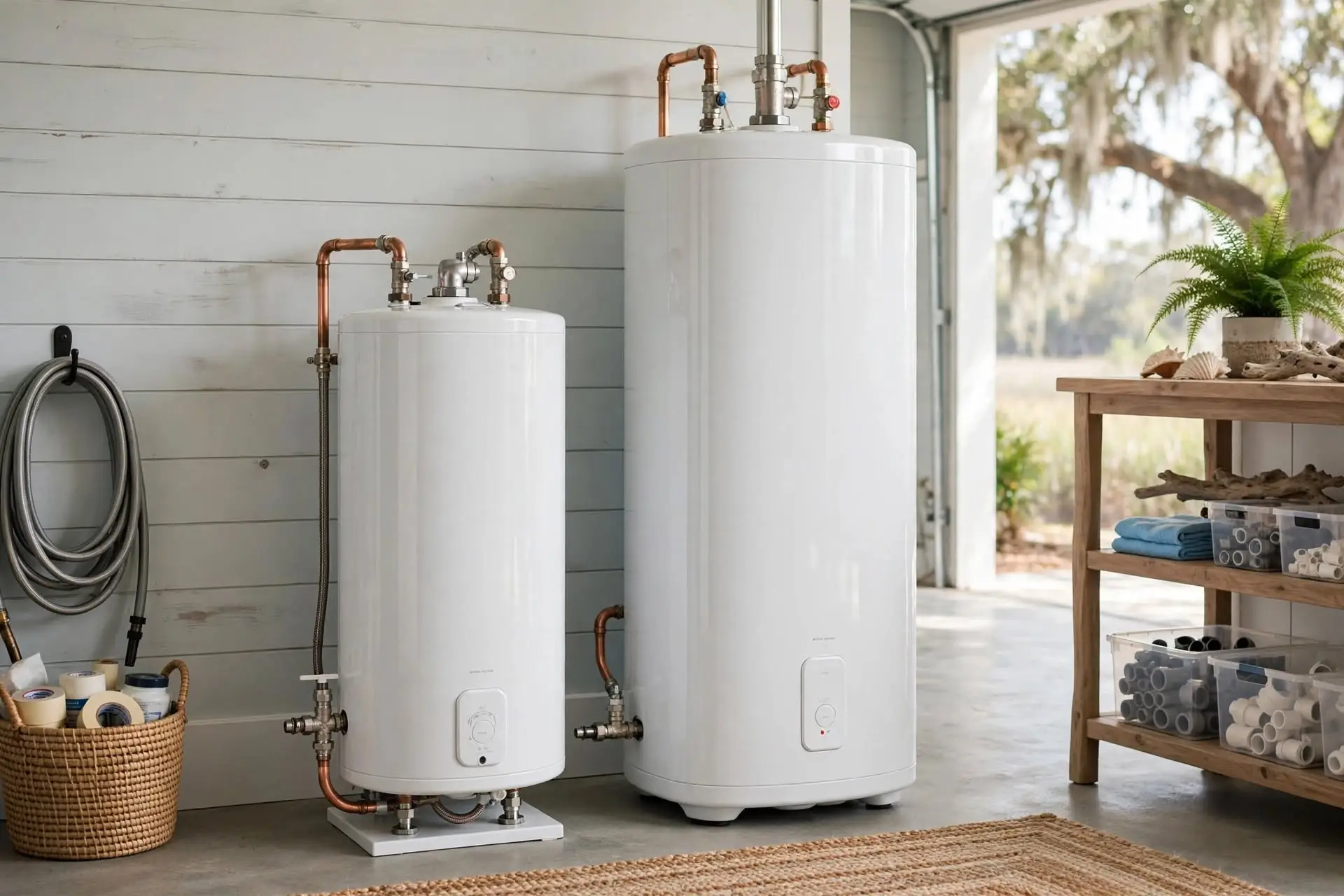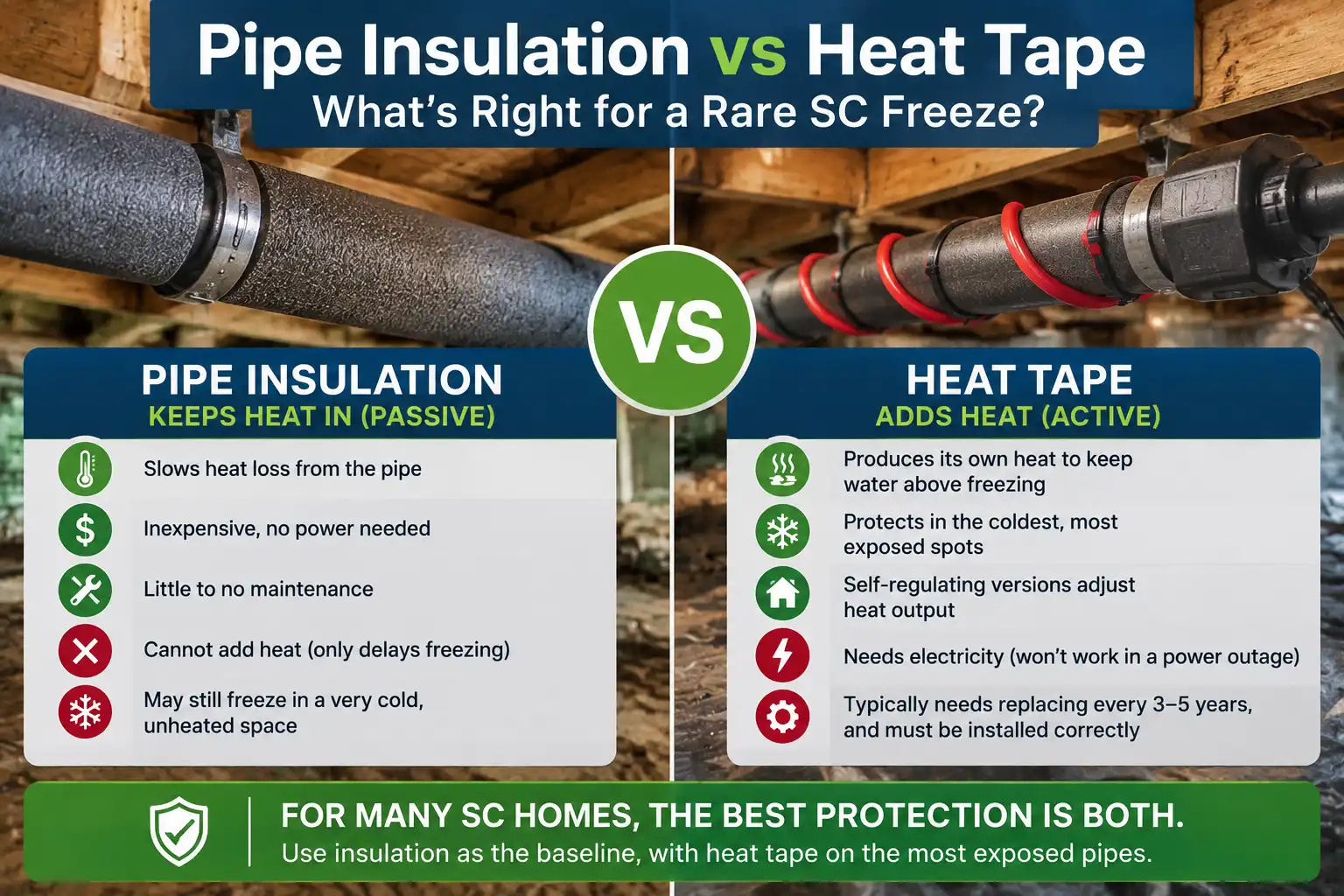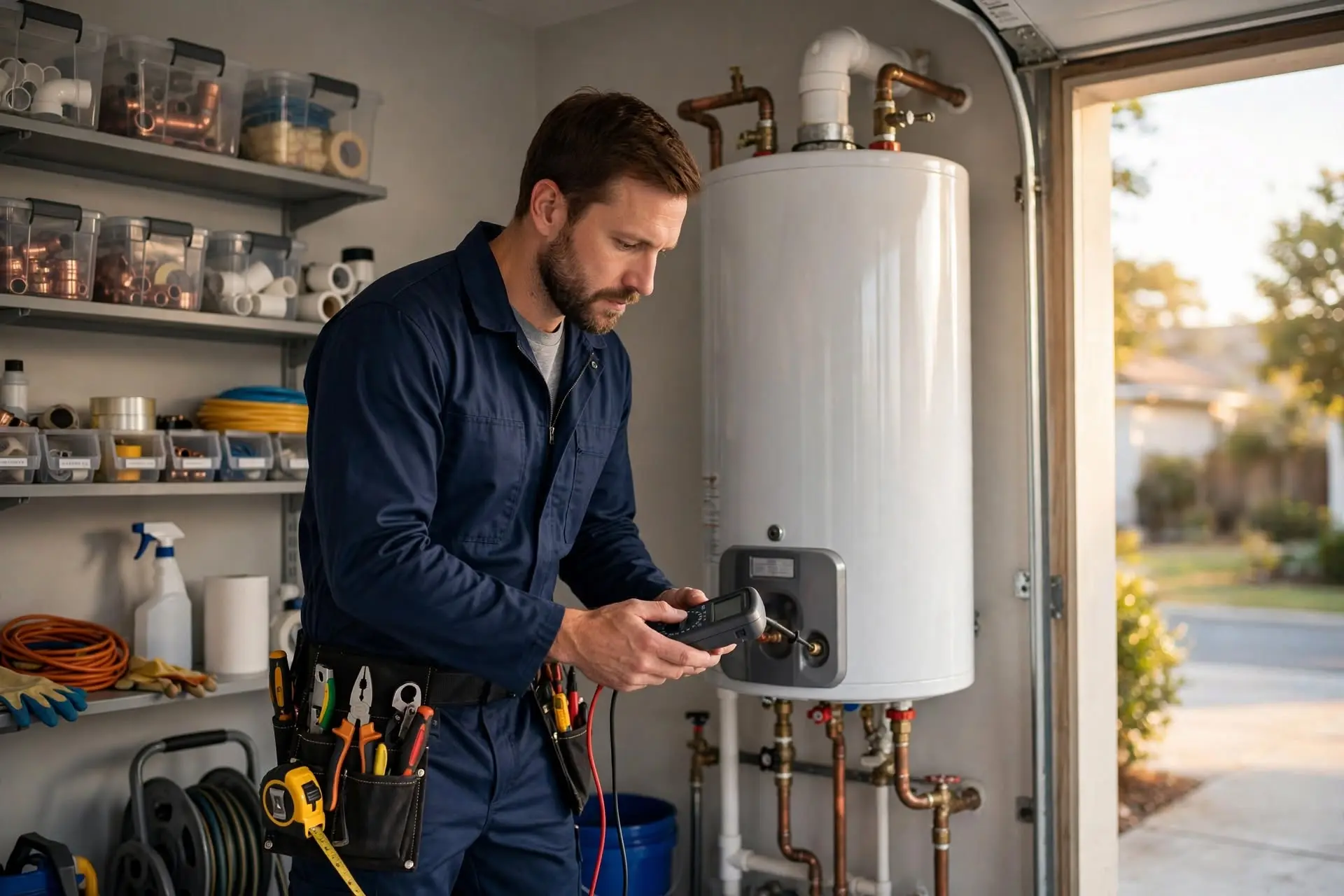
Waking up to no hot water is one of the more disruptive plumbing problems a household can face. The good news is that the cause is usually something specific, and some of the causes are things a homeowner can check before calling for help. Knowing where to look saves time and tells you quickly if this is a quick fix or a job that needs a plumber.
This guide walks through the common causes of no hot water for both gas and electric tank water heaters, and what to do about each one.
Start by Confirming the Problem
Before troubleshooting the water heater, confirm the problem is actually the heater and not something else.
Run a hot water tap and let it run for a full minute. If the water is cold at every hot tap in the house, the problem is at the water heater or its power and gas supply. If only one fixture has no hot water while others are fine, the problem is local to that fixture, usually a mixing valve or cartridge issue rather than the heater itself.
Once you’ve confirmed that the whole house has no hot water, move on to checking the heater.
Gas Water Heater Troubleshooting
The Pilot Light or Igniter
On an older gas water heater with a standing pilot light, the first thing to check is if the pilot is lit. A pilot that has gone out means no flame to heat the water. The heater has instructions printed on the side for relighting the pilot safely. If the pilot won’t stay lit after relighting, the thermocouple may be failing, which is a repair rather than a reset.
Newer gas heaters use electronic ignition rather than a standing pilot. If the igniter isn’t firing, the unit won’t heat. This usually requires a plumber to diagnose.
The Gas Supply
Confirm that gas is reaching the heater. If other gas appliances in the home, like a stove or furnace, are also not working, the issue is with the gas supply to the house rather than the water heater. If only the water heater is affected, check that the gas shutoff valve on the supply line to the heater is fully open.
The Thermostat & Gas Control Valve
If the pilot is lit and gas is flowing but the water still isn’t heating, the gas control valve or thermostat on the unit may have failed. This is a component that needs professional diagnosis and replacement.
Electric Water Heater Troubleshooting
The Circuit Breaker
The most common cause of no hot water on an electric heater is a tripped breaker. Check the electrical panel for the water heater breaker and see if it has tripped. If it has, reset it. If the breaker trips again shortly after resetting, there’s an electrical fault in the unit that needs a professional. Do not keep resetting a breaker that keeps tripping.
The Reset Button
Electric water heaters have a high-temperature reset button, usually located behind an access panel on the upper thermostat. If the unit overheated and tripped this safety switch, pressing the reset button restores operation. If the reset button trips again, the thermostat or element has a fault that needs attention.
Heating Elements
Electric water heaters have one or two heating elements. When an element burns out, the water heats partially or not at all. A home that suddenly has lukewarm water or runs out of hot water quickly often has a failed element. Element replacement is a standard repair for a plumber.
Problems That Affect Both Types
A Failed Thermostat
Both gas and electric heaters rely on a thermostat to control the water temperature. A thermostat that has failed may stop calling for heat entirely, which leaves the water cold. This requires diagnosis and replacement.
Sediment Buildup
In Goose Creek and the surrounding Lowcountry, the mineral content of the water produces sediment that settles at the bottom of the tank over time. A heavy sediment layer insulates the water from the burner or lower element, which reduces heating performance. A home that has gradually been getting less hot water over months, rather than losing it suddenly, may have a sediment problem that a flush can address.
A Leaking Tank
If there’s water pooling around the base of the heater, the tank itself may be leaking. A leaking tank cannot be repaired. Once the steel tank has corroded through, the unit needs to be replaced. Water around the base combined with no hot water is a sign the heater has reached the end of its life.
When to Call a Plumber
Some of the checks above are within reach for a homeowner. Relighting a pilot, resetting a breaker, and pressing the high-temperature reset button are all reasonable first steps. If any of those resolve the problem, you’ve saved a service call.
A plumber is the right call in these situations. The breaker trips repeatedly after resetting. The pilot won’t stay lit after relighting. The reset button trips again after being pressed. There’s water pooling around the base of the unit. The gas control valve, thermostat, or heating element needs replacement. Any situation involving a gas smell near the heater should be treated as an emergency, and the gas supply should be shut off before calling.
A water heater that’s more than 10 to 12 years old and has lost hot water is worth evaluating for replacement rather than repair. At that age, a significant repair often costs enough that putting the money toward a new unit makes more sense, particularly since a new unit comes with a warranty and a fresh service life.
No hot water is disruptive, but it’s almost always fixable. Working through the checks in order tells you quickly if this is a five-minute reset or a call for professional help.