Replacing a toilet is one of those home projects that looks simpler than it is. The basic steps are straightforward enough: remove the old unit, set the new one, bolt it down, reconnect the water. But the decision that happens before any of that, choosing the right toilet for the space, the household, and the existing rough-in, determines how long the installation will last and how well it will work.
This guide covers the toilet options most commonly installed in Goose Creek homes, what the differences actually mean in daily use, and what the installation process involves.
The Rough-In Measurement Comes First
Before choosing a toilet, measure the rough-in distance. This is the distance from the finished wall behind the toilet to the center of the drain pipe in the floor. In most American homes, the rough-in is 12 inches. Some older homes have 10-inch or 14-inch rough-ins.
A toilet purchased without confirming this measurement may not fit the existing drain location. A 12-inch toilet sitting over a 10-inch rough-in leaves a gap between the tank and the wall. A 14-inch rough-in with a 12-inch toilet requires the tank to sit further from the wall than intended.
Confirming the rough-in before buying the toilet is the single most important step in the selection process. A plumber can verify this measurement during a pre-installation assessment.
ADA-Height Toilets
ADA-compliant toilets have a seat height of 17 to 19 inches from the floor, compared to the 15-inch standard bowl height found on most older toilets. The Americans with Disabilities Act sets this height requirement for commercial and public facilities, but ADA-height toilets have become increasingly common in residential installations as well.
The practical benefit is that a taller bowl is easier to sit down onto and rise from than a shorter one. This matters for older adults, people recovering from surgery or injury, and anyone with limited mobility in the hips or knees. Many homeowners who install an ADA-height toilet for accessibility reasons find that the rest of the household adapts quickly and prefers it.
One consideration for ADA-height toilets in households with young children is that the additional height can make independent use more difficult for smaller children. A step stool resolves this in most cases and is a worthwhile trade-off for households where accessibility matters more.
Comfort-Height Toilets
Comfort-height toilets fall in the same height range as ADA toilets, 17 to 19 inches, and are sometimes marketed interchangeably with ADA-height models. The distinction is largely one of labeling. In practice, a comfort-height toilet and an ADA-height toilet provide the same seated position benefit.
The term “comfort-height” emerged as a marketing description before ADA terminology became widely used in residential contexts. When comparing models, the seat height measurement tells you more than the label does.
Dual-Flush Toilets
Dual-flush toilets offer two flush volumes: a lower volume for liquid waste and a higher volume for solid waste. Standard dual-flush configurations use approximately 0.8 gallons per flush for the reduced cycle and 1.6 gallons for the full cycle, compared to 1.6 gallons for every flush on a standard low-flow toilet.
In a household with multiple people and regular daily use, the water savings from a dual-flush toilet are real over the course of a year. Water costs in the Goose Creek area make this a meaningful consideration for homeowners interested in reducing utility bills.
Dual-flush toilets require slightly more instruction for guests and household members who aren’t familiar with the two-button or push-pull activation mechanism. This is a minor adjustment for most people and not a practical drawback for most households.
One-Piece vs Two-Piece Toilets
The choice between one-piece and two-piece toilets affects both the installation and the long-term maintenance.
Two-Piece Toilets
Two-piece toilets, where the tank and bowl are separate components bolted together, are the most common configuration in residential installations. They’re generally less expensive than one-piece models and easier to transport in a standard vehicle. If the tank or bowl is damaged, only the affected piece needs to be replaced. The seam between the tank and bowl does require occasional inspection for leaks.
One-Piece Toilets
One-piece toilets have the tank and bowl molded as a single unit. They’re easier to clean because there’s no seam between the tank and bowl for moisture and grime to accumulate. They tend to be lower in profile than two-piece models. The trade-off is higher upfront cost and greater weight during installation.
What the Installation Involves
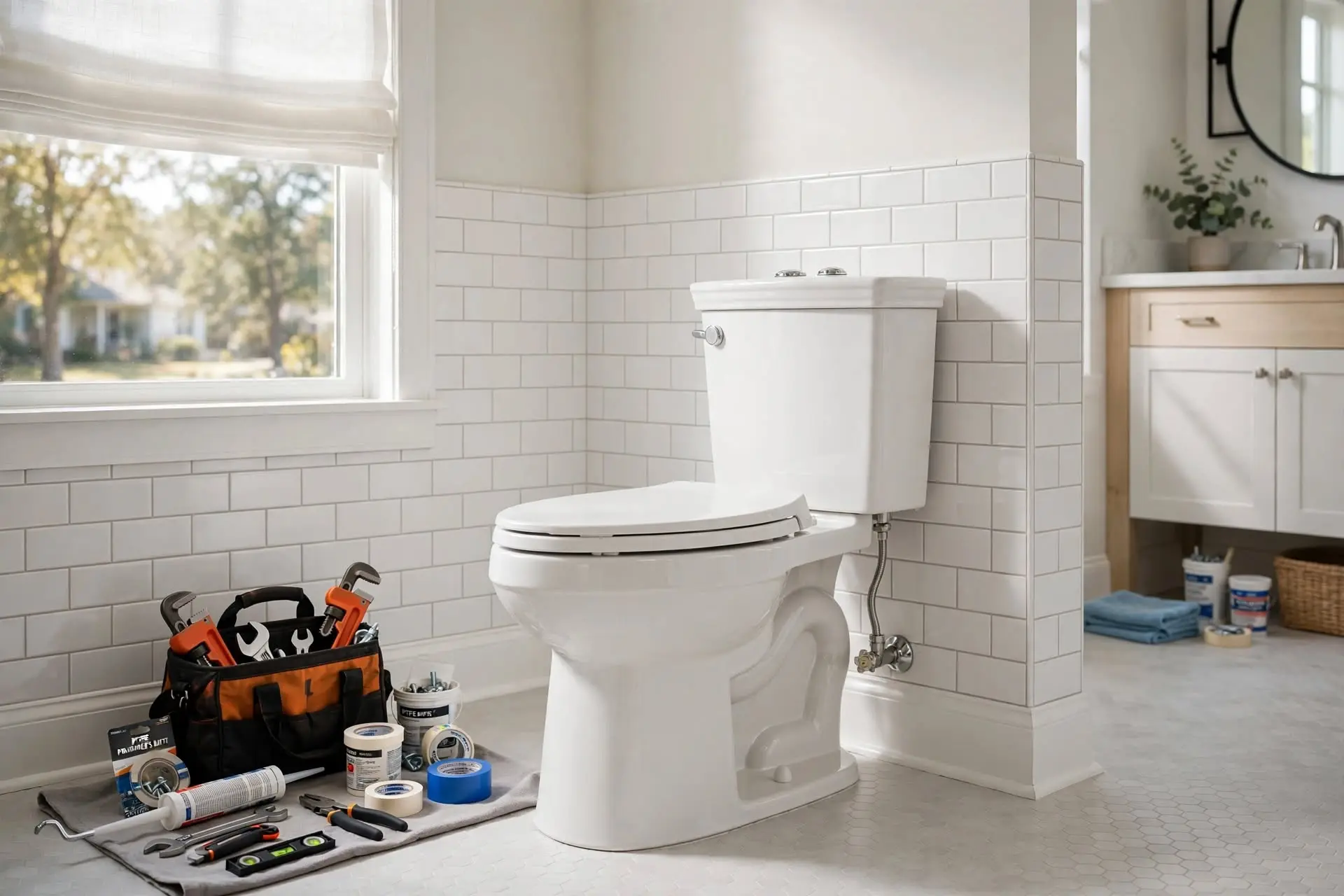
A standard toilet replacement in an existing bathroom is typically completed in a few hours. The process involves shutting off the water supply, disconnecting the supply line, draining the tank and bowl, removing the old wax ring and mounting hardware, and setting the new toilet.
The wax ring creates the seal between the bottom of the toilet and the drain flange in the floor. A new wax ring is always used during installation. The mounting bolts are also replaced at this time. Reusing old hardware is a common shortcut that leads to a rocking toilet and a failed seal within a year or two.
The toilet is set onto the new wax ring, leveled, and secured. The supply line is reconnected, the water is restored, and the toilet is tested through multiple flush cycles before the installation is complete.
If the toilet rocks slightly after installation, the mounting bolts should be checked before assuming the floor or flange is the problem. A toilet that rocks after the bolts are confirmed tight indicates a flange that sits below the finished floor level, which requires a flange extender before the toilet will sit correctly.
When to Replace vs Repair
An existing toilet that runs constantly, has a weak flush, or leaks at the base doesn’t automatically need to be replaced. Running toilets are almost always a flapper or fill valve issue. Base leaks usually point to a failed wax ring. Both are repairs that cost less than a new toilet.
Replacement makes sense when the toilet is more than 25 years old with a flush volume above 1.6 gallons per cycle, when the porcelain has cracks in the bowl or tank, or when repeated repairs to the fill valve and flapper have become a regular occurrence. At that point, the cost of installation is a one-time expense rather than a recurring one.