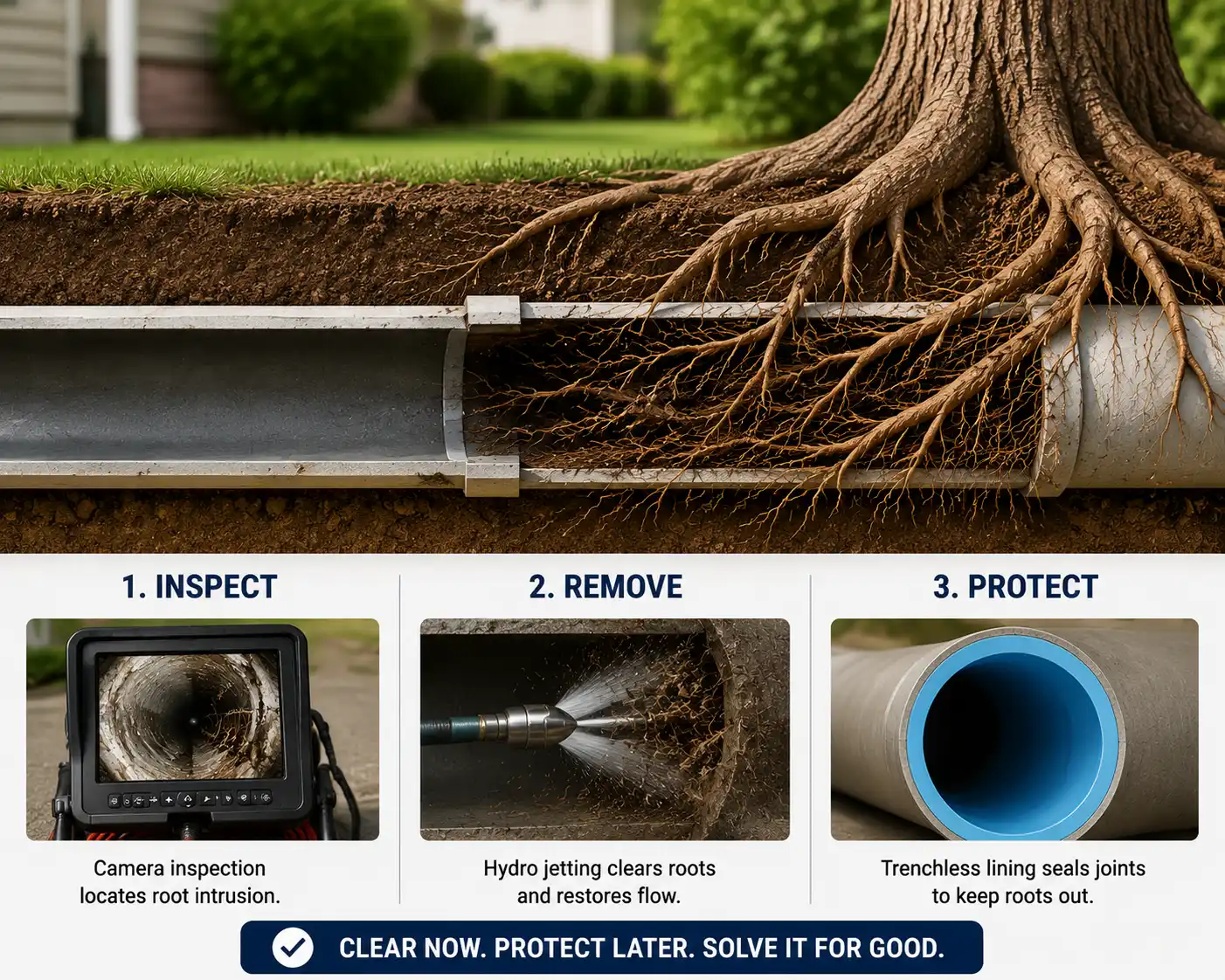
Tree roots are the most common cause of a sewer line that clogs on a schedule. Roots seek the moisture inside your sewer pipe, find their way in through tiny gaps at the joints, and grow into a mass that snags waste and paper until the line backs up. In the Lowcountry, with fast-growing trees and a high water table, this happens more than most homeowners expect. Clearing the roots is straightforward. Keeping them out is the part that matters, and the two are different jobs.
How to Know Roots Are the Problem
The strongest clue is a main line that re-clogs on a predictable schedule, every 6 to 12 months, rather than a one-time blockage. Alongside that, you may notice gurgling drains and toilets that flush weakly, since roots restrict the flow before they block it completely. A soggy patch in the yard over the sewer line’s path is another sign. A camera inspection confirms it visually and shows exactly where the roots are entering, which matters for deciding the fix.
The Removal Methods
Two professional methods clear roots, and they are not equal.
Mechanical Cutting (Rooter/Auger)
A rotating cutting head on a cable is fed into the line to shred the root mass and restore flow. It works fast and clears the immediate blockage, but it punches through the roots rather than removing them. The root skeleton left clinging to the pipe wall quickly catches grease and paper again, which is why snaked root lines often re-clog within weeks or months.
Hydro Jetting
Hydro jetting uses high-pressure water to shear the roots flush with the pipe wall and flush the debris out, while also stripping the grease and scale the roots were trapping. It removes far more of the intrusion than cutting does, and jetted lines stay clear noticeably longer as a result. Because the general comparison of hydro jetting versus drain snaking applies to more than just roots, it is worth reading if you are weighing the two for a recurring clog.
What Does Not Work
Household drain chemicals have no effect on established roots. Purpose-made foaming root herbicides can slow regrowth as a maintenance step between professional cleanings, but nothing poured from a bottle removes an existing root mass, and the harsh drain openers sold for clogs do nothing here except sit in the line as a hazard. Chasing a root clog with chemicals wastes money and time while the roots keep growing.
Clearing Is Not the Same as Fixing
This is the part most homeowners miss. Roots enter through openings in the pipe, usually small gaps at the joints, and as long as those openings exist, the roots grow back. Jetting buys you a clear line for a few years, but the permanent fix is repairing the pipe itself so the roots have no way in. That is where trenchless pipe lining comes in, sealing the joints from the inside, or in severe cases a section replacement. A camera inspection after clearing shows whether the pipe is sound enough to line or damaged enough to need sewer line repair.
The Right Sequence
For a root-clogged line, the order is: inspect to confirm and locate, jet to remove the roots thoroughly, then decide whether to line or repair the pipe so they stay out. Professional hydro jetting in Goose Creek clears the intrusion at the root rather than just punching through it, and a sewer camera inspection before and after confirms the line is actually clear. Handled that way, a root problem gets solved once instead of returning every rainy season.