A sewer camera inspection typically costs $150 to $500 for a standard residential line, and for that price you get something no other diagnostic gives you: a live look inside your sewer pipe, so a plumber knows exactly what is wrong and where before anyone digs. If you have recurring backups, are buying a home, or keep clearing the same clog, this is the step that replaces guesswork with certainty. Here is what actually happens during the visit.
These figures are typical for the area and are not a quote. Access and line length move the number, which we cover below.
How the Inspection Works
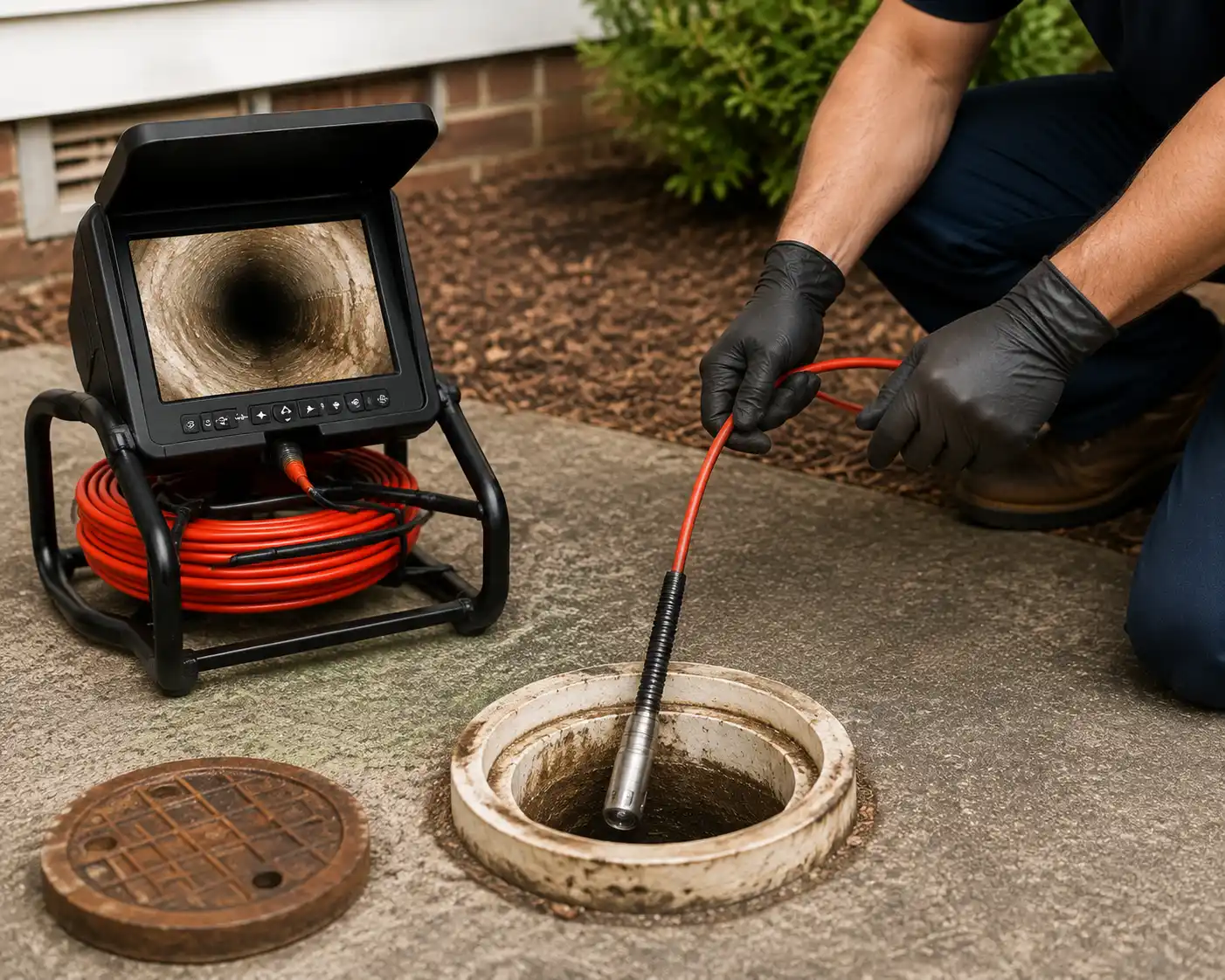
A technician arrives with a waterproof, high-resolution camera mounted on a long flexible cable. They locate an access point, usually a cleanout or a removed toilet, and feed the camera slowly through the sewer line. As it travels, it sends a live video feed to a monitor that you and the plumber watch together in real time. The pipe shows you exactly what it has been hiding: cracks, root intrusion, bellies where the line sags, grease buildup, or a collapse.
The process is non-destructive. Nothing is cut or dug during the inspection itself. Most jobs take under an hour on an accessible line, and at the end you get a marked location of any problem, a recommended repair, and usually a copy of the video for your records.
What the Camera Can Find
The camera reveals the causes behind symptoms you can only guess at from inside the house. Tree roots growing in through joint gaps, the most common cause of a main line that clogs on a schedule. Cracks and offset joints from ground movement. A belly, or low spot, where waste and water collect. Grease and scale narrowing the pipe. And full breaks or collapses. When more than one fixture backs up at once, the problem is usually in this shared main line, and multiple drains clogging at the same time is the signal that a camera is warranted.
When You Need One
A few situations call for a camera specifically. Recurring backups that return every few months point to a root intrusion or a structural problem the camera will locate. A persistent sewer smell coming from a drain can trace to a broken line the camera confirms. Buying an older home is one of the best times to scope the sewer, since a hidden lateral problem is a five-figure surprise you want to find before closing rather than after. And any time a plumber recommends a major sewer repair, a camera should justify the recommendation with footage.
What Affects the Cost
The biggest factor is access. A home with an easily reached cleanout is straightforward. If the technician has to remove a toilet or reach the line through a roof vent, the added labor raises the bill. Line length matters too, since a long run under a driveway or large yard takes more time. And location and after-hours timing move the price as they do for any service. One thing to remember: the inspection fee covers the diagnosis, not the repair. If the camera finds a problem, fixing it is a separate cost.
The Lowcountry Factor
Sewer problems here have local drivers. Fast-growing trees and a high water table mean roots aggressively seek out the moisture in sewer joints, and the sandy, shifting soil stresses older lateral lines. That combination makes root intrusion and joint separation common in Goose Creek, which is part of why Lowcountry soil and tree roots make local drains behave differently than in other parts of the state.
After the Inspection
Once the camera shows the problem, the footage drives the repair decision. A root intrusion may call for jetting and then a plan to keep them out. A cracked or collapsed section leads to a choice between trenchless and traditional repair. And a clean bill of health is worth the peace of mind on its own. Professional sewer camera inspection in Goose Creek gives you the video, the location, and a clear recommendation, so whatever comes next is based on what the pipe actually showed rather than a guess.