A healthy sump pump cycles on when water rises and off when the pit clears. Two failures break that rhythm, and they mean opposite things. A pump that runs constantly is working itself to death. A pump that will not turn on leaves your crawl space unprotected. Both need attention before the next heavy rain, and knowing the likely cause helps you decide what you can check and when to call for help.
When It Runs Constantly
A pump that never shuts off will burn out its motor, so this is not something to wait on. Several things cause it.
A Stuck Float Switch
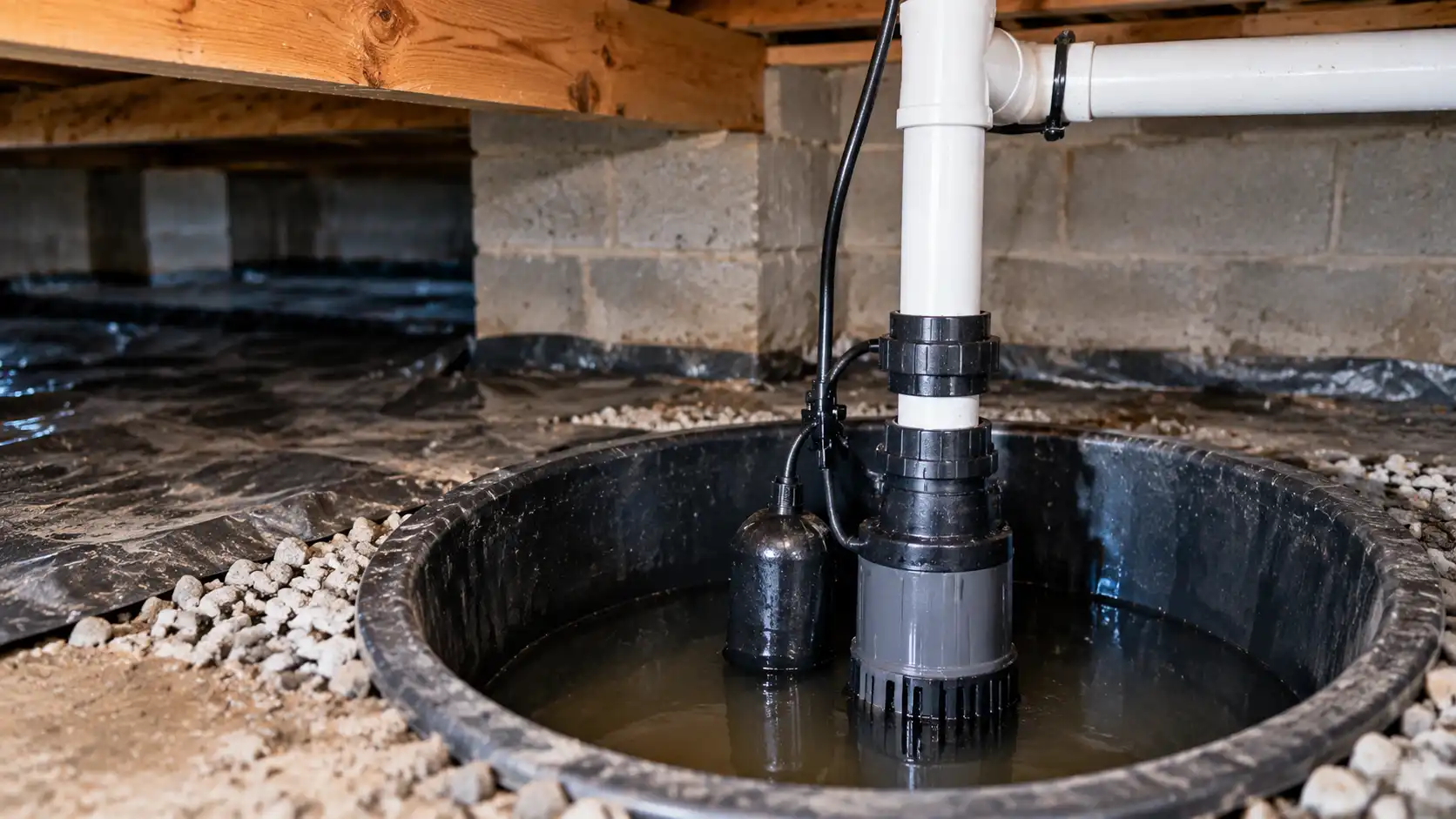
The float switch rides up with the water to turn the pump on and drops to shut it off. If it gets wedged against the pit wall, tangled in the power cord, or simply wears out, it can stick in the on position and the pump runs even after the pit is empty. Look in the pit: if the pump is running with little or no water in it, a stuck float is the most likely cause. Gently freeing the float often confirms it.
A Failed Check Valve
The check valve on the discharge pipe stops pumped water from falling back into the pit. When it fails, the water the pump just pushed up the pipe drops right back down, the float rises again, and the pump cycles endlessly on the same water. If you hear water rushing back after the pump shuts off, or it restarts every minute or two, suspect the check valve.
Too Much Water or Too Small a Pit
Sometimes constant running is not a fault. During a major storm or a period of high water table, the pump may simply be keeping up with genuine inflow, which is normal for a day or two. But a pit that is too small refills the moment it empties and triggers cycle after cycle, and an undersized pump cannot clear the water fast enough and runs nonstop trying. A clogged or frozen discharge line does the same by blocking the water from leaving.
When It Will Not Turn On
A silent pump during a wet spell is the more urgent problem, because the crawl space is unprotected. Start with power: check that it is plugged in, that the breaker has not tripped, and that the GFCI outlet has not tripped, which lightning and storms often cause. If it has power but stays silent, the float may be stuck in the down position, held there by debris or against the pit wall, so it never gets the signal to start.
If the motor hums but no water moves, the impeller may be jammed with debris or the pump may be airlocked. And a pump that does nothing at all, with power confirmed and the float free, has likely reached the end of its life. Most units last about ten years, and a dead motor at that age usually means replacement rather than repair.
What You Can Safely Check
A few checks are safe: confirm power and the breaker, look for a float obviously stuck or tangled, and make sure the outside discharge line is not blocked or crushed. Never reach into a pit with the pump powered, and never touch standing water around the unit until the power is off. Beyond those basics, the diagnosis usually needs a professional, since float switches, check valves, and impellers are easy to misdiagnose.
When to Call
A pump that runs nonstop, will not start, or cycles every couple of minutes needs service before it fails during a storm. Professional sump pump repair in Goose Creek pinpoints whether it is the float, the valve, the sizing, or the motor, and fixes it while the weather is calm. If the pump turns out to be at the end of its life, replacing it and adding a battery backup is the durable fix. A sump pump behaving strangely is your home asking for help before the next heavy rain.