A sump pump is only as reliable as the power feeding it, and in the Lowcountry the storms that cause flooding are the same ones that knock out the power. That is the problem a battery backup solves. When the grid goes down mid-storm, your primary pump goes silent exactly when the water is rising fastest. A backup keeps it pumping. Here is how these systems work and whether one is worth it for your home.
Why Power Loss Is the Real Risk
The most common reason a sump pump fails is not a broken pump. It is a power outage. Severe thunderstorms, tropical systems, and hurricanes bring heavy rain and high winds together, and the wind takes down power lines while the rain floods the crawl space. The pump you rely on cannot run without electricity, so the moment the lights go out, the water starts winning. This region knows the pattern well: when Hurricane Helene swept the Southeast in September 2024, millions lost power for days across multiple states, and any sump pump without a backup was useless the whole time.
How a Battery Backup Works
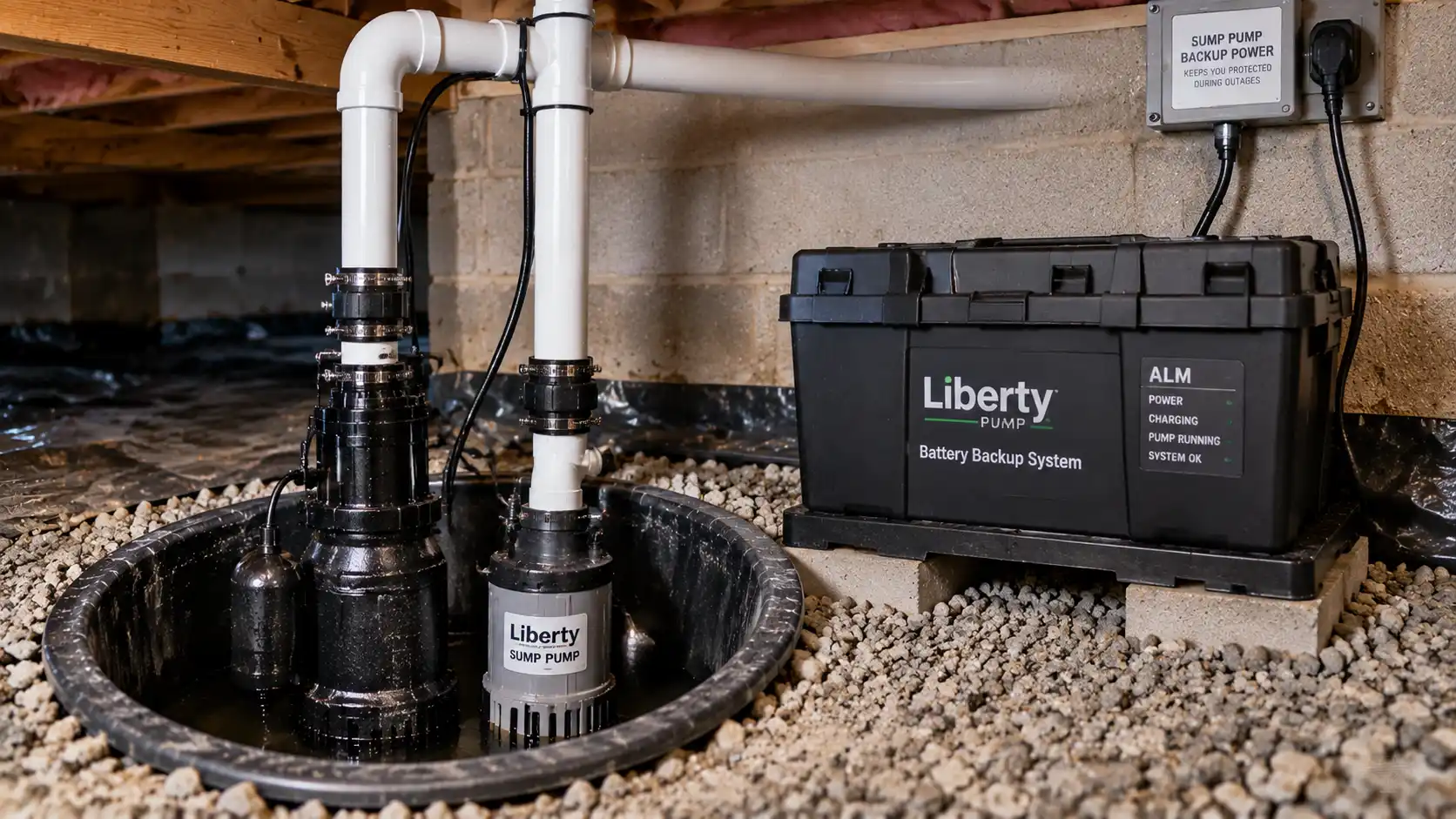
A battery backup system pairs a second pump, or a backup power source for the main pump, with a charged battery. When it senses the primary pump has lost power or cannot keep up, it activates automatically and keeps pumping water out of the pit. Because it switches on by itself, it protects the home even when no one is there or it is the middle of the night. Most batteries provide somewhere between 4 and 12 hours of active pumping depending on size and how much water is coming in.
Backup Options Compared
There are a few ways to keep a pump running through an outage. A battery backup is the most practical for short outages and typical storm events, since it works indoors, starts automatically, and needs no fuel. A water-powered backup runs off your home’s water pressure with no battery to maintain, but it uses municipal water and needs strong pressure to work. A generator, whether portable or a whole-home standby unit, provides the longest runtime for multi-day outages, but a portable one needs someone home to start it, and neither protects against the primary pump failing mechanically. For most Goose Creek homes, a battery backup covers the most likely scenario, and pairing it with a generator handles the rare multi-day event.
Runtime and the Multi-Day Storm
One honest caveat: a battery sized for 12 hours covers a typical overnight outage, but a major hurricane can leave power out for days. In that case a battery alone runs down after the first day. Homes in the most flood-prone spots often plan for both a battery backup for immediate, automatic protection and a generator for extended outages. Sizing the battery to your actual water inflow and typical outage length is the key decision.
Maintenance Matters
A backup only helps if it works when called on. Batteries age, chargers fail, terminals corrode, and floats can stick just like on the primary pump. Test the system before storm season and after any major weather, check the battery terminals a couple of times a year, and replace the battery on the manufacturer’s schedule. The time to discover a dead backup battery is during a test, not during a flood.
Plan Before the Season, Not During It
The worst time to shop for a backup is when a storm is already in the forecast, because that is when units sell out and installers are booked. Adding one is a calm-weather job. If your area sees regular outages and heavy rain, and especially if your home sits where a sump pump is essential, a backup is cheap insurance against the cost of a flooded crawl space. For the nights the power fails, it is also worth knowing your options when a plumbing emergency hits at 2am. Professional sump pump installation in Goose Creek can add a properly sized battery backup to your existing system so it keeps running when the grid does not.