When you shop for a way to fight hard water, you will see two categories that sound the same but do very different things: salt-based water softeners and salt-free water conditioners. The marketing blurs the line, and the wrong choice leaves you with the problem you paid to solve. Here is the honest difference and how to pick the right one for a Goose Creek home.
They Are Not the Same Thing
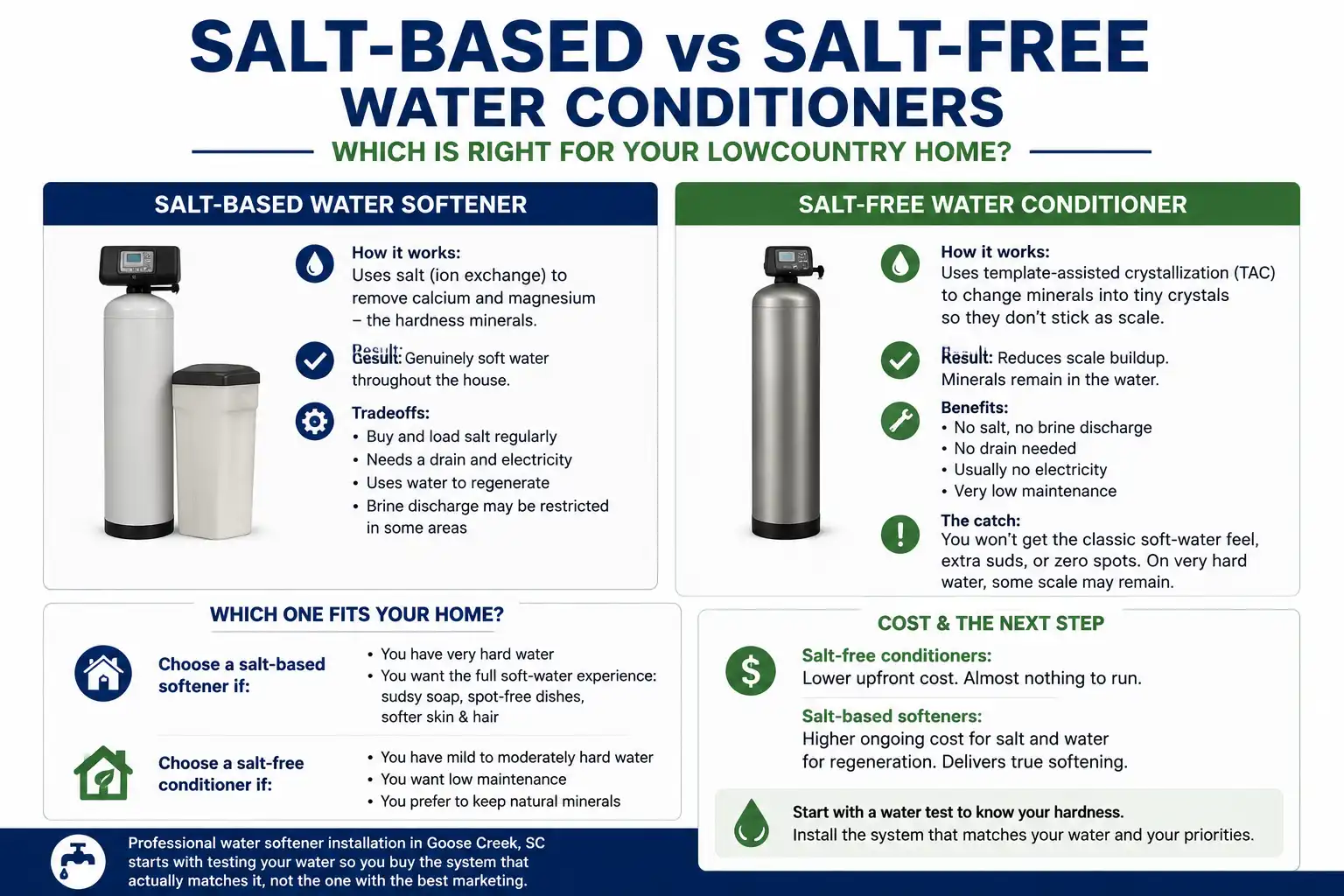
The most important fact up front: a salt-free system does not actually soften water. A true water softener uses salt to remove the hardness minerals. A salt-free system leaves those minerals in the water and only changes their form so they are less likely to stick as scale. Both reduce scale buildup, but only one removes hardness. Calling both softeners is where the confusion starts.
How Salt-Based Softeners Work
A salt-based softener uses a process called ion exchange. Water passes through a tank of resin beads that grab the calcium and magnesium (the hardness minerals) and swap them for sodium. When the resin fills up, the system runs a regeneration cycle using salt from a brine tank to recharge the beads, and flushes the collected minerals down a drain line. The result is genuinely soft water throughout the house.
The tradeoffs are real. You buy and load salt regularly, the system needs a drain and electricity, and the regeneration discharges brine, which some areas restrict. If you want to know whether an existing unit is doing its job, the signs that a water softener is working are worth checking before you replace it.
How Salt-Free Conditioners Work
A salt-free conditioner uses template-assisted crystallization, or TAC. It passes water over a special media that turns the dissolved calcium and magnesium into tiny stable crystals that stay suspended in the water instead of clinging to pipes and fixtures. No salt, no brine discharge, no drain, and usually no electricity. It needs very little maintenance, which makes it appealing for anyone who does not want to haul bags of salt.
The catch is that the minerals are still in the water. You will not get the classic soft-water feel, the extra suds from soap, or the complete elimination of spots and scale. On very hard water, a conditioner reduces scale but does not solve it.
Which One Fits Your Home
The right choice comes down to how hard your water is and what you want from the system. For very hard water, or if you want the full soft-water experience of sudsy soap, spot-free dishes, and softer skin and hair, a salt-based softener is the more complete solution. For mild to moderately hard municipal water, or if low maintenance and keeping the natural minerals matter more to you than a true soft feel, a salt-free conditioner is a practical, eco-friendlier option.
Lowcountry municipal water tends to run moderately hard, which puts many Goose Creek homes right in the range where either can work, so the decision leans on your priorities. The first step is knowing your actual hardness number, and the signs of hard water in a Goose Creek home tell you whether it is a problem worth treating at all.
Cost and the Next Step
Salt-free conditioners are often cheaper to buy and install and cost almost nothing to run. Salt-based softeners cost more over time in salt and water for regeneration but deliver true softening, and the price of water softener systems varies with capacity, which is why sizing matters. If you go salt-based, sizing the unit correctly is what keeps it efficient. Either way, professional water softener installation in Goose Creek starts with testing your water so you buy the system that actually matches it, rather than the one with the best marketing.