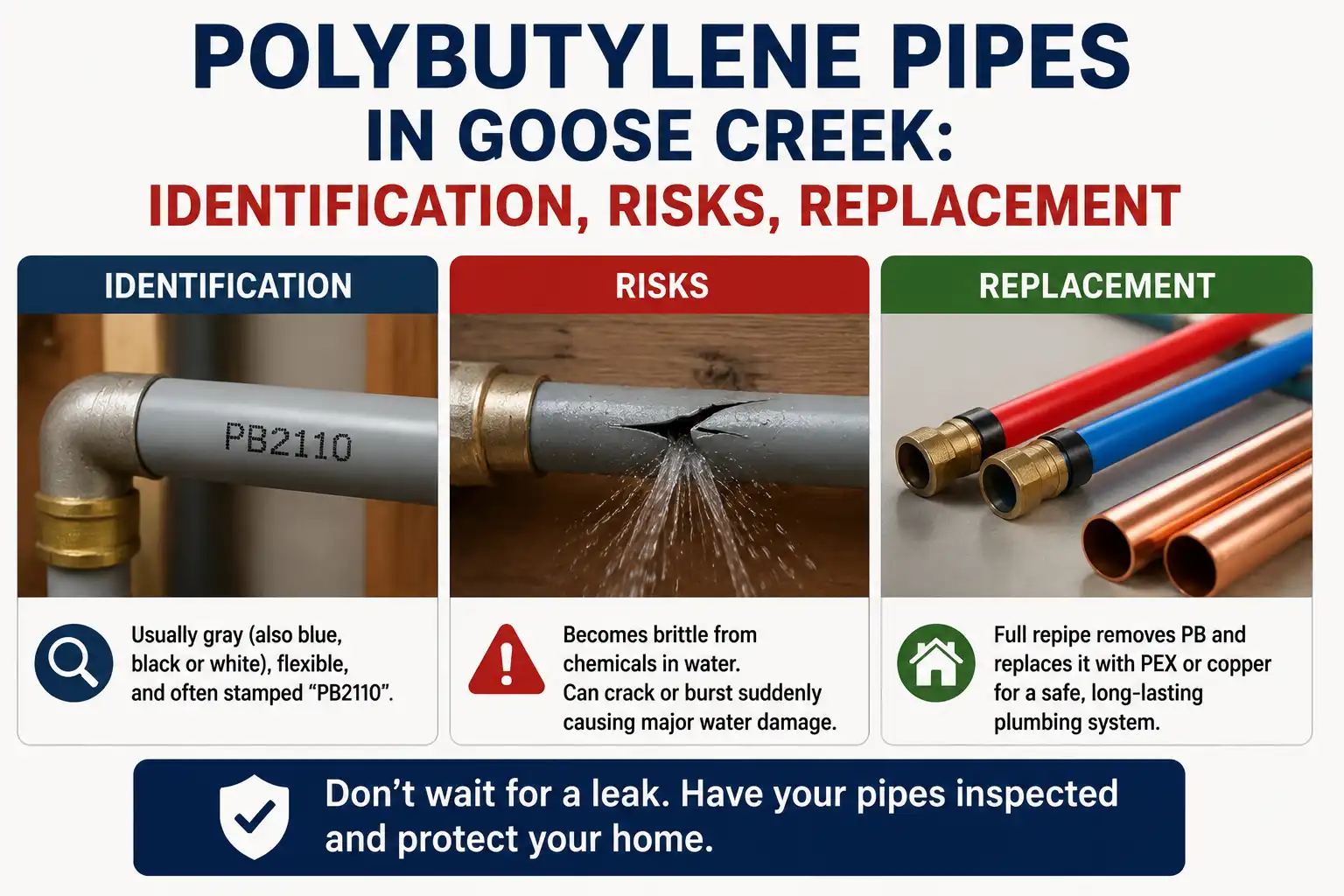
If your Goose Creek home was built between the late 1970s and the mid 1990s, there is a real chance it has polybutylene water pipes hiding in the walls. This material was used in millions of homes across the country, and it was especially common in the southern states. It was cheap, flexible, and easy to install, so builders liked it. Then it started failing, often without warning, and it was pulled from the plumbing codes.
This post explains what polybutylene is, how to tell if you have it, why it is a problem, and what replacement involves. If you own an older home here, this is worth a few minutes.
What polybutylene is
Polybutylene, usually shortened to PB, is a flexible plastic resin pipe. It was made from the late 1970s through the mid 1990s and marketed as a low cost alternative to copper. For a while it seemed like a smart upgrade. Over time, though, it became clear that the pipe reacts badly with the chemicals in ordinary tap water, and by 2005 it was no longer accepted in building materials.
How to identify polybutylene in your home
You do not need to open a wall to start checking. PB is usually easiest to spot at the points where pipes are exposed:
- Look near the water heater, under sinks, and where the main water line enters the home.
- The pipe is often gray, though it can also be blue, black, or white.
- It is about half an inch to one inch across and flexible, not rigid like copper.
- Check the surface for a stamp. Polybutylene pipe is often marked “PB2110.”
One important warning. Polybutylene fails from the inside out. The pipe can look completely fine on the outside while it is quietly getting brittle within. A quick glance at a clean looking pipe is not proof that it is safe. That is also why most home inspectors will not certify PB as being in good condition from an outside look alone.
If you are not sure what you are looking at, take a photo and send it to a plumber, or have someone come take a look. It is a fast thing to confirm.
Why polybutylene fails
The core problem is chemistry. Municipal water carries oxidants such as chlorine, and those chemicals slowly attack polybutylene. Over years, the pipe reacts, becomes brittle, and develops tiny cracks. Fittings weaken. Because the water is always running through the pipe, the damage builds up on the inside where you cannot see it.
When PB finally goes, it often does not start with a slow drip you can catch early. It can crack or burst suddenly, and because the material is fragile by that point, the failure can be widespread rather than a single tidy leak. That is what makes it dangerous. A homeowner can go from no visible problem to major water damage in a short time.
There is also a corrosion issue at the joints. When PB was connected to metal fittings without the right protection, the two materials can react and corrode, which weakens the connection and adds another failure point.
Warning signs to watch for
Since the damage hides inside the pipe, pay attention to the clues that do reach the surface:
- Discolored, rust colored, or cloudy water from the taps.
- Small leaks or damp spots that keep coming back, often near fittings.
- Repeated pinhole leaks in the same system.
If you see any of these in a home of the right age, treat it seriously and get the pipes looked at.
The insurance and home sale problem
Polybutylene is not only a leak risk. It can affect your money in two other ways.
Some home insurance companies will not cover a house that still has polybutylene plumbing, or they charge a higher premium because of the added risk. If you are buying or selling, the presence of PB has to be disclosed, and buyers often use it to negotiate the price down. Replacing the pipes before you list a home removes that bargaining chip and makes the house easier to sell.
Why full replacement is the fix
You cannot patch your way out of polybutylene. The material is no longer manufactured, so a damaged section cannot be replaced with matching pipe. More to the point, if one length of PB has become brittle, the rest of it is aging the same way. Fixing one leak does nothing for the next one waiting to happen.
The only lasting solution is a full repipe that removes the polybutylene and replaces it with a modern material. Most homeowners today choose PEX or copper. For coastal homes around Goose Creek, PEX is usually the better fit because it resists both our water chemistry and the salt air, though copper remains a solid option depending on the home. Our guide to PEX vs copper for coastal South Carolina breaks down that choice in detail.
Related reading
- PEX vs Copper Piping: Which Is Best for Coastal South Carolina?
- How Long Does Whole-House Repiping Take? The Process Explained
What replacement involves
A repipe is a bigger job than a single repair, but it is routine work for a plumber who does it regularly, and it is far less disruptive than most people expect. The old polybutylene is disconnected and the new water lines are run to every fixture. Water is shut off only during the tie in, and in most cases it is back on by the end of the workday. Most families stay in the home the whole time. For the full breakdown, see how long whole-house repiping takes.
Once the new pipes pass a pressure test and inspection, any access holes cut into walls are patched. After that, the leak risk, the insurance headache, and the worry are gone for good.
Get your pipes checked
If your Goose Creek, Hanahan, or Charleston area home is from the right era, the smart move is to confirm what you have before it fails on its own schedule. Mueller’s Plumbing Service can inspect your plumbing, tell you plainly if it is polybutylene, and lay out your replacement options with no pressure. Call us at (843) 572-8522 to schedule a look.