How to Prevent Your Bathroom Drains From Clogging (Simple Steps)
Your bathroom has four distinct drains, and each one clogs differently. The sink collects toothpaste residue and soap buildup that forms a specific kind of scum. The tub deals with hair and bath product residue. The shower handles soap scum and hair in a vertical configuration that traps material differently. The toilet has its own issues tied to the flapper and refill system. Treating all four the same way is why most homeowners keep dealing with recurring clogs despite their best efforts.
This guide walks through each bathroom fixture separately and gives you the specific setup and maintenance that prevents clogs in that fixture. It is not about habits or products you should buy. It is about the fixtures themselves, how they work, and what keeps them working.
Bathroom Sink: The Pop-Up Stopper Problem
The most common bathroom sink clog in Goose Creek homes has nothing to do with what goes down the drain. It has to do with the pop-up stopper mechanism. That little lever behind the faucet that lifts and lowers the stopper has a rod underneath the sink that connects through a pivot ball and runs to the back of the drain. Hair and debris collect on this mechanism, specifically on the pivot rod where it enters the drain body, creating a ball of gunk that restricts flow even when the drain itself is clear.
The fix is removing the pop-up stopper twice a year, cleaning it thoroughly, and putting it back. Most pop-up stoppers simply lift out once you disconnect the horizontal pivot rod under the sink (usually by unscrewing a retaining nut behind the drain). Pull the stopper up, scrub the accumulated debris off with an old toothbrush, rinse, and reinstall. This 10-minute job prevents more bathroom sink clogs than any other single action.
Bathroom sinks are also where toothpaste, mouthwash, and shaving cream residue accumulates. These products contain ingredients that resist dissolving and stick to pipe walls. Running hot water for 30 seconds after brushing teeth or shaving flushes most of this residue through before it can settle.
Bathtub: The Overflow Drain and Stopper Assembly
Your bathtub has two drain connections. The main drain at the bottom, and a smaller overflow drain at the top of the tub (usually behind a metal cover). Most homeowners ignore the overflow drain completely, which is a mistake. The overflow drain catches soap scum, hair, and residue that splashes up during bathing. Over time, this material accumulates inside the overflow pipe and contributes to slow drainage because it connects to the same drain line as the main drain.
Remove the overflow cover once a quarter (usually 2 screws) and clean inside with a bottle brush. The buildup you pull out is often disgusting, which is exactly why this should be a regular task.
The main drain stopper (whether lift-and-turn, toe-touch, or trip-lever type) also accumulates debris on its mechanism. Lift-and-turn stoppers come out by turning counterclockwise and pulling. Trip-lever stoppers have a mechanism behind the overflow drain that controls a linkage down to the drain. Clean visible debris from whichever style you have. For trip-lever systems, the linkage itself sometimes needs adjustment or cleaning after years of use.
The other major tub drain issue is hair buildup from people rinsing off without strainers. Our article on how to avoid clogged drains: the top 7 things you’re doing wrong covers the behaviors that most often contribute to bathroom drain clogs, including specific hair management for tubs.
Shower: Drain Cover Type Matters
Shower drains come in a few types, and the type you have affects how you prevent clogs. Tile showers typically have a square or round drain cover flush with the floor, sometimes with linear drain styling in newer installations. Fiberglass shower inserts usually have a screw-in round drain cover. Each type has specific maintenance needs.
For standard round or square shower drain covers, the key issue is whether the cover comes off easily for cleaning. Many Goose Creek shower drain covers are screwed in with a single Phillips screw in the center. Others are snap-fit and pry off with a flat screwdriver. If the screw is corroded or the cover refuses to come off, replace it with a new one. These cost $5 to $15 at any hardware store. A drain cover that cannot be removed for cleaning is useless for prevention.
Linear drains (the long trough style increasingly common in newer showers) have a removable grate on top. Lift it out monthly, clean the catch basin underneath, and put it back. The catch basin in linear drains fills up faster than most people realize because the long surface catches more hair and debris than a point drain.
Toilet: Flapper, Fill Valve, and Chain Adjustment
Toilet clogs from what gets flushed down are covered in other articles. This section is about mechanical maintenance of the toilet itself, which prevents a different category of problems including overflows, running water, and weak flushes that lead to more flushing and more material going through the drain.
The flapper is the rubber seal at the bottom of the tank that lifts when you flush. Over time, flappers harden, crack, or develop mineral buildup from Goose Creek’s hard water. A failing flapper causes the toilet to run constantly, leak water from tank to bowl, or provide a weak flush that does not fully clear waste. Replacing a flapper takes 10 minutes and costs $10. Do it every 4 to 5 years as preventive maintenance.
The chain connecting the flush handle to the flapper needs proper slack. Too much slack and the flush is weak. Too little slack and the flapper does not seal properly. Adjust it so there is about half an inch of slack when the flapper is seated.
Fill valves (the tall component on one side of the tank) also fail over time. Signs include slow tank refill, continuous running, or water spraying inside the tank. Replace these every 7 to 10 years as preventive maintenance. A good toilet tank should refill within 60 seconds after flushing and remain completely silent between flushes.
For toilet-specific clogging scenarios and what to do when your toilet actively overflows, our toilet overflow emergency guide covers the emergency response and how to handle the three different types of toilet backup.
Bathroom-Specific Clogging Materials Most Homeowners Ignore
Some things that go down bathroom drains are unique to bathrooms and cause specific problems you will not encounter in the kitchen or laundry. Understanding what these are helps you intercept them before they enter the drain.
Toothpaste and Mouthwash Residue
Toothpaste contains abrasive particles and stabilizers that do not fully dissolve. Mouthwash contains oils and alcohols that leave residue. Both products hit the bathroom sink drain multiple times daily in most homes. Over years, they accumulate into a hard coating on pipe walls that narrows the effective diameter. Flushing with hot water for 30 seconds after each brushing cycle prevents most of this buildup.
Hair Product Residue
Hair gels, waxes, mousses, and styling products contain polymers and oils that coat everything they touch. When rinsed off hands or hair over the sink or in the shower, the residue coats drain pipes. This is separate from hair itself and creates its own kind of slow buildup.
Shaving Cream and Scrub Residue
Shaving cream foams on skin but turns into a waxy residue in pipes. Exfoliating scrubs containing microbeads (still present in many older or foreign-made products despite the US ban) pass through aerators and strainers but collect in P-traps. Even sugar-based or salt-based scrubs can contribute to slow drainage.
The humidity in Goose Creek accelerates how fast these residues build up on pipe walls. Our article on how to prevent clogged drains in humid South Carolina homes covers why our climate makes bathroom drain maintenance more important than in drier regions.
Bi-Annual Bathroom Drain Maintenance Checklist
Print this or bookmark it. Twice a year (spring and fall are easy to remember), work through this list in each bathroom of your home. Total time per bathroom is about 30 minutes.
| ☐ | Remove and clean bathroom sink pop-up stoppers (twice yearly) |
| ☐ | Clean tub overflow drain cover with a bottle brush |
| ☐ | Inspect and clean shower drain cover, replace corroded ones |
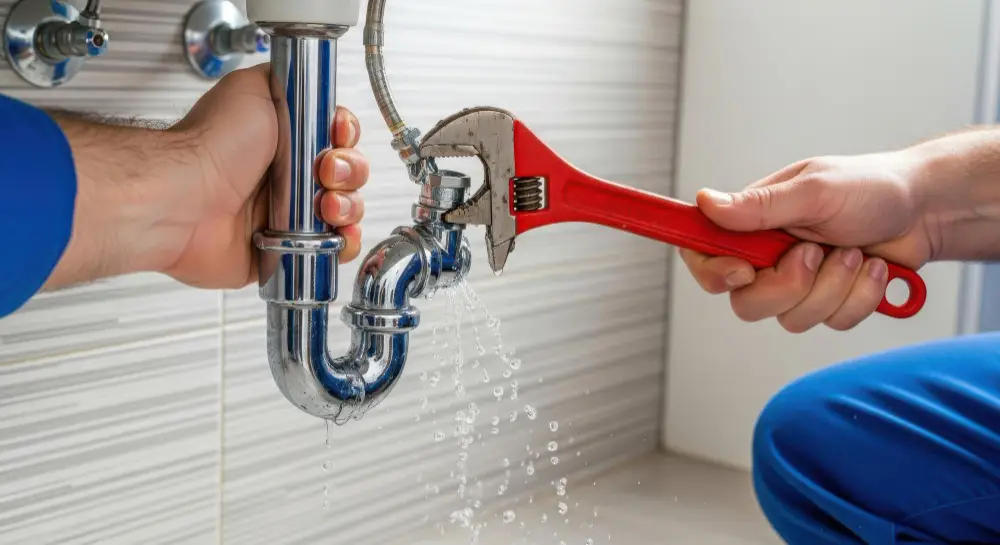
| ☐ | Check all P-traps under sinks for leaks or visible buildup |
| ☐ | Clean faucet aerators (mineral scale removal in hard water areas) |
| ☐ | Test toilet flapper by adding food dye to tank – check bowl after 15 min |
| ☐ | Flush rarely-used guest bathroom fixtures to refill P-trap water |
| ☐ | Check under-sink drain connections for moisture or condensation |
| ☐ | Remove and rinse shower head for scale buildup inside |
| ☐ | Check bathtub stopper mechanism (lift-and-turn or trip-lever) for smooth operation |
When Bathroom Drain Issues Have Already Set In
If your bathroom drains are currently slow or regularly clogging despite following the prevention steps, the system likely has years of accumulated buildup that requires professional cleaning to reset. Once cleared, the maintenance habits in this article keep the bathroom drains working properly. We handle bathroom drain cleaning, fixture replacements, and diagnostic camera inspections throughout Goose Creek.
Call Mueller’s Plumbing Service at (843) 572-8522 for service, or visit our clogged drain service page for more information. For ongoing maintenance plans, our drain cleaning service page covers what we offer. A functioning bathroom is not just a convenience, it protects your home from water damage and costly emergency calls.