A toilet overflowing is one of the most disgusting and stressful plumbing emergencies a Goose Creek homeowner can face. The water is dirty, it spreads fast, and most people panic and grab the plunger immediately. That is usually the wrong first move. The actions you take in the first 30 seconds determine whether this is a 5-minute cleanup or a 5-day restoration project.
This guide walks you through the exact steps to take when your toilet is actively overflowing, plus the critical skill of identifying which type of overflow you have. Three different overflow types require three different responses, and getting it wrong can make the situation dramatically worse.
The First 30 Seconds: Stop the Water
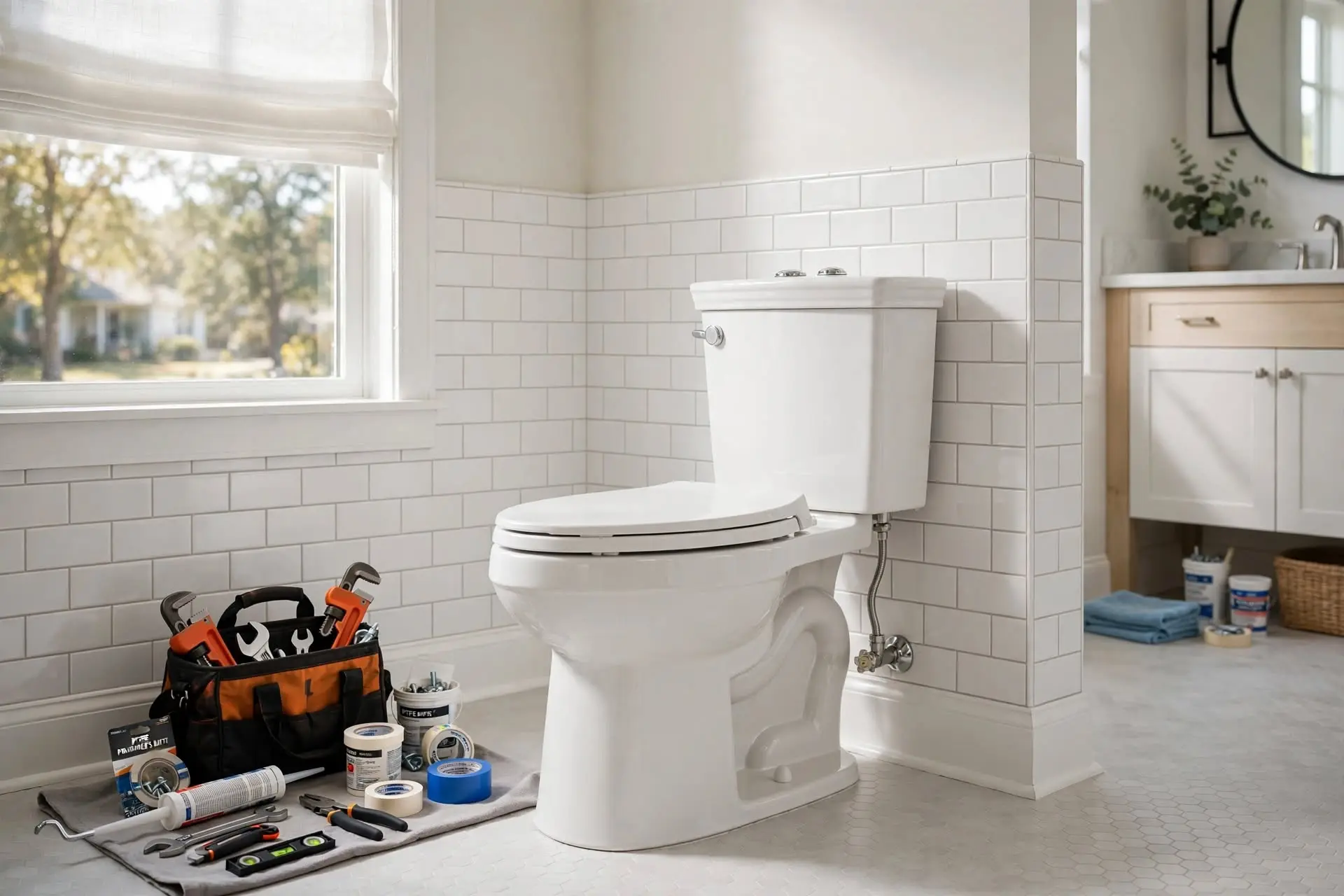
Before you grab a plunger, a towel, or anything else, you need to stop more water from entering the bowl. Every toilet has a shutoff valve behind it, usually on the wall where the supply line enters the base of the tank. Turn that valve fully clockwise until it stops. This cuts water to that specific toilet only and stops the bowl from filling any further.
If the shutoff valve is stuck, corroded, or missing (which happens in some older Goose Creek homes), lift the lid off the tank and manually close the flapper at the bottom of the tank. Press it down and hold it. This stops water from flowing from the tank into the bowl, which buys you time.
If neither of those works, reach into the tank and lift the float arm or ball up. This shuts off the fill valve and stops water from entering the tank. You now have a temporary solution until you can address the underlying issue.
Identify Which Type of Overflow You Have
This is the most important step most people skip. Not every toilet overflow is caused by a clog. There are three distinct types, and each requires a completely different response.
| Overflow Type | Key Signal | Immediate Action |
| Clogged toilet | Only that toilet affected, water rising from bowl | Shut off fill valve behind toilet, plunge |
| Fill valve failure | Water running into tank nonstop, bowl rising | Shut off fill valve behind toilet |
| Sewer line backup | Multiple fixtures affected, foul odor, black/brown water | Shut off water to entire home, call plumber immediately |
The quick test: after you shut off the water, look at what is happening in other fixtures. If the tub is backing up, a sink is gurgling when you flush, or other toilets are affected, you do not have a clogged toilet. You have a sewer backup, which is a much more serious emergency that needs a plumber immediately. Do not plunge a sewer backup. Plunging can force contaminated water into other drains and make the spread worse.
If It Is a Standard Toilet Clog
This is the most common overflow scenario. The bowl clogs, someone flushes again (mistake), and water spills over the rim. Here is how to handle it correctly.
- Shut off the water at the valve behind the toilet (already done)
- Remove any excess water from the bowl with a small container into a bucket before plunging to prevent splashing
- Use a flange plunger, not a cup plunger. Flange plungers have a rubber extension that fits into the toilet drain and creates real suction
- Push down firmly, pull up forcefully, and repeat. The pull-up creates the suction that actually clears the clog
- After 10-15 firm plunges, check if water levels are returning to normal
- If the plunger works, wait 5 minutes, then turn the water back on and flush to confirm it drains properly
- If the plunger does not work after 3 attempts, stop. Continued aggressive plunging can damage the wax ring seal at the base of the toilet
When plunging fails, the next step is a toilet auger (also called a closet auger). This is a specialized tool with a long flexible cable and a rubber-coated tip that extends down into the drain without damaging the porcelain. They cost $20 to $40 at hardware stores. If you do not own one and are not comfortable using one, this is the point to call a plumber.
If the Fill Valve Is the Problem
Sometimes the toilet overflow is not a clog at all. The fill valve inside the tank has failed, water keeps running into the tank forever, overflows the tank’s internal overflow tube, and eventually spills out. The bowl is not clogged. Water is coming from the tank, not the drain.
The signs of fill valve failure are specific. You can hear water running continuously into the tank. The water level in the tank is at the very top of the overflow tube or spilling into it. The bowl water level is normal (not raised, not clogged). In this situation, plunging does absolutely nothing because the clog is not the problem.
The fix is replacing the fill valve. A new fill valve costs $15 to $30 at any hardware store and installs in about 20 minutes with basic tools. If you are comfortable with minor plumbing work, this is a DIY project. If not, a plumber can replace one in a single service visit.
Fill valve issues often come with running toilet symptoms for days or weeks before the overflow. If your toilets have been running intermittently, check the fill valves before they fail completely. Our toilet repair service handles fill valve replacement, flapper issues, and any internal tank component failure.
If It Is a Sewer Backup (Serious Emergency)
This is the scariest version of a toilet overflow and the most dangerous. A sewer backup means wastewater from the main sewer line is backing up into your home through the lowest drain, which is often a toilet or tub on the lowest floor. The water coming out is contaminated sewage, not clean tank water.
Here is how to recognize a sewer backup. The water in the toilet is dark, smelly, or contains visible debris that was not from your recent use. Multiple fixtures are affected at the same time. Gurgling sounds come from other drains when water is running. The backup often happens during or after heavy rain or significant water usage like a washing machine cycle.
When you suspect a sewer backup, do these things immediately.
- Shut off water to the entire home at the main shutoff valve. This stops anything from flowing down drains and pushing more sewage back up
- Do not use any other fixtures. No sinks, no showers, no dishwashers, no washing machines
- Keep people and pets out of affected areas until the water is removed and the area is sanitized
- Call an emergency plumber immediately. This is not a DIY scenario
- Document everything with photos before cleanup for insurance purposes
Sewer backups often require special insurance coverage. Standard SC homeowners policies exclude sewer backup damage unless you specifically added a sewer backup rider. Our article on how homeowners insurance handles plumbing damage in South Carolina explains which scenarios are covered and which are not.
Safe Cleanup After a Toilet Overflow
After the overflow is stopped and the underlying issue is addressed, cleanup is the next priority. How you approach cleanup depends on whether it was clean water from a fill valve failure or contaminated water from a clog or sewer backup.
For clean water (fill valve failure), use towels and a wet vacuum to remove the water. Dry the floor thoroughly. Run fans and open windows to speed drying. If water reached walls or baseboards, inspect for damage over the next several days.
For contaminated water (clog or sewer backup), treat it as a biohazard. Wear gloves, old clothes, and a mask. Remove standing water with a wet vacuum you are willing to discard or sanitize thoroughly after. Clean all affected surfaces with a bleach solution (1 cup bleach per gallon of water). Disinfect anything that touched the water, including mops, buckets, and cleaning tools.
Severe sewage backups with significant water spread usually require professional restoration. Call a water damage restoration company in addition to a plumber. The health risks of inadequate cleanup are serious, and insurance often requires professional cleanup to pay out on the damage claim.
When to Stop DIY and Call a Plumber
The line between a DIY toilet overflow fix and a professional call is clearer than most homeowners think. Call a plumber immediately if any of these apply.
- Plunger has not cleared the clog after 3 solid attempts
- Multiple fixtures are backing up (sewer backup indicator)
- The overflow water is dark, smelly, or contains debris
- Water has spread beyond the bathroom to hallways or other rooms
- You cannot identify which type of overflow you have
- The toilet shutoff valve does not work or is broken
- This is the third or fourth overflow in a short time period, indicating a deeper line issue
Get Your Toilet Emergency Handled Fast
Toilet overflows do not wait for business hours. Mueller’s Plumbing Service responds to toilet emergencies 24/7 in Goose Creek and the Tri-County area. We diagnose the type of overflow quickly, fix the underlying cause, and do it without making the mess worse than it already is. Over 30 years of experience means we have seen every type of toilet emergency and know exactly what works.
Call us now at (843) 572-8522 for emergency toilet service, or visit our emergency plumbing service page for details on what we cover. If your toilet is actively overflowing, shut off the water at the valve first, then call us. We will be there fast.