It is a fair question in the Lowcountry, where hard freezes are rare and a standard outdoor faucet works fine most of the year. So is a frost-free hose bib worth the extra cost here, or is it protection against a problem South Carolina does not really have? The honest answer is that our winters are exactly the kind that catch homeowners off guard, which is what makes frost-free a smart, cheap insurance policy for a home in Goose Creek.
How a Frost-Free Hose Bib Works
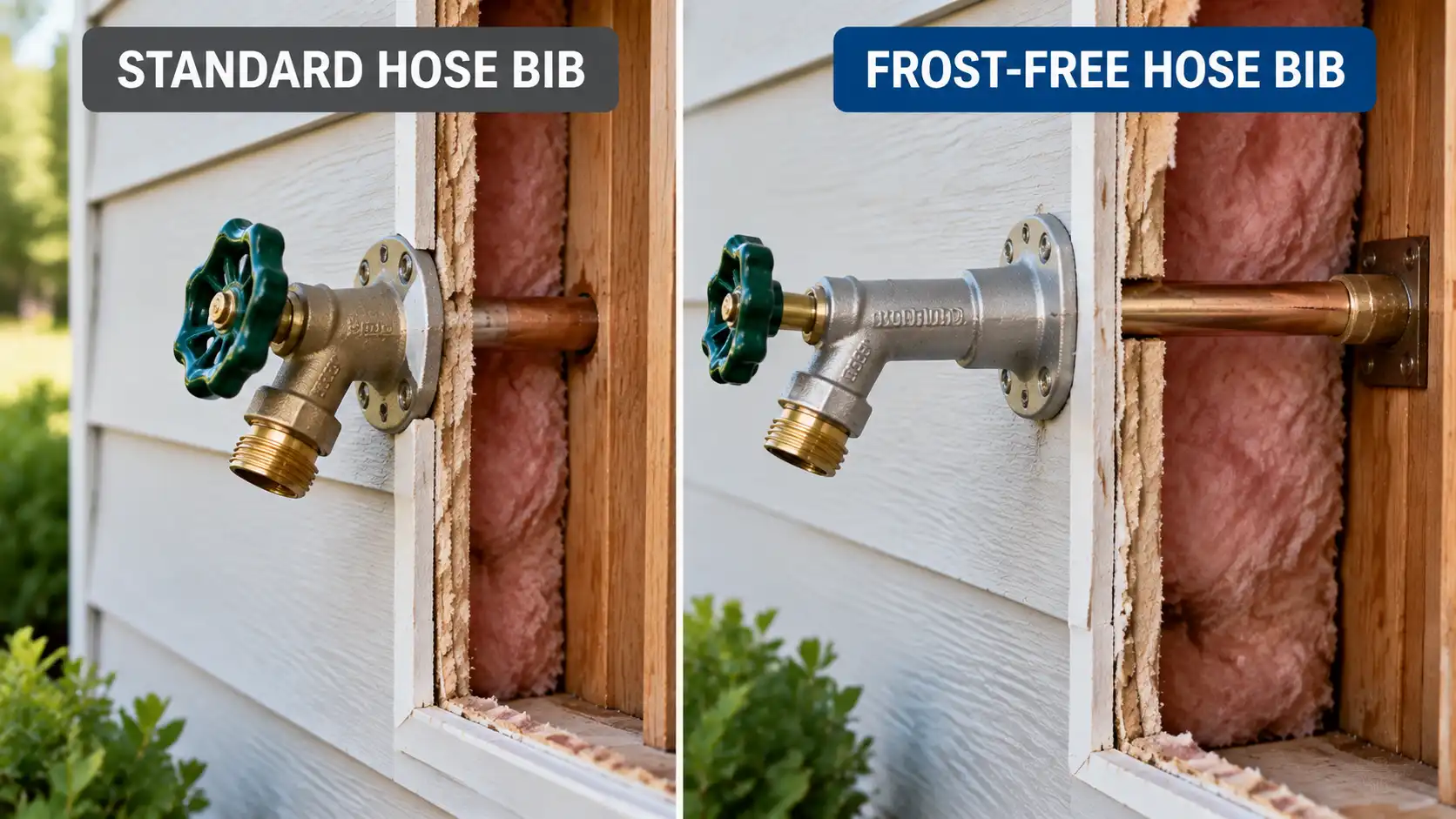
The difference between a standard and a frost-free faucet is where the water actually shuts off. On a standard hose bib, the valve is right at the wall, so water sits in the short exposed section and freezes easily. A frost-free bib has a long stem that moves the shut-off valve 6 to 12 inches back inside the heated wall. When you close it, the water stops deep inside where it stays warm, and the water in front of the valve drains out the spout, leaving nothing in the exposed section to freeze. That design is what prevents the burst.
The Case for the Lowcountry
The argument against frost-free is that South Carolina rarely freezes hard, and that is true. But rarely is not never. Every few winters an Arctic blast drops the Lowcountry into a hard freeze for a night or two, and those are precisely the events that burst pipes, because homeowners here are not in the habit of winterizing outdoor faucets the way people in cold climates are. A standard hose bib that freezes can split the pipe feeding it inside the wall, and the leak often shows up inside the house, which is a far bigger repair than the faucet cost. The relevant question is what the rare cold snap does to unprepared homes, and outdoor faucets are near the top of that list.
Against that risk, a frost-free bib is inexpensive. It costs a modest amount more than a standard faucet, needs almost no seasonal maintenance, and removes one of the most common freeze-related failure points. For a fixture you will keep for years, that is cheap peace of mind, and it is why whether pipes really burst in South Carolina is a question worth taking seriously rather than dismissing.
The Catch Every Pro Stresses
A frost-free hose bib is not foolproof, and there is one mistake that defeats it entirely: leaving a garden hose attached over a freeze. When a hose stays connected, water cannot drain out of the stem, so it sits trapped inside, freezes, and splits the pipe just as it would on a standard faucet. If you install frost-free, you still have to disconnect hoses before a cold snap. Do that one thing, and the faucet does the rest.
Installation matters too. The bib has to be pitched slightly downward so the stem drains fully, and the stem length has to match your wall thickness so the valve sits in the heated zone. A frost-free faucet installed at the wrong pitch or with too short a stem can still freeze, which is why correct installation is part of getting the protection you paid for.
The Verdict
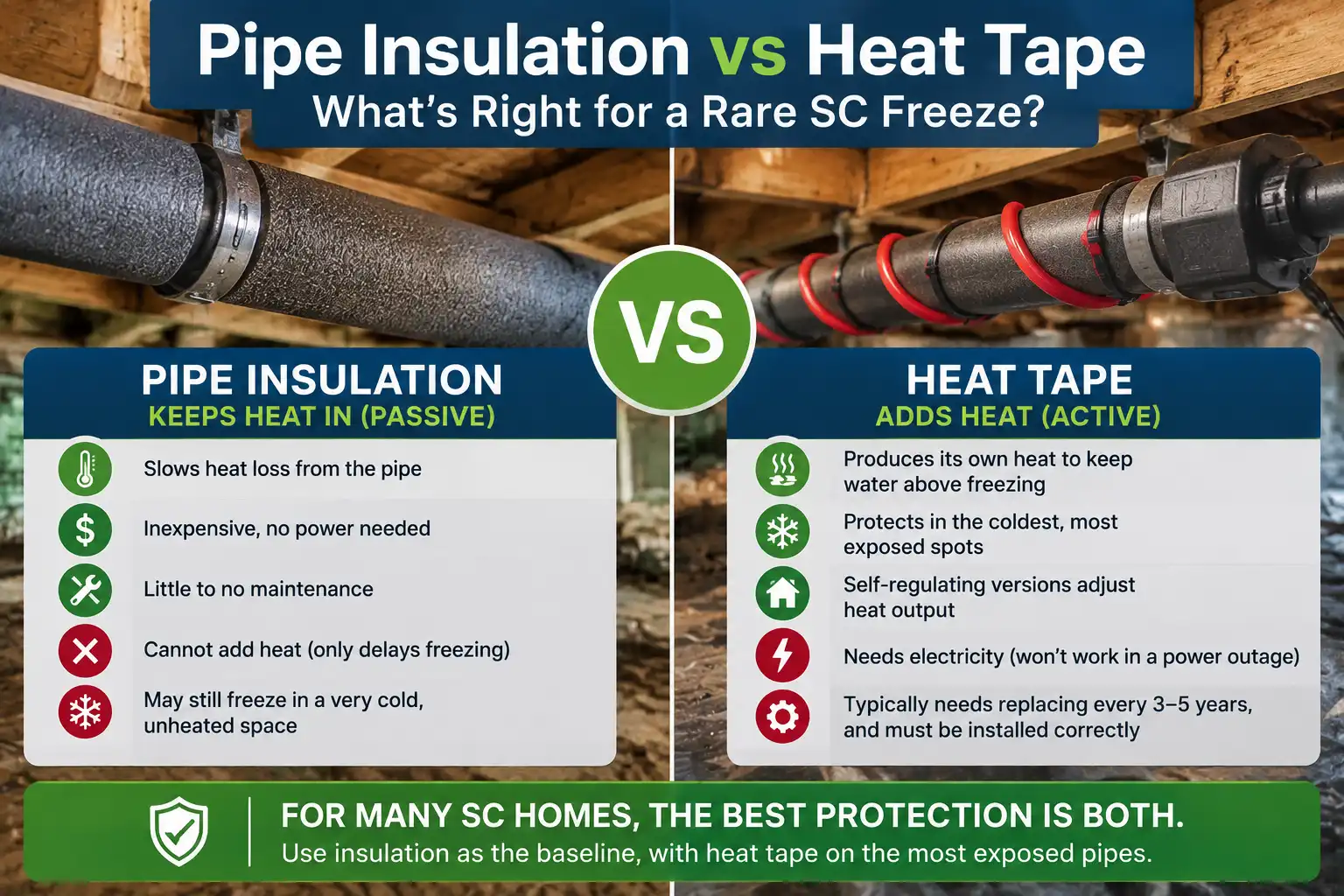
For a Goose Creek home, a frost-free hose bib is worth it. Our freezes are infrequent but real, homeowners here tend not to winterize, and the cost of upgrading is small next to the cost of a pipe that bursts inside the wall. Pair it with the simple habit of disconnecting hoses in a cold snap, and you have eliminated one of the most common winter plumbing failures. For deeper protection, combining it with pipe insulation versus heat tape for exposed lines covers the rest of your freeze risk.
Professional hose bib and outdoor faucet service in Goose Creek installs frost-free bibs at the correct length and pitch, and frozen pipe repair handles the aftermath when an unprotected faucet has already failed. Upgrading before winter is far cheaper than repairing a burst after it.