Choosing a kitchen sink comes down to more than looks. The two main mounting styles, drop-in and undermount, affect how the sink installs, how the counter around it is finished, how you clean it, and what it costs. Each fits a different situation, and picking the right one before a remodel saves you from tearing out work later.
How Each Style Mounts
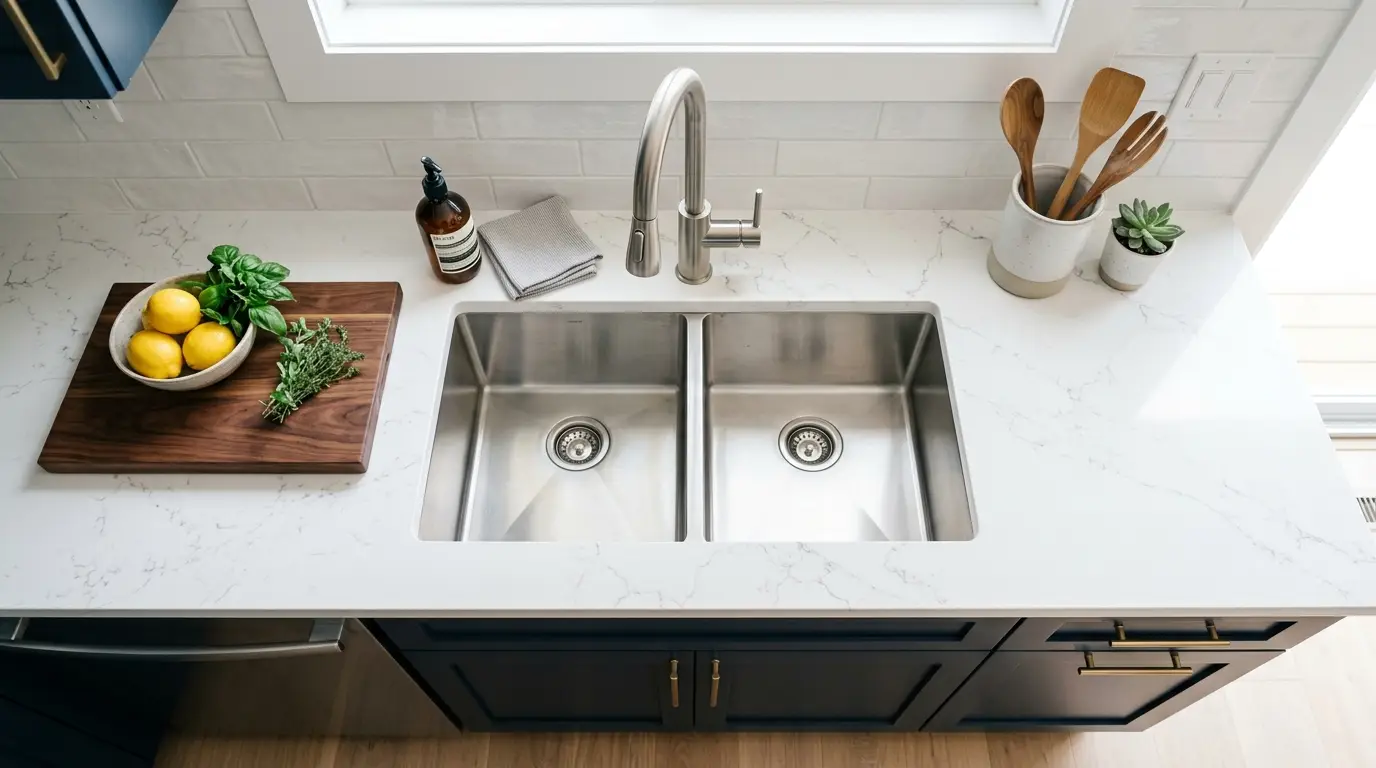
A drop-in sink, sometimes called a top-mount or self-rimming sink, sets into a hole cut in the countertop with a visible rim that rests on the counter surface. The weight of the sink sits on that rim, and a bead of sealant under it keeps water out. An undermount sink attaches to the underside of the countertop, so the counter edge forms the rim of the opening and no lip sits above the surface.
Countertop Compatibility Comes First
The single biggest factor is your countertop. Undermount sinks require a solid, water-resistant counter material like granite or quartz, because the exposed counter edge around the opening is constantly in contact with water. Laminate counters cannot take an undermount sink, since water reaches the particleboard core through the cut edge and swells it. Drop-in sinks work with any counter material, because the rim covers and protects the cut edge.
Cleaning and Daily Use
This is where undermount sinks earn their popularity. With no rim sitting on the counter, you can wipe crumbs and water straight from the countertop into the sink with nothing to catch debris. A drop-in sink’s rim creates a seam where the sink meets the counter, and that seam collects grime and needs regular attention to stay clean and sealed. Undermount sinks also give you slightly more usable basin depth for the same cutout.
Installation and Cost Differences
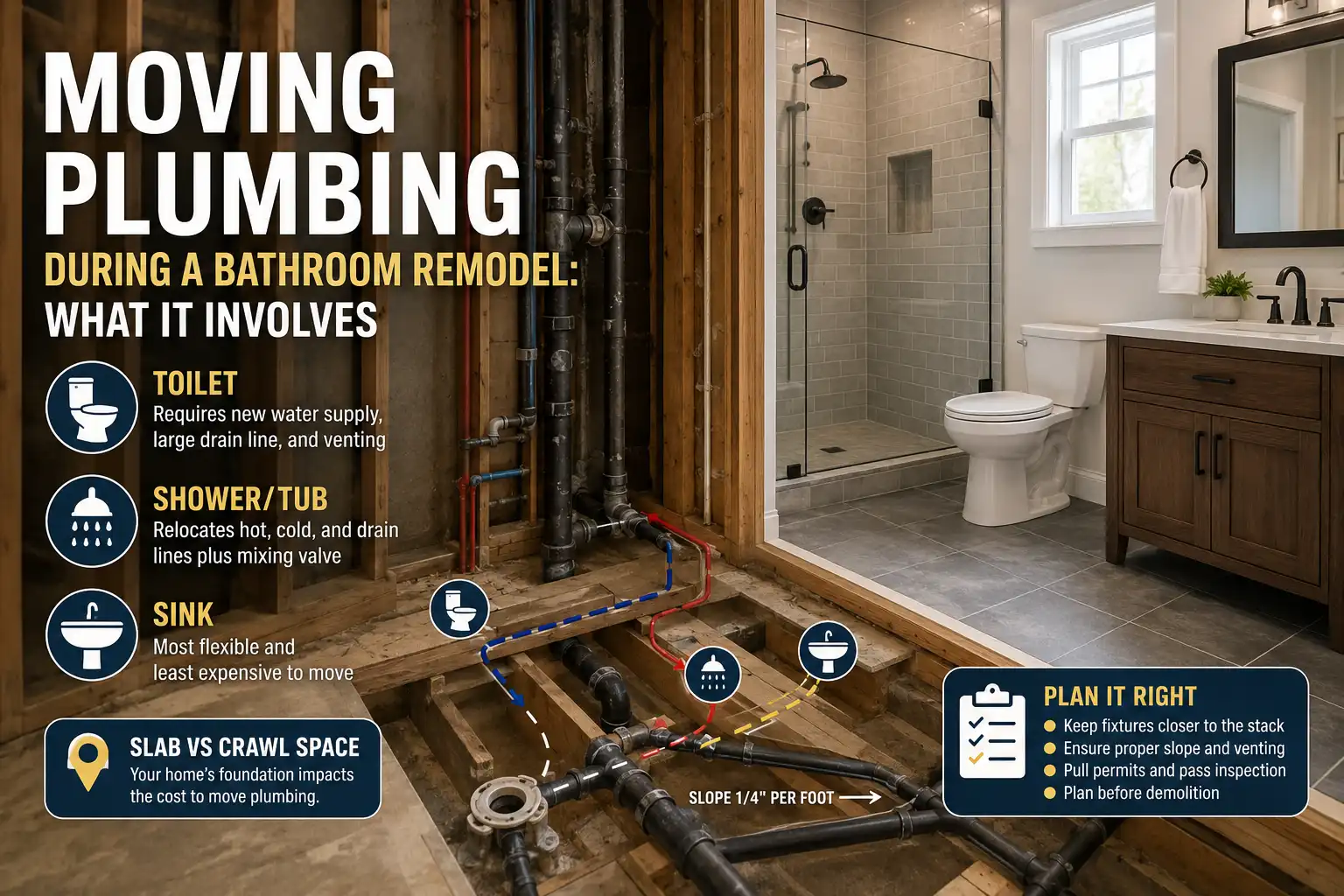
Drop-in sinks install faster and cost less to fit. The hole is cut, the sink drops in, and it is sealed and connected. Undermount sinks take more labor. They are usually set during the countertop installation, mounted from below with proper support, and sealed carefully to the underside of the stone. If your remodel involves relocating the sink or reworking the base cabinet, understanding what goes into relocating a kitchen sink during a remodel helps you budget the full job rather than just the sink.
Matching the Sink to the Rest of the Job
The sink choice ripples into the fittings around it. Faucet holes are drilled into the counter for an undermount setup, while drop-in sinks often have the faucet holes built into the rim. Garbage disposals, dishwasher connections, and drain alignment all depend on the basin position, so if a dishwasher drain connection is part of the remodel, the sink layout needs to account for it from the start.
Which One to Choose
If you have or are installing stone counters, want the cleanest look, and do not mind the higher cost, undermount is the stronger choice for most kitchens. If you are working with laminate, keeping costs down, or planning a simple sink swap, a drop-in is the practical answer and no compromise on function.
Either way, the sink is only as good as its installation. A poorly sealed drop-in leaks at the rim, and an undermount that loses its adhesive bond can drop under load. Professional sink installation in Goose Creek makes sure the mount, the seal, and the drain connections are done right, so the sink you picked lasts as long as the remodel around it.