The most expensive part of a bathroom remodel is often the part you cannot see. New tile and a nice vanity are the visible upgrades, but if your new layout moves the toilet, shower, or sink, the real cost lives in the pipes behind the walls and under the floor. Two bathrooms with identical fixtures can land thousands of dollars apart on plumbing alone, and the difference comes down to how far the fixtures move. Here is what moving plumbing actually involves and what drives the cost.
The One Factor That Drives Everything: Distance From the Stack
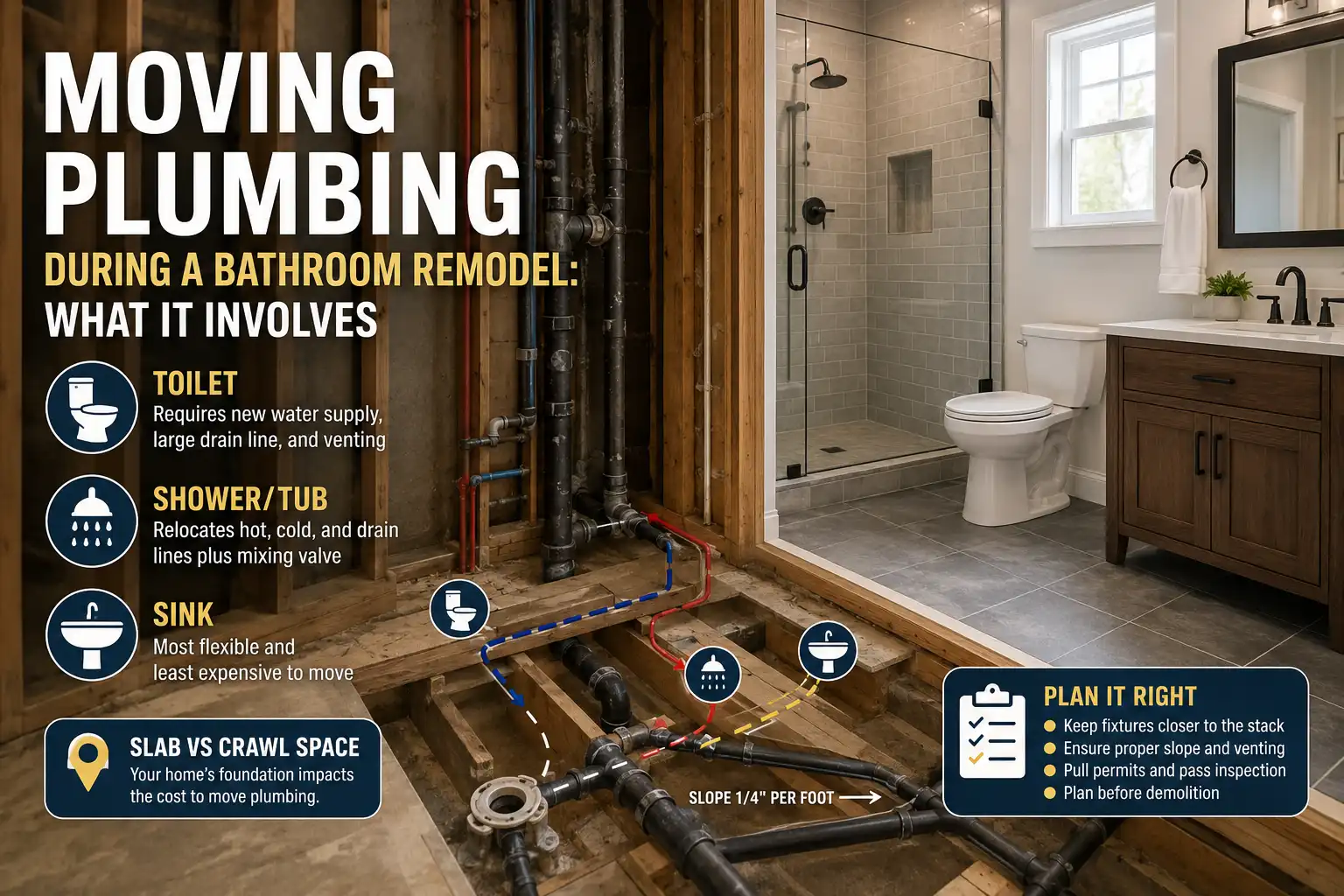
Your bathroom drains into a main vertical waste pipe called the stack. The closer a fixture stays to that stack, the cheaper it is to plumb. A fixture moved three feet from the existing drain and one moved across the room are completely different jobs even when they look the same on a floor plan. Every foot of new drain line has to maintain a downward slope of at least a quarter inch per foot to drain by gravity, which limits how far and where a fixture can go. A smart layout keeps the toilet near the stack and lets the sink, which is more forgiving, do the traveling.
What It Takes to Move Each Fixture
The Toilet
The toilet is the most expensive fixture to relocate. It needs both a new water supply line and a new large-diameter waste line, and because it depends entirely on gravity and precise slope, its placement is exacting. Moving it also means a code-compliant vent within a set distance of the drain. This is usually the single costliest plumbing move in a bathroom.
The Shower or Tub
Moving a shower means relocating three lines: hot supply, cold supply, and the drain. A tub drain and a shower drain sit in different spots, so switching between them shifts the drain and requires resetting it to hold slope. Changing from a tub spout to a shower means a new in-wall mixing valve too, and the pan or base has to be waterproofed correctly. The plumbing side pairs with fixture decisions like choosing between a shower cartridge and a full valve when you are reworking the shower anyway.
The Sink
The sink is usually the cheapest and most flexible to move, since its supply and drain lines are smaller and easier to reroute within a wall. If your layout has to move something, the sink is the fixture to move.
Slab vs Crawl Space: A Local Cost Factor
How your home is built decides how a plumber reaches the drains, and it is the biggest local cost swing in Goose Creek. In a home over a crawl space, the plumber works from below, which keeps drain relocation manageable. In a slab-on-grade home, the drain lines are buried in concrete, so moving a fixture means cutting and jackhammering the slab, trenching for the new line, having it inspected, and repatching the concrete. The same fixture move can cost far more on a slab than over a crawl space, so knowing which you have is key to a realistic budget.
The Mistakes That Cost the Most
A few errors turn up again and again. Moving a fixture too far from the stack causes chronic drainage and clog problems down the line. Skipping or shortcutting the vent leads to slow drains and sewer gas. And failing to pull the required permits creates trouble at inspection and resale. All of these are avoidable with proper planning before demolition, which is why the plumbing layout should be settled during design, not discovered mid-tear-out.
Plan It Right From the Start
Most bathroom remodels take one to three days of plumbing work depending on how much moves, and the decisions made before the first wall opens determine the whole budget. If the permit question is on your mind, whether remodel plumbing needs a permit in Berkeley County is worth reading early. Professional bathroom remodel plumbing in Goose Creek plans the fixture moves around your stack and foundation, handles the permits and inspections, and gets the supply, drain, and venting right the first time, so the part you cannot see does not become the part you regret.