When you are protecting pipes from a South Carolina cold snap, you will run into two options that sound similar but work in completely different ways: pipe insulation and heat tape. One keeps existing heat in; the other adds heat. Knowing the difference, and where each one actually works, keeps you from over-spending on a mild-winter home or under-protecting the pipe that really needs it. Here is how they compare for Lowcountry conditions.
Insulation Is Passive
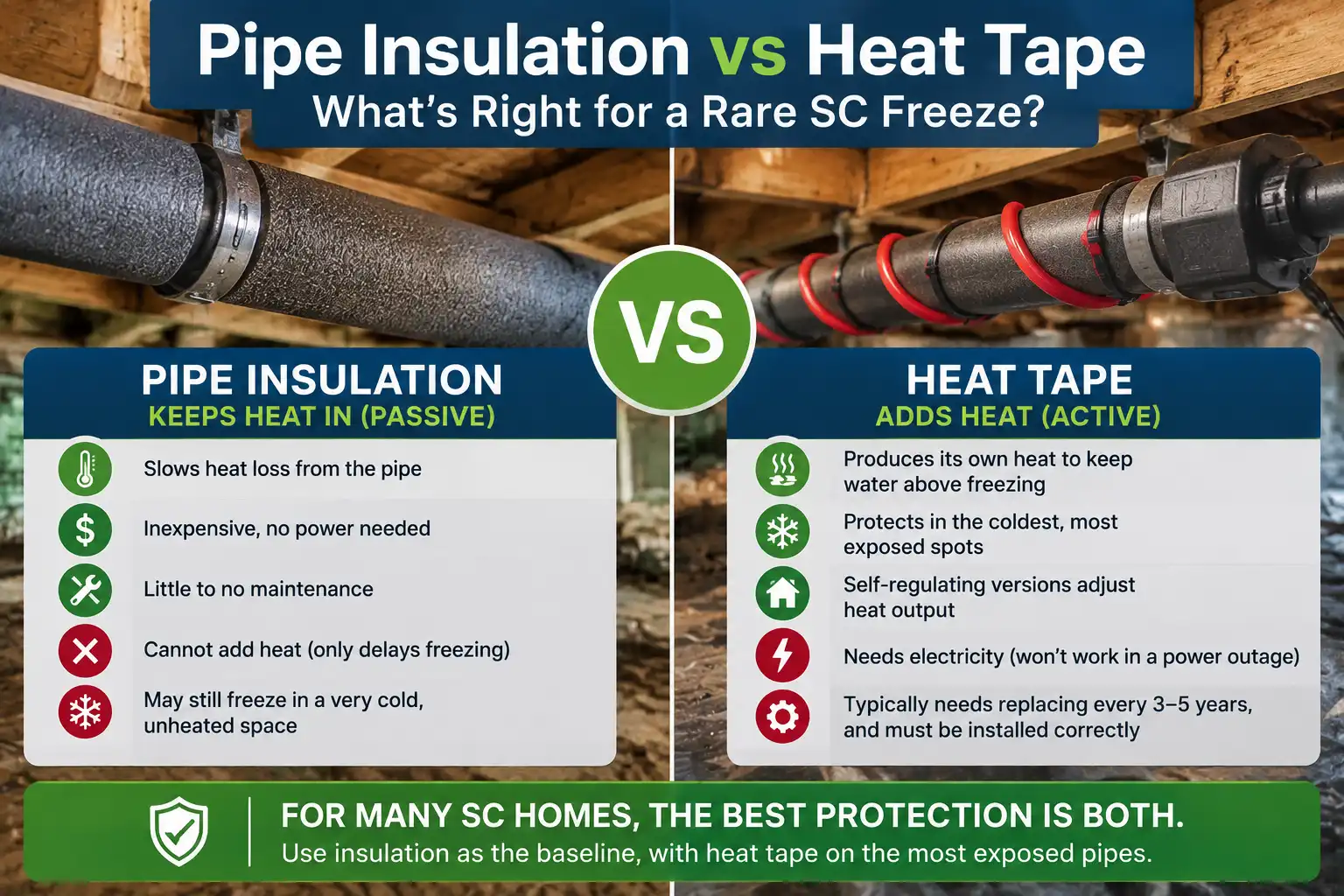
Pipe insulation, usually foam sleeves or fiberglass wrap, does one thing: it slows the loss of heat from the pipe to the cold air around it. It does not create any warmth of its own. As long as the pipe or the space around it has some heat, insulation holds that heat longer and delays freezing. It is cheap, needs no power, and requires no maintenance.
The limit is important. In a genuinely cold, unheated space with no heat source, insulation only slows the freeze, it cannot stop it. Over a short cold snap of a night or two, insulated pipes usually ride it out. Over a long, hard freeze in a fully exposed spot, the pipe can still eventually reach freezing even wrapped, because there is no heat left to retain.
Heat Tape Is Active
Heat tape, also called heat trace or heat cable, is an electric cable that wraps along the pipe and produces its own heat, keeping the water above freezing no matter how cold it gets around it. Because it adds warmth rather than just retaining it, it protects pipes in the coldest, most exposed spots where insulation alone would fail. Self-regulating versions adjust their heat output to the temperature, running only as much as needed.
The tradeoffs: heat tape needs electricity, so it fails in a power outage, exactly when a storm-driven freeze might knock out the grid. It typically needs replacing every three to five years. And it has to be installed correctly, because improperly installed heat tape is a real fire hazard.
The Best Protection Is Often Both
For the most vulnerable pipes, the strongest setup combines the two: heat tape on the pipe to add warmth, with insulation over it to hold that warmth in, so the cable runs less and works more efficiently. But there is a critical safety rule here. Never put foam insulation over heat tape, because if the cable overheats or cracks it can ignite the foam. Use fiberglass or a rubber insulation rated for the purpose instead, and always follow the heat tape manufacturer’s instructions, since some self-regulating cables specify exactly what can go over them.
Which One for a South Carolina Home
Here is where the Lowcountry climate decides it. Our freezes are short and infrequent, a hard night or two a few times a winter rather than weeks of sustained cold. For that pattern, good pipe insulation plus sealing the drafts in the crawl space handles the great majority of homes. You simply do not need the expense and upkeep of heat tape on every pipe when the cold does not last long enough to defeat well-placed insulation.
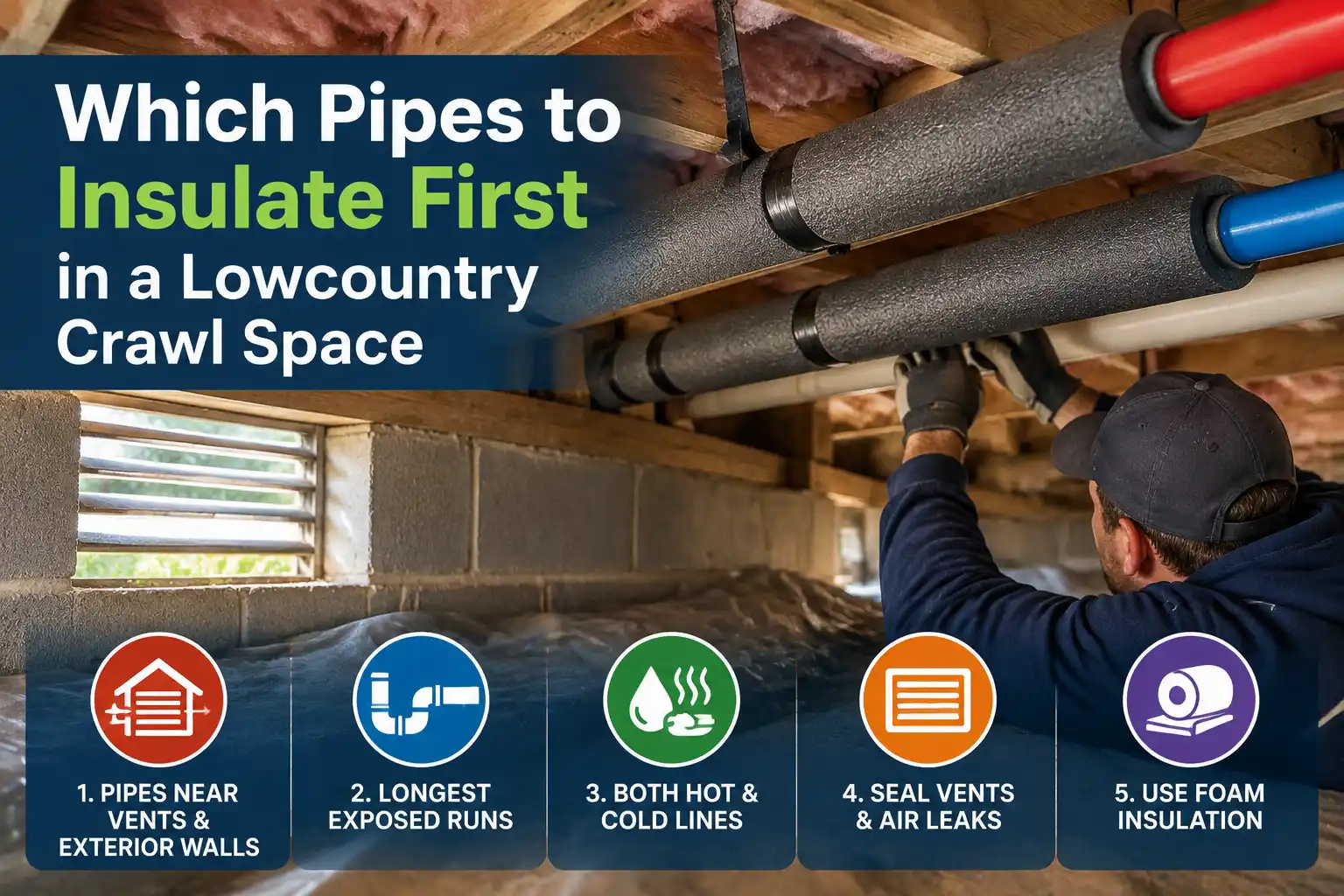
Heat tape earns its place on the specific pipes that stay genuinely exposed to the cold, the run right next to an open crawl-space vent, a line along an uninsulated exterior wall, or a pipe in a spot that has frozen before despite insulation. For those, active heat is worth it. The smart Lowcountry approach is insulation as the baseline for everything, with heat tape reserved for the few problem spots, which is also why knowing which pipes to insulate first matters before you decide where heat tape is even needed.
Get It Set Up Right
Whichever you use, correct installation is what separates protection from a false sense of security, and with heat tape it is also a safety matter. Because our cold snaps are the kind homeowners forget to prepare for, doing this before winter is far cheaper than dealing with a pipe that has already burst in a freeze. Professional pipe insulation service in Goose Creek insulates the baseline runs and installs heat tape safely where it is genuinely needed, and frozen pipe repair is there for the times an unprotected pipe did not make it through the cold.