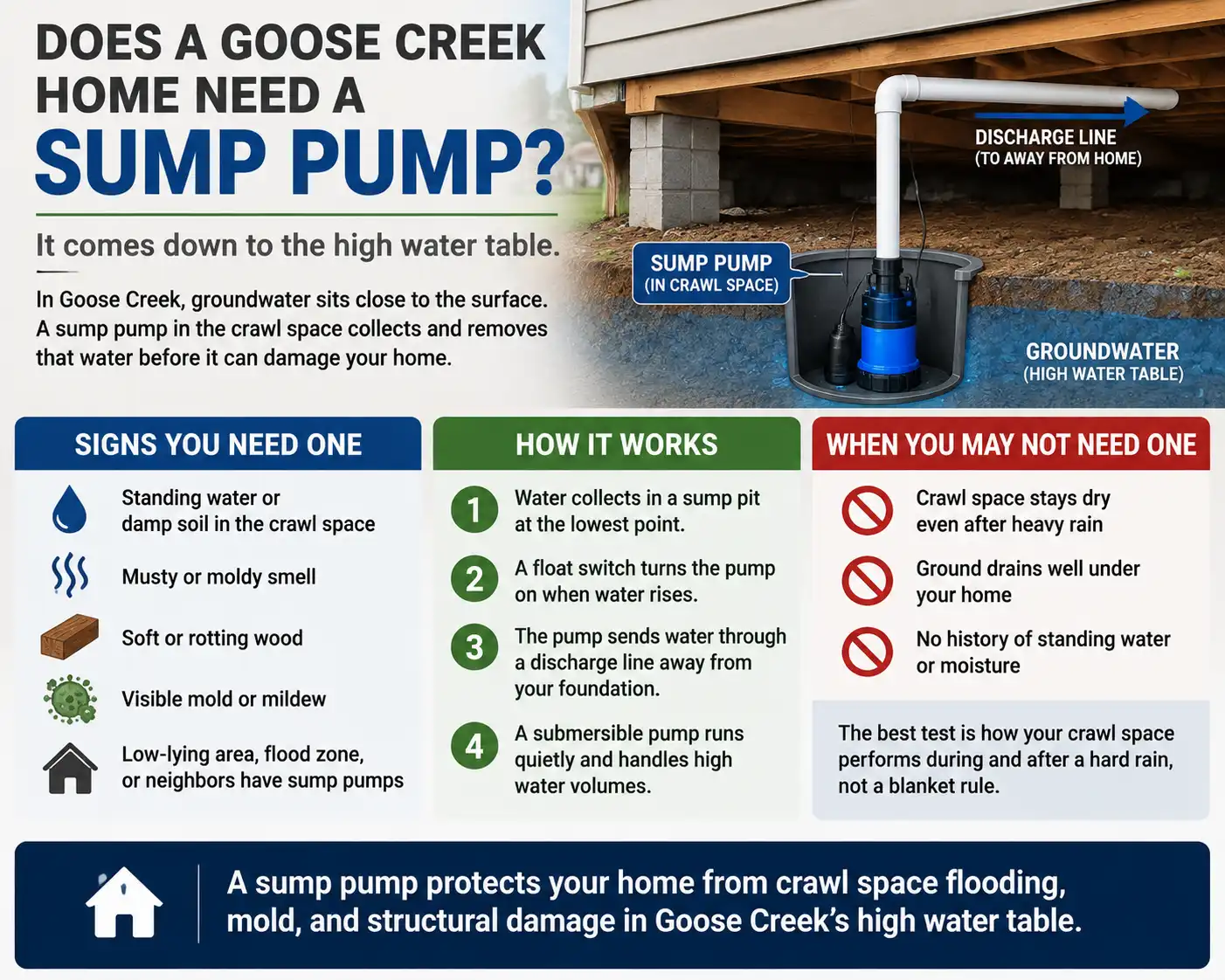
Most advice about sump pumps is written for homes with basements, which is why it does not fit the Lowcountry well. In Goose Creek, the same high water table that makes basements impractical is exactly the reason many homes need a sump pump anyway, just in the crawl space instead. Whether yours needs one comes down to how much groundwater sits under your home, not whether you have a basement to flood.
Why This Area Is Different
A sump pump does not deal with rain running across your yard. It deals with groundwater in the soil pressing up against and under your home. The Lowcountry sits on a naturally high water table, with groundwater often close to the surface, and after heavy rain or a tropical system that water rises fast. Combined with flat terrain that does not drain and stretches of dense soil that holds moisture, that creates standing water and saturated ground under crawl-space homes across Goose Creek and Berkeley County. A sump pump in the crawl space collects that water in a pit and pumps it away before it damages the structure.
Signs Your Home Needs One
A few signs point clearly toward needing a pump. Standing water or persistent damp soil in the crawl space, especially after rain, is the most direct. A musty, moldy smell coming from under the house signals trapped moisture. Wood framing or subfloor that feels soft or shows rot, and visible mold or mildew in the crawl space, both mean water has been sitting. And if your neighbors have sump pumps, your water table is likely the same as theirs. Even without visible flooding, a home in a low-lying area or a FEMA flood zone is a strong candidate for one as a preventive measure.
Left unmanaged, crawl-space moisture does the same damage a wet basement would: it rots framing, feeds mold that affects the air in the house above, and over time can undermine the footings. The connection between standing groundwater and structural harm is the same one behind burst pipes and foundation damage, just slower and quieter.
How a Crawl-Space Sump Pump Works
The setup mirrors a basement system. A pit, called a sump basin, is dug at the lowest point of the crawl space. Water in the soil collects there, and when it rises to a set level, a float switch turns on the pump, which sends the water out through a discharge line away from the foundation. A submersible pump sits down in the pit and runs quietly, which is the common choice for high-water-table homes because it handles volume well.
When You Probably Do Not Need One
Not every home requires a pump. If your crawl space stays consistently dry, the ground under it drains well, and you have never seen standing water or smelled moisture even after a heavy storm, you may not need one. Homes on higher, well-draining ground sometimes stay dry through the wettest months. The honest test is what your crawl space actually does during and after a hard rain, not a blanket rule.
The Best Time to Decide
The worst time to think about a sump pump is during a storm when the crawl space is already flooding. Adding one is far easier as a planned job, and pairing it with crawl-space moisture control and year-round plumbing maintenance keeps the space dry through storm season. Professional sump pump installation in Goose Creek starts by assessing your crawl space and water table, then sizes and places the pump where it will actually protect the home. And if you already have one, knowing whether it runs constantly or fails to keep up tells you if it is doing its job.