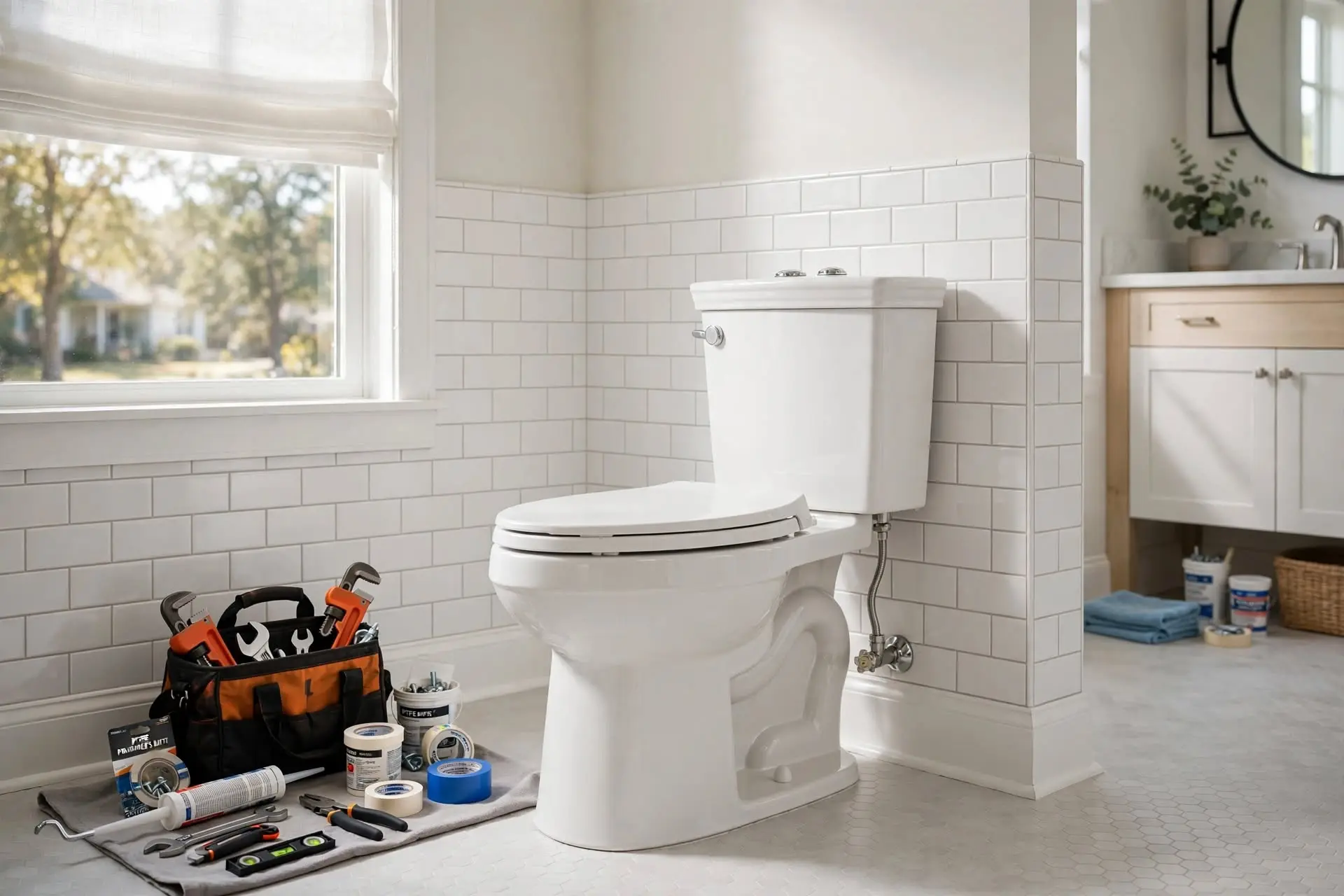
A toilet that no longer clears the bowl in one flush is more than an annoyance. It wastes water on second and third flushes and often points to a fixable problem rather than a worn-out toilet. Most weak flushes come from one of a handful of causes, and working through them in order usually finds the fix without a service call.
Check the Water Level in the Tank
The power of a flush depends on the volume of water that drops from the tank into the bowl. Lift the tank lid and look at the water line. It should sit about an inch below the top of the overflow tube. If it is lower, the tank is not filling enough to produce a strong flush. Adjust the fill valve to raise the water level, either by turning the adjustment screw on top or by repositioning the float. This one change fixes a surprising number of weak flushes.
Clear the Rim Jets
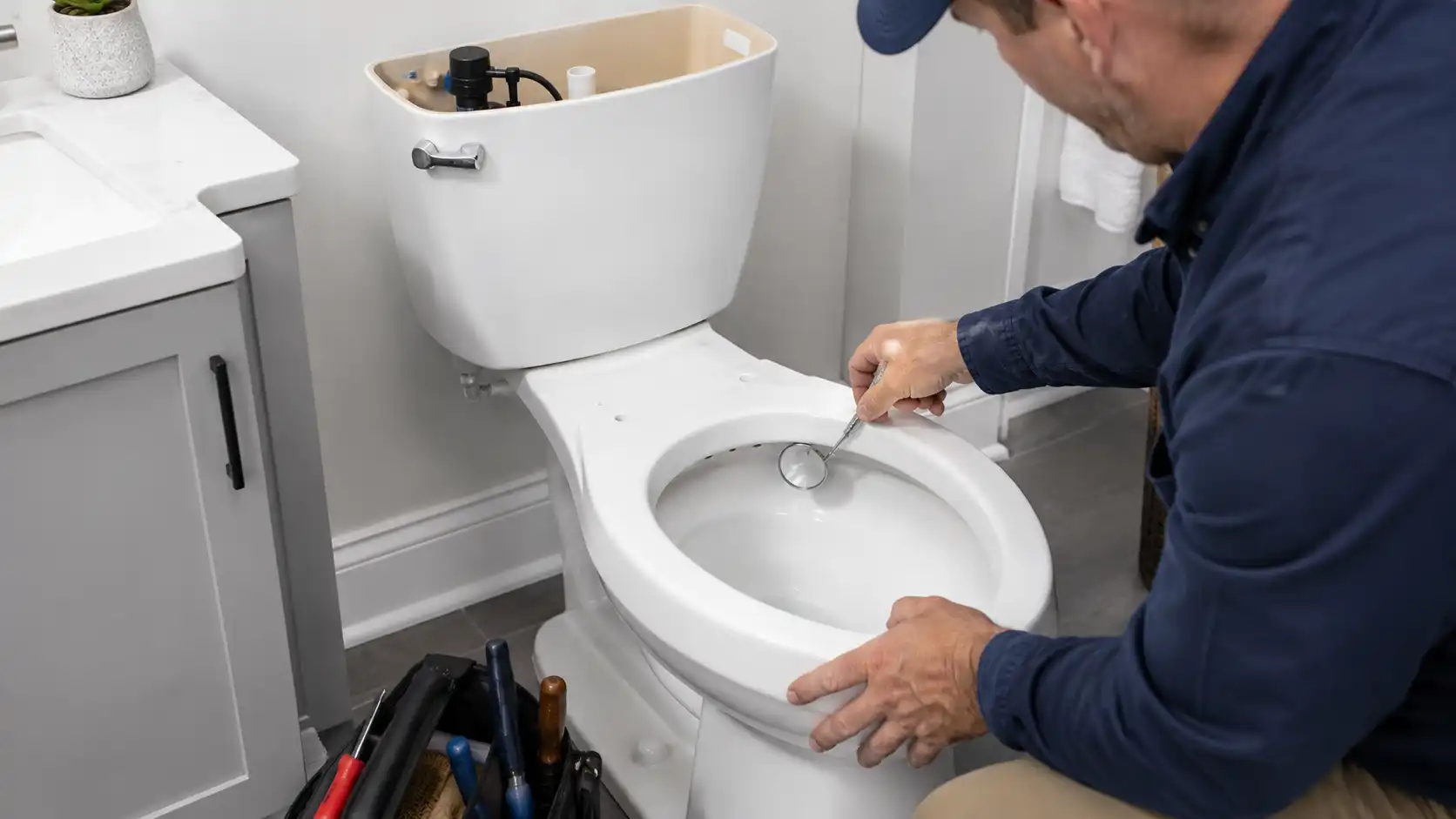
Under the rim of the bowl are small angled holes called rim jets, and a larger hole at the bottom front called the siphon jet. These direct the flushing water into the bowl. Over time, especially with hard water, mineral deposits build up and partially block them, which weakens and unbalances the flush. Look up under the rim with a mirror and flashlight. If you see crusty buildup around the holes, the jets are restricted.
Clearing them takes patience. A piece of stiff wire can open individual jets, and a mineral-dissolving cleaner poured into the overflow tube and left to sit will break down the deposits. In an area with hard water, this buildup returns, which is one more reason signs of hard water are worth paying attention to before they clog every fixture in the house.
Inspect the Flapper
The flapper is the rubber seal at the bottom of the tank that lifts to release water during a flush. If it does not open fully, or closes too early, only part of the tank empties and the flush comes out weak. Watch the flapper during a flush. If it drops back down before the tank has emptied, the chain may be too long, or the flapper itself may be warped and need replacing. Flappers are inexpensive and one of the easier parts to swap.
Rule Out a Partial Clog
A flush that seems weak may actually be a bowl that cannot empty because of a partial clog in the trap or the drain below it. If the water rises higher than normal before draining slowly, the problem is a blockage rather than the flush mechanism. A plunger or a toilet auger clears most of these. If the bubbling or slow drain also affects other fixtures, the clog is deeper in the line, not in the toilet.
Watch for a Running Toilet Too
A weak flush sometimes travels alongside a toilet that runs between flushes, since both trace back to the flapper and fill valve. If yours keeps cycling on its own, the wasted water adds up fast, and knowing what a constantly running toilet is costing you is worth reading while you have the tank open.
When to Call a Plumber
If the water level is correct, the jets are clear, the flapper is good, and the bowl still will not clear in one flush, the issue may be a cracked internal trap or a design flaw in an older low-quality toilet, and replacement is often the better value. A plumber can also confirm whether a venting or drain-line issue is dragging down the flush. Professional toilet repair service in Goose Creek sorts out whether the fix is a part, a cleaning, or a new fixture. And if you also notice water pooling around the base, that is a separate problem to address before it damages the floor.