You flush the toilet, walk away, and a few minutes later you can still hear water trickling into the bowl. Or maybe you cannot hear it anymore because the sound finally stopped, but the tank took way longer than it should have to refill. Most people ignore it. It seems like a minor annoyance, the kind of thing you will deal with eventually when you get around to it. The problem is that a running toilet is one of the most expensive leaks in the average home, and the bill adds up fast.
A toilet that runs constantly can waste anywhere from 200 to 6,000 gallons of water per day depending on how bad the leak is. That is not a typo. Six thousand gallons in a single day from one toilet that sounds fine most of the time. Even a slow, barely noticeable leak puts hundreds of dollars onto your water bill every year. And the silence you hear after the sound stops is not the toilet fixing itself. It is water quietly slipping past a worn out flapper into the bowl and straight down the drain.
What Is Actually Happening Inside the Tank
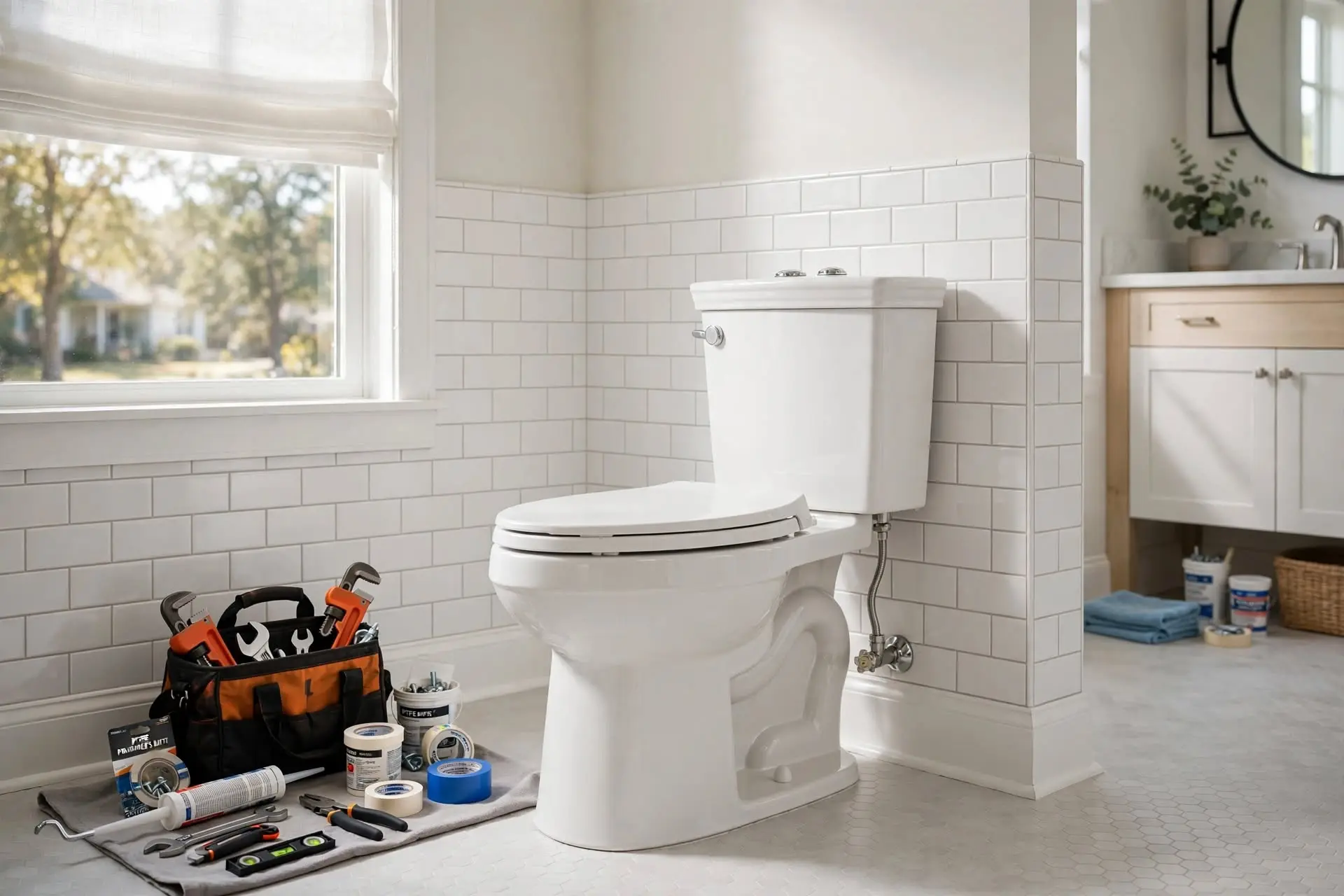
The guts of a toilet tank are simpler than most people think. You have a flapper at the bottom that seals the tank, a fill valve that refills the tank after a flush, a float that tells the fill valve when to shut off, and an overflow tube in the middle. When any one of those parts stops doing its job, the toilet starts running.
The flapper is the most common culprit. It is a rubber seal, and rubber degrades over time. After a few years of sitting in chlorinated water, the flapper gets stiff, warped, or coated in mineral buildup, and it stops forming a tight seal. Water keeps leaking from the tank into the bowl, which drops the water level, which triggers the fill valve to turn on. That cycle repeats all day and all night.
The Silent Leak That Costs the Most
Here is the part that catches most homeowners off guard. A toilet can leak silently for weeks or months without anyone in the house noticing. The flapper does not have to be completely broken. It just has to be sealing imperfectly. A thin film of mineral deposit around the edge is enough to let a steady trickle of water slip through.
You can test for this in about 30 seconds. Drop a few drops of food coloring into the tank. Do not flush. Wait about 15 minutes, then look at the bowl. If you see color in the bowl water, the flapper is leaking. That slow silent leak is what a lot of homeowners are paying for every month without realizing it. Water utilities across the Tri-County area charge by the gallon, and a leaky toilet can easily add 30 to 80 dollars a month to your bill.
Fill Valve Problems
If the flapper checks out fine but the toilet still runs, the fill valve is usually the next suspect. The fill valve is the tall vertical piece on the left side of the tank. It controls when the tank refills and when it shuts off. When the float attached to it cannot rise high enough, or when the valve itself gets worn, water keeps trickling in through the overflow tube. You will actually see water running down into the tube if this is happening.
Fill valves wear out on roughly the same timeline as flappers, so if one is failing, the other is probably not far behind. A toilet repair service will usually replace both at the same time because it makes no sense to swap out one part and leave the other old piece in place to fail a few months later.
Chain, Float, & Handle Issues
Sometimes the problem is not a worn part but a misadjusted one. The chain that connects the handle to the flapper can get tangled or set at the wrong length, which keeps the flapper from seating properly after a flush. The float can be set too high, causing water to constantly spill into the overflow tube. The handle itself can stick, holding the flapper open.
These are small adjustments, but they have the same expensive effect as a broken part. Checking them takes a few minutes and requires no tools. Lift the tank lid, flush the toilet, and watch what happens. If anything looks stuck, tangled, or out of place, that is probably your answer.
What the Running Is Actually Costing
Run the numbers on a toilet that leaks even slightly. At 200 gallons a day of wasted water, you are talking about 6,000 gallons a month. In most South Carolina water districts, that adds somewhere between 25 and 50 dollars to the monthly bill depending on your tier. Over a year, that one running toilet has cost you 300 to 600 dollars in water you never used. And that is the low end estimate. A flapper that fails completely can waste ten times that much.
The parts to fix it usually run 15 to 40 dollars. A professional toilet repair service call costs way less than what one year of leaking water adds to your bills. The math is not close.
Stop Ignoring It
The running toilet is not going to fix itself, and the silence after the running stops is not good news. It usually means the leak got slow enough to hide but did not actually go away. Do the food coloring test this week. Pull the tank lid off and look at the flapper. If anything looks worn, swollen, or crusted with mineral buildup, that part is costing you money every single day it stays in there.