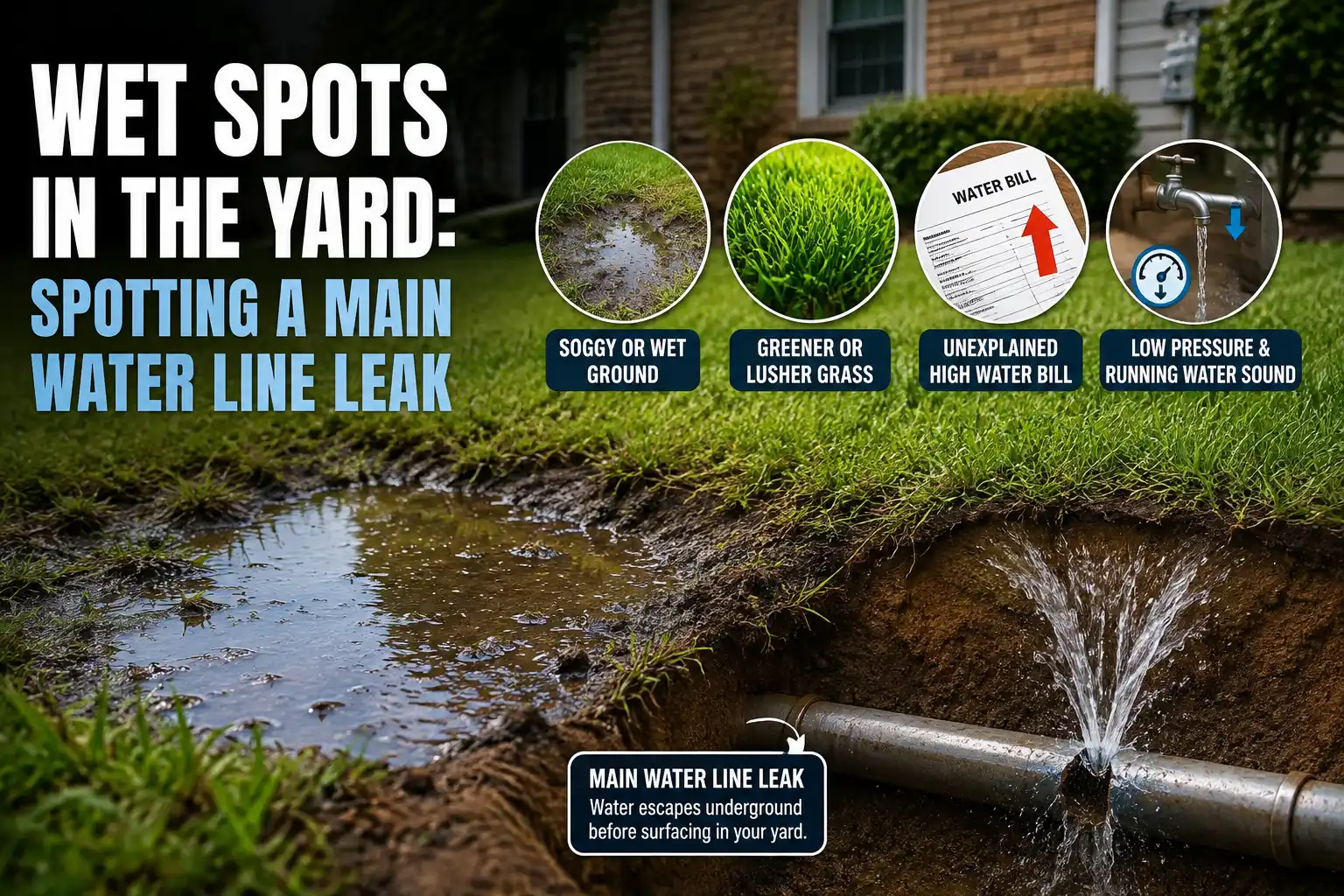
A soggy patch in the yard that will not dry out, even when it has not rained, is one of the clearest signs of a leak in the main water line buried under your property. That line carries every gallon your home uses from the meter to the house, and when it springs a leak underground, the water works its way up through the soil and shows on the surface. Catching it early keeps a manageable repair from becoming a flooded yard and a soaring water bill.
The Signs to Watch For
A main line leak announces itself in several ways, and often more than one at once.
Wet or Soggy Ground With No Rain
The most telling sign is standing water, mud, or spongy soil that appears in dry weather, especially along the straight path the water line takes from the street to the house. If one area stays saturated while the rest of the yard is dry, water is escaping underground beneath it.
A Patch of Grass That Is Greener or Faster-Growing
A leaking line acts like underground irrigation. One section of lawn that is noticeably greener, lusher, or growing faster than the surrounding grass is being fed by the escaping water. It looks like a healthy patch, but it is a warning sign.
A Water Bill That Climbed for No Reason
If your usage habits have not changed but your bill jumped, water is escaping somewhere before it reaches your fixtures. An underground leak can waste thousands of gallons quietly, and the bill is often the first thing homeowners notice. Comparing month to month catches it early, and the connection to water being wasted around the home is direct.
Low Pressure and the Sound of Running Water
When water leaks out before reaching the house, less arrives at your fixtures, so pressure drops across the whole home. If the low pressure is genuinely house-wide rather than at one fixture, the supply line is a suspect, and it is a different diagnosis from low pressure at a single fixture. You may also hear a faint hiss or running-water sound near where the line enters the house when everything is shut off.
Confirm It With the Meter
A simple test points to an underground leak. Turn off every water-using fixture and appliance in the house, then watch the water meter. If it keeps moving with everything off, water is escaping somewhere in the system, and combined with a wet yard, that points to the buried service line.
The Leak Is Not Always Where the Water Surfaces
An important detail: the wet spot is not necessarily directly over the break. As water escapes, it travels through the soil before rising, so it can surface several feet from the actual leak. This is exactly why digging on your own is a mistake. You can excavate the wrong spot entirely. Professional electronic leak detection pinpoints the real location before any digging, so the repair is targeted.
Yard Leak or Something Else
Wet ground can have other causes worth ruling out. Water surfacing inside the home rather than the yard, with a warm spot on the floor, points to a slab leak instead, which is why the signs of a slab leak are a separate check. And soggy ground over the sewer line’s path, with odor, points to a sewer issue rather than the supply line. Where the water shows and whether it smells help separate the three.
Do Not Wait on It
A main line leak only grows, wasting water and undermining the soil and anything near it. If you can, knowing where your main water shutoff valve is lets you stop the flow in an emergency. Professional water line repair in Goose Creek locates the leak precisely and repairs or replaces the failed section, before a soggy patch turns into a washed-out yard and a bill to match.