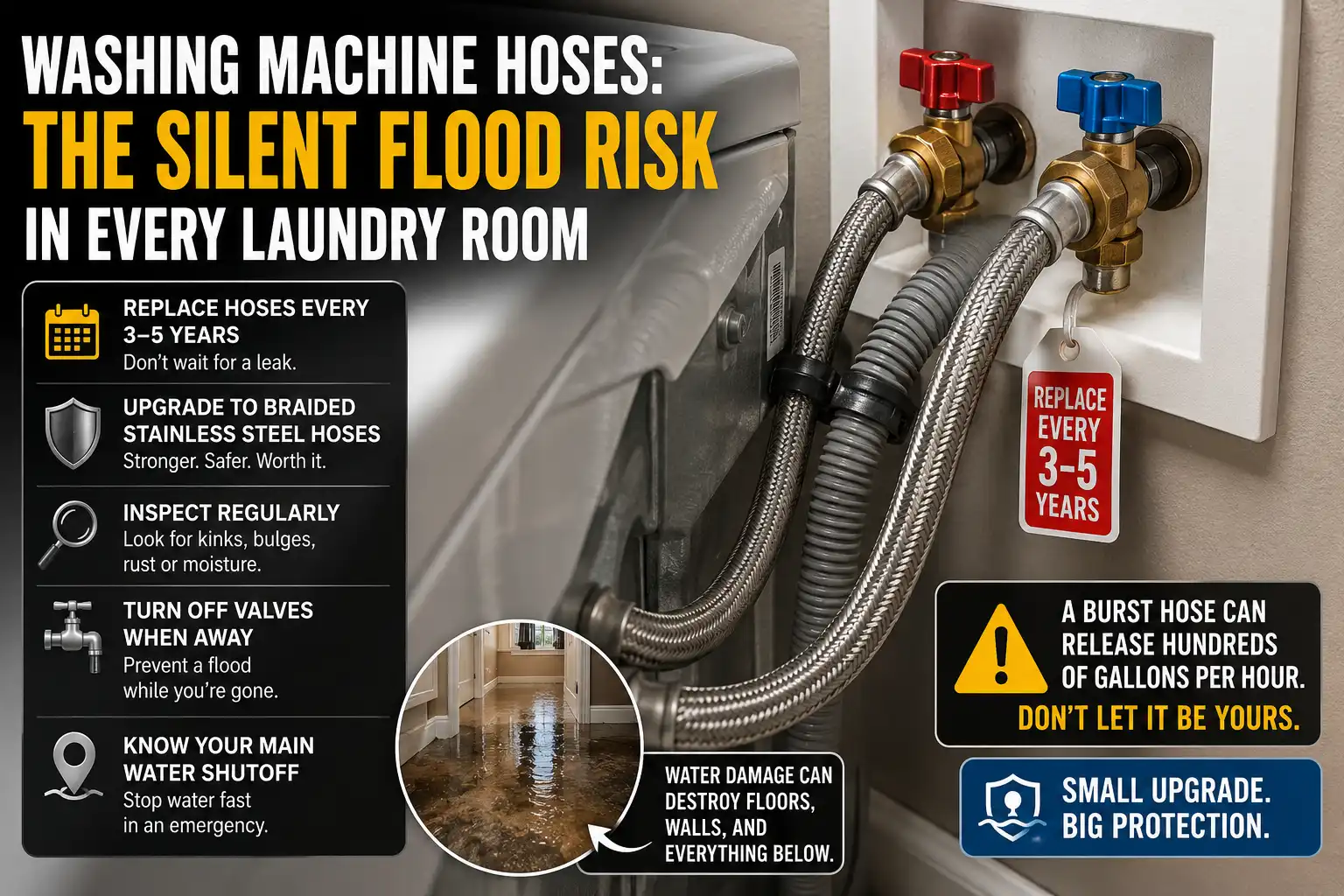
The hoses behind your washing machine are one of the most common causes of home flooding, and almost no one thinks about them. They sit coiled and out of sight, under constant water pressure whether the machine is running or not, quietly aging until one day a rubber hose splits and sends hundreds of gallons an hour across your floor. Insurance data backs this up: supply hoses account for more than half of all washing machine water damage claims, and the average failed hose is under ten years old. Here is why they fail and how to make sure yours never does.
Why the Hoses Are Under Constant Threat
Unlike a faucet you turn off, washing machine supply hoses stay pressurized the entire time the shut-off valves are open, which for most homes is always. That constant pressure, combined with the pressure spike each time the machine’s valve snaps shut at the end of a fill, slowly fatigues the hose. Standard rubber hoses lose flexibility, crack, blister, and bubble with age until the wall gives way. Because they are hidden behind the machine, the deterioration goes unnoticed until it fails.
When a hose lets go, there is nothing to stop the water. It runs unchecked for as long as it takes someone to notice and shut the valve, which if it happens overnight or while you are out can mean hours of water pouring into the laundry room, through the floor, and into the rooms and ceilings below. A hose that fails on a second-floor laundry is especially destructive.
How Often to Replace Them
Manufacturers and plumbers agree: replace washing machine hoses every three to five years, even if they look fine. Failure rates climb sharply after five years, and most failures happen before the ten-year mark. Waiting for a hose to look bad is a mistake, because the deterioration happens inside the hose where you cannot see it. Mark the replacement date on a calendar or tie it to another regular task so it actually gets done.
Upgrade to Braided Stainless Steel
If your machine still has the black rubber hoses it came with, the single best upgrade is a switch to braided stainless steel hoses. The steel braid gives the hose several times the burst strength of plain rubber, and it resists the cracking and blistering that kills rubber. They cost only a little more, run about the price of a couple of coffees, and dramatically cut the odds of a failure. For even more protection, auto-shutoff hoses include a valve that senses a sudden rush of water and cuts it off automatically.
Simple Habits That Prevent a Flood
A few habits go a long way. Inspect the hoses every few months for kinks, bulges, rust at the fittings, or moisture, and replace any hose showing wear immediately. Leave about four inches of space between the machine and the wall so the hoses are not crimped against it. And consider turning off the supply valves when you will be away for an extended period, so a failure while you are gone cannot flood the house. A single-lever shut-off valve makes that easy to do routinely.
It also helps to know where your main water shutoff valve is, so that if a hose does burst you can stop the water fast rather than scrambling. A burst supply line is one of the fastest ways to cause the kind of foundation and structural water damage that costs far more than the appliance itself.
When to Bring in a Plumber
Replacing hoses is a quick job, but it involves moving the machine, draining the lines, and sealing the connections so the new hoses do not leak or work loose. If the shut-off valves behind the machine are old, stiff, or themselves leaking, or you want auto-shutoff hoses and a water hammer arrestor installed to tame the pressure spikes, a plumber handles it properly. Professional washing machine hookup service in Goose Creek installs braided hoses, checks the valves, and makes sure the connection is solid, turning the most common flood risk in the house into a non-issue.