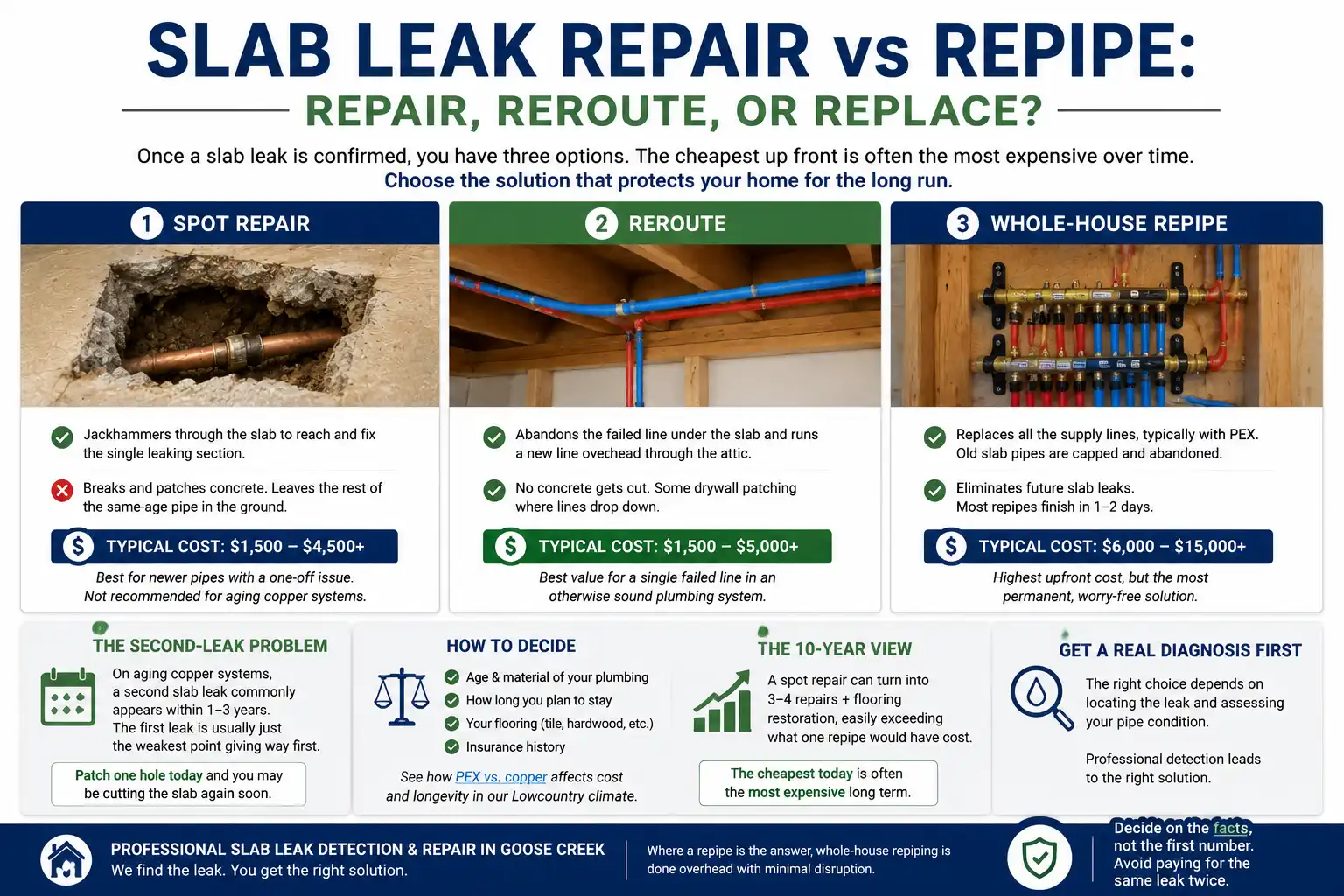
Once a slab leak is confirmed, you face a decision that costs more than the leak itself: fix the one spot, reroute the failed line, or repipe the whole house. The cheapest option up front is often the most expensive over ten years, and the right answer depends less on your budget today than on the age and material of your pipes. Here is how to choose based on facts rather than the lowest number.
The Three Options
Spot Repair
A spot repair jackhammers through the slab to reach and fix the single leaking section. It sounds cheap because it targets one spot, but breaking and patching concrete and refinishing the floor above eats up much of the savings. More importantly, it fixes one hole while leaving the rest of the same-age pipe in the ground. On a corroded copper system, that is like patching one worn tire and driving off on three more just as worn.
Reroute
A reroute abandons the failed line under the slab and runs a new line overhead through the attic and down the walls to the fixtures it served. No concrete gets cut. The tradeoff is drywall patching where the new line drops down and some attic work. For a single failed line in an otherwise sound system, this is usually the best value in this market.
Whole-House Repipe
A repipe replaces all the supply lines, typically with modern PEX, leaving the old slab pipes capped and abandoned. It costs the most up front but eliminates the possibility of future slab leaks entirely, since no active water lines remain under the foundation. Most repipes finish in one to two days. The pros and cons of a whole-home repipe come down to paying once versus paying repeatedly.
The Second-Leak Problem
Here is the fact that decides most of these cases. On an aging copper system, a second slab leak commonly appears within one to three years of the first, because the entire system corroded at the same rate and the first failure is simply the weakest point giving way first. Spending on a spot repair for a 40-year-old copper system usually means paying to cut the slab again before long. This is why plumbers rarely recommend a spot repair unless the pipe is genuinely new and the leak came from a one-off defect or a nail strike.
How to Decide
A few factors point clearly one way or the other. The age and material of your plumbing matter most, since newer PEX suits a reroute while older copper favors a repipe. How long you plan to stay counts, because a repipe pays off over years of ownership. Your flooring matters, as expensive tile or hardwood over the slab makes cutting concrete the worst option. And your insurance history is a real factor, since some carriers raise premiums or drop coverage after multiple slab leak claims, which tips the math toward a permanent fix.
The pipe material question is worth its own look, because the choice between PEX and copper for a Lowcountry repipe affects both cost and longevity in this climate.
The Ten-Year View
The honest comparison is not the price today but the total cost over ten years. A spot repair on old copper can turn into three or four repairs plus flooring restoration each time, easily exceeding what one repipe would have cost. A reroute buys years on a single line but leaves the rest of the aged system in place. A repipe ends the cycle. Framed that way, the cheapest option in the moment is often the most expensive in the long run.
Get a Real Diagnosis First
The right choice depends on knowing whether your system is failing in one spot or deteriorating overall, and that requires locating the leak and assessing the pipe condition. Professional slab leak detection and repair in Goose Creek starts there, and where a repipe is the answer, whole-house repiping is done overhead with minimal disruption. Decide on the facts, not the first number, and you avoid paying for the same leak twice.