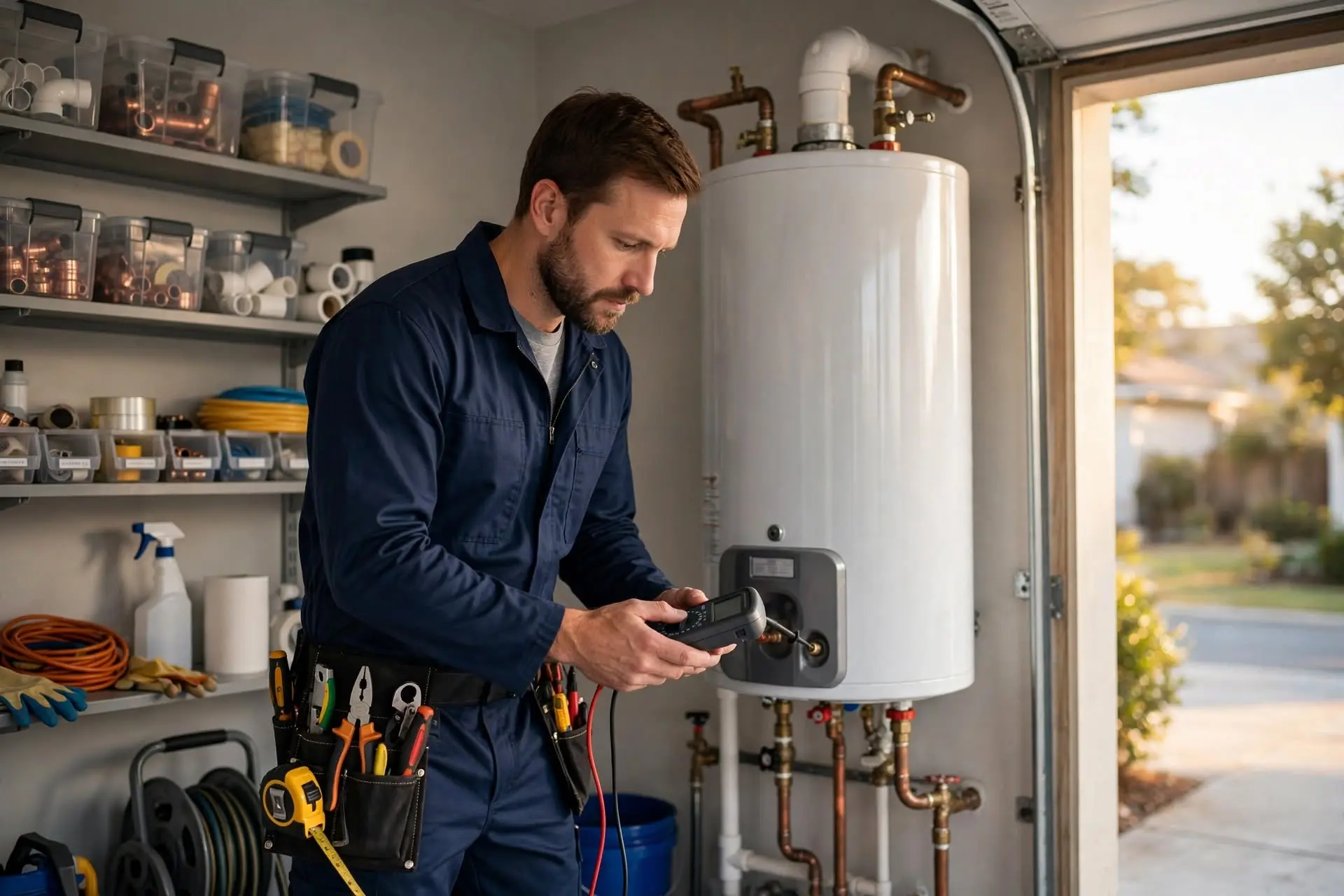
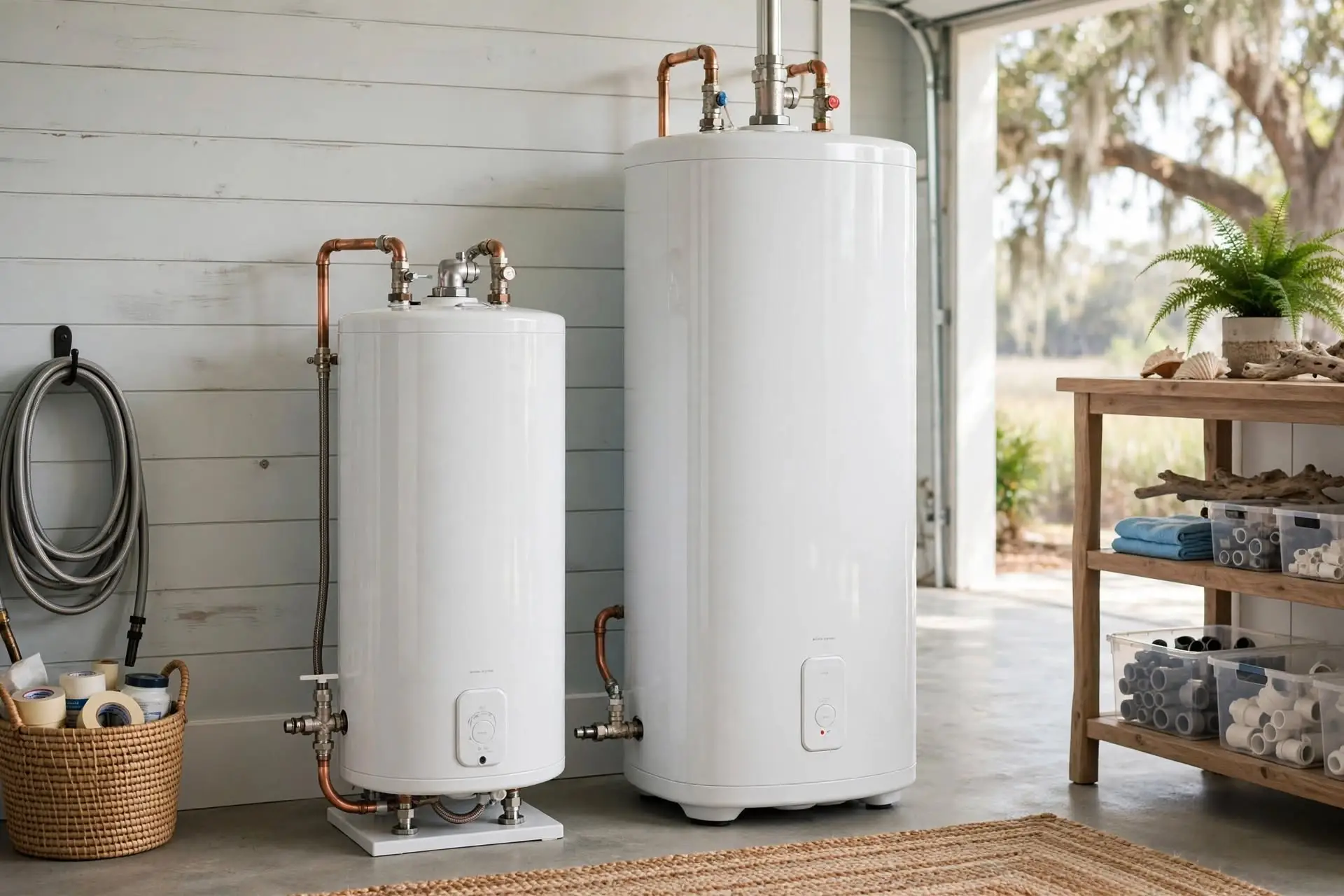
Tankless water heaters are sold with an appealing promise: endless hot water, energy savings, longer lifespan, and freed-up space. For some Goose Creek homeowners, all of that is true. For others, tankless is a frustrating downgrade that cost $2,000 more than a traditional tank would have. The difference between loving tankless and regretting it comes down to matching the technology to your actual household and understanding the tradeoffs nobody mentions at the showroom.
This article is the honest lifestyle assessment. You will see what tankless actually delivers in real use, the experience issues that rarely appear in marketing materials, which Goose Creek households genuinely benefit, and which are better served by a traditional tank. No hype, just practical reality.
The Real Pros of Tankless in Daily Use
Pro 1: Endless Hot Water (With Caveats)
Within the unit’s flow rate capacity, tankless does genuinely provide continuous hot water. You can take a 45-minute shower and the water stays hot. For families where back-to-back showers on school mornings mean the last person always gets lukewarm, this is transformational. The caveat (covered in the Cons section) is that simultaneous demand can exceed the flow rate, which changes the “endless” experience.
Pro 2: Space Savings
Tankless units are wall-mounted and roughly the size of a large briefcase. A 50-gallon tank water heater takes up a 2×2 foot floor space and 5 feet of height. In Goose Creek homes with small utility closets or converted garage spaces, reclaiming this floor space is meaningful. The space can be used for storage, a laundry machine upgrade, or just not feeling cramped in a utility area.
Pro 3: Longer Lifespan
Properly maintained tankless units typically last 20+ years versus 10 to 15 years for tank water heaters. In Goose Creek specifically, this longevity advantage depends heavily on descaling maintenance because our hard water scales tankless heat exchangers 2 to 3 times faster than the national average. Owners who skip annual descaling see lifespans drop below traditional tanks.
Pro 4: No Standby Heat Loss
Tank water heaters continuously reheat water to maintain tank temperature, which wastes energy during hours when hot water is not being used. Tankless heaters only fire when you turn on a hot water tap, eliminating this standby loss. For families with irregular hot water use patterns (vacation homes, work-travel households), this energy savings is substantial.
Pro 5: Outage Resilience for Gas Tankless
Gas tankless units often have battery backup systems that let them function during short power outages. This combined with gas fuel source means Goose Creek homeowners with gas tankless can have hot water during hurricane-related power loss, which is genuinely valuable for storm-prone SC.
The Cons Nobody Mentions (The Honest Ones)
Con 1: Flow Rate Limits Are Real
The “endless hot water” marketing obscures that tankless units have strict flow rate limits measured in gallons per minute. A typical residential tankless unit outputs 4 to 9 GPM. A single standard shower uses 1.5 to 2.5 GPM. Two showers plus a dishwasher can easily exceed a 5 GPM unit’s capacity. When demand exceeds capacity, the unit either reduces flow rate (weaker water pressure at fixtures) or reduces output temperature (lukewarm water). Neither experience matches the “endless” promise.
Con 2: The Cold Water Sandwich Effect
This is the tankless issue most showrooms never mention. When you turn off hot water briefly then turn it back on, there is typically a 2 to 15 second burst of cold water between two bursts of hot water. This happens because the unit has to restart the heating cycle. If you are washing dishes and pause to grab something, you get a cold splash when you resume. If you are showering and turn the water off briefly, the restart gives you a cold shock.
Some higher-end tankless units minimize this effect with recirculation systems or buffer tanks, but they cost significantly more. Budget tankless installations (the ones most homeowners buy to save money) have the cold sandwich issue as a daily reality.
Con 3: Goose Creek Hard Water Reality
Our hard water is particularly tough on tankless heat exchangers. Scale buildup on the exchanger reduces efficiency, restricts flow, and eventually damages the unit beyond repair. Annual descaling is not optional in Goose Creek, it is essential. Units that are not descaled regularly fail within 5 to 7 years, and heat exchanger replacement typically costs more than buying a new unit.
Tankless descaling is a genuinely more involved maintenance task than anything a traditional tank requires. Our detailed guide on water heater maintenance for long-term performance covers the tankless descaling procedure and frequency specific to Goose Creek hard water.
Con 4: Higher Upfront Cost
Tankless units cost $1,500 to $4,500 installed versus $1,100 to $2,200 for traditional tanks. For electric tankless specifically, the upfront cost jumps because most homes require electrical panel upgrades to handle the 200A+ demand. Breaking even on the upfront cost difference takes 6 to 10 years of operation, and homeowners who move before that point lose money on the tankless investment.
Con 5: Venting Requirements
The space savings advantage gets partially offset by venting requirements. Gas tankless units need specific venting (often dedicated PVC routes to exterior walls) that can complicate installation. Older Goose Creek homes without existing gas water heater venting face significant re-routing costs, sometimes $500 to $1,500 beyond the unit installation. The space you save indoors is partially consumed by exterior venting runs.
Con 6: Complexity When Things Go Wrong
Tankless units have more electronic components than tank water heaters. When something fails, diagnosis and repair is more complex, takes longer, and often costs more. Tank water heater repairs are typically understood by any plumber. Tankless repairs require specialist knowledge, and finding someone who works on tankless quickly during an emergency can be harder than getting a tank unit fixed.
Which Goose Creek Households Actually Benefit From Tankless
The honest truth is that tankless makes sense for specific household profiles and is a poor choice for others. Here is the real-world fit analysis.
| Household Profile | Tankless Experience | Tank Experience |
| Single person / couple | Excellent fit – low demand matches tankless strengths | Oversized for daily needs |
| Small family (3 people) | Good fit – manageable simultaneous demand | Fine but wastes standby heat |
| Large family (4-5 people) | Requires 9+ GPM unit or multi-unit setup | 50-80 gal tank handles well |
| Multi-gen / 6+ people | Often needs 2 tankless units in parallel | 75+ gal tank or premium unit needed |
| Vacation home / rental | Ideal – no standby loss when empty | Wastes energy constantly |
| High-volume users (long baths) | Flow limits may frustrate | Tank drain then reheat cycle |
| Morning-rush families (school) | Flow rate can limit simultaneous showers | Runs out if undersized |
The pattern is clear. Tankless works best for small households with low-to-moderate hot water demand, vacation/rental properties where standby loss matters most, and homes where space savings is genuinely valuable. It works poorly for large families with simultaneous high-demand peaks where the flow rate limits become a daily frustration.
The Multi-Unit Solution for Large Homes
For Goose Creek homes with 5+ residents or multiple bathrooms in simultaneous heavy use, a single tankless unit often cannot provide the peak flow rate needed. The solution is two or more tankless units installed in parallel, which multiplies flow capacity. A two-unit setup can deliver 14 to 18 GPM combined, enough for 3 or 4 showers plus appliances running at once.
The tradeoff is cost. Two tankless units plus the more complex installation can run $4,500 to $8,000 total. At that price point, a premium 75 or 80 gallon tank water heater ($2,500 to $3,500 installed) handles the same peak demand for much less upfront cost. The multi-unit tankless approach makes sense only when you strongly value the lifespan and standby-loss advantages of tankless AND have the budget to pay for them.
The Hybrid Option Most Homeowners Never Hear About
A hidden third option for larger Goose Creek homes is the hybrid tank-plus-tankless configuration. A standard tank water heater handles baseline demand, while a smaller tankless unit kicks in as a booster during peak demand. This combination eliminates the cold water sandwich effect, handles high peak flows without multiple tankless units, and provides hot water during brief outages.
The hybrid approach costs more than either pure option ($3,500 to $5,500 installed) but delivers better real-world performance than either approach alone. It is genuinely worth considering for homes with irregular but occasionally high demand patterns.
How to Make the Final Decision
The tankless-vs-tank decision comes down to honestly assessing your own household, not being persuaded by marketing. Ask yourself these questions.
- How many people shower within the same 30-minute window on busy mornings?
- Do you run hot water simultaneously across multiple fixtures regularly?
- Are you committed to annual descaling to handle Goose Creek hard water?
- Will you be in this home for at least 8-10 years to recoup upfront cost?
- Does space savings matter for your specific utility area setup?
- Can your budget absorb the higher upfront cost comfortably?
The decision also connects to sizing and fuel type choices. Our size guide for Goose Creek water heaters helps determine GPM needs, and our gas vs electric water heater comparison for SC addresses the fuel choice that particularly matters for tankless installations.
Get Tankless-Specific Recommendations for Your Home
Whether tankless makes sense for your Goose Creek home depends on specific factors: your household size and demand pattern, gas availability, space constraints, budget, and willingness to handle descaling maintenance. Mueller’s Plumbing Service provides honest tankless consultations that include assessing your actual demand, explaining the real tradeoffs for your specific situation, and pricing both tankless and tank options so you can compare fairly.
Call us at (843) 572-8522, or visit our water heater installation service page to schedule a consultation. After 30 years of water heater installations in the Tri-County area, we tell homeowners honestly when tankless is the right move and when a quality tank water heater will serve them better for less money.