The water line feeding your refrigerator’s ice maker is thin, easy to forget, and hidden behind an appliance that never moves. That combination makes it one of the sneakiest sources of water damage in a home. A slow leak from that little line can run for weeks or months behind the fridge, soaking the floor, the wall, and the cabinets before anyone notices. Here is how to spot the warning signs and stop the damage early.
Why This Small Line Is a Big Problem
The ice maker line is a small-diameter plastic or copper tube that runs from a water connection, usually under the sink or in the wall, to the back of the refrigerator. Because the fridge is rarely pulled out, a leak at a cracked section or a loose fitting stays out of sight. Plastic lines grow brittle and crack with age and temperature swings, copper lines kink or corrode, and connections loosen, especially if the fridge has been pushed back tightly against the wall. Any of these lets water escape where no one is looking.
Unlike a burst hose that floods fast, an ice maker line usually leaks slowly, and that is what makes it dangerous. Slow moisture behind the fridge feeds mold, which can start within a day or two, and quietly rots the flooring and swells the baseboards and wall before you see standing water.
The Warning Signs
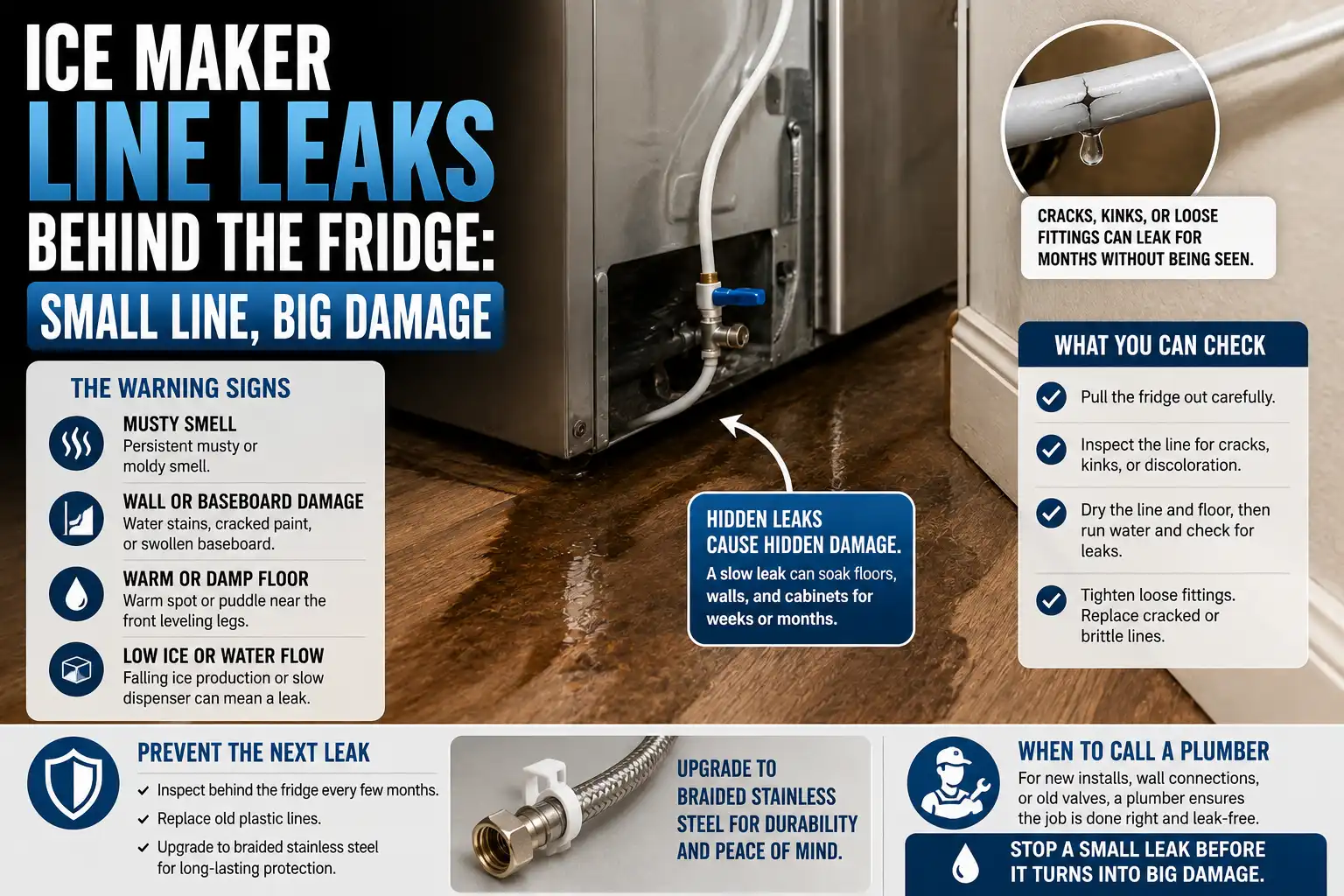
Because you cannot see the line, you have to read the secondary clues. A persistent musty or moldy smell near the refrigerator, even when the kitchen is clean, often signals hidden moisture. Water stains, cracked paint, or a swollen baseboard on the wall behind or beside the fridge point to a leak that has been running a while. A warm or damp spot on the floor in front of the fridge, or a small puddle near the front leveling legs, means water is traveling under the appliance from the back. And falling ice production or a water dispenser that has slowed down can mean the line is cracked or kinked and losing pressure.
What You Can Check
If you suspect a leak, carefully pull the refrigerator out from the wall, going slowly and with help. Clear the dust and inspect the entire line from the wall or under-sink connection all the way to the fridge, looking for cracks, pinholes, sharp kinks, crushed sections, or discoloration. Dry the line and the floor completely, then run the dispenser or watch the line fill while shining a flashlight along it to spot where water beads up. Check that both ends, at the shut-off and at the fridge, are snug.
If the leak is at a loose fitting, tightening it may solve it. If the line itself is cracked or brittle, it needs replacing rather than patching, since a repaired crack in a brittle line will just fail again nearby.
Preventing the Next Leak
The best prevention is inspection and replacement on a schedule. Look behind the fridge every few months for moisture or stains, and replace the line if it is old plastic or has leaked before. Upgrading a brittle plastic line to braided stainless steel gives you a far more durable connection. Because this is one of the places pipes and connections most commonly leak in local homes, catching it early is what keeps a small line from causing big damage.
When to Call a Plumber
If the leak is at the wall connection, the shut-off valve is old or seized, or you are installing a line to a new refrigerator, a plumber makes the connection correctly and to code so it does not leak. The same care applies when a fridge with a water and ice feature is added to a kitchen that never had one. Professional ice maker line installation in Goose Creek runs and connects the line with durable materials and a proper shut-off, so the convenience of built-in ice does not come with a hidden flood risk.