A water heater is one of the most overlooked appliances in any home until it stops working efficiently. If you’ve ever noticed slow heating, strange noises, or rising energy bills, the issue might be simple: lack of maintenance.
So, how often should you drain your water heater? The answer can directly impact your system’s lifespan, efficiency, and performance. This complete guide backed by expert insights from Residential Plumbing Goose Creek gives you clear schedules, real-world guidance, and actionable steps to keep your water heater running like new.
Quick Answer: How Often Should You Drain Your Water Heater?
Here’s the ideal maintenance schedule:
- Standard recommendation: Every 6–12 months
- Hard water areas: Every 6 months
- Soft water areas: Once every 12 months
- Older units (8+ years): Every 4–6 months
- Tankless systems: Annual descaling, not draining
In short: most homeowners should drain their water heater at least once a year more frequently if you have hard water or an older unit.
Why Draining Your Water Heater Is Essential
Regular draining isn’t optional, it’s critical maintenance.
- Prevents sediment buildup: Minerals like calcium settle at the bottom
- Improves heating efficiency: Clean tanks heat water faster
- Extends lifespan: Reduces wear on internal components
- Lowers energy bills: Less energy wasted on heating through buildup
- Maintains water quality: Prevents rust and cloudy water
Skipping this simple task can cost you in repairs, replacements, and energy waste.
What Happens If You Don’t Drain Your Water Heater?
Ignoring maintenance leads to serious performance issues.
Sediment Buildup and Reduced Efficiency
Minerals form a thick layer that blocks heat transfer, making your system work harder.
Increased Heating Time and Energy Costs
Your heater takes longer to heat water, increasing utility bills.
Strange Noises (Popping or Rumbling)
Trapped water under sediment creates popping sounds during heating.
Risk of Tank Corrosion and Failure
Sediment traps moisture, accelerating internal rust and tank damage.
Reduced Hot Water Supply
Less usable hot water due to reduced tank efficiency.
How Often Should You Drain Your Water Heater Based on Your Situation? (Detailed Guide)
How Often Should You Drain Your Water Heater in Hard Water Areas?
Hard water contains high mineral content, leading to faster sediment buildup.
Recommended: Every 6 months
How Often Should You Drain Your Water Heater in Soft Water Areas?
Soft water slows sediment accumulation.
Recommended: Once per year
How Often Should You Drain Your Water Heater for Older Units?
Older systems are more prone to buildup and inefficiency.
Recommended: Every 4–6 months
How Often Should You Drain Your Water Heater for New Systems?
Preventive care ensures long-term efficiency.
Recommended: Once per year
How Often Should You Drain Your Water Heater for Tankless Systems?
Tankless units don’t store water but still need maintenance.
Recommended: Annual descaling
Signs Your Water Heater Needs Draining Immediately
Don’t wait for your yearly schedule if you notice:
- Water takes longer to heat
- Rust-colored or cloudy water
- Popping or rumbling noises
- Reduced hot water pressure
- Unexpected increase in energy bills
These are clear indicators of sediment buildup.
Water Heater Draining Frequency Comparison Table
| Situation | Recommended Frequency | Risk Level if Ignored | Maintenance Priority |
| Hard Water Homes | Every 6 months | High | Critical |
| Soft Water Homes | Once per year | Medium | Moderate |
| Older Water Heaters | Every 4–6 months | Very High | Urgent |
| New Water Heaters | Once per year | Low | Preventive |
| Tankless Systems | Annual descaling | Medium | Important |
Step-by-Step: How to Drain Your Water Heater Safely
Follow this expert-approved process:
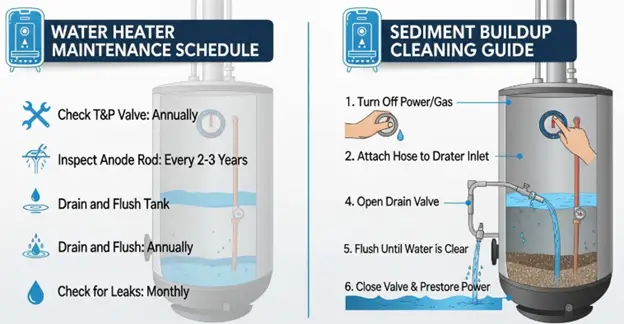
Step 1: Turn Off Power or Gas Supply
- Electric: switch off circuit breaker
- Gas: set to pilot mode
Step 2: Turn Off Cold Water Supply
Prevents new water from entering the tank.
Step 3: Attach Hose to Drain Valve
Direct water to a safe drainage location (floor drain or outside).
Step 4: Open Pressure Relief Valve
Allows air in, ensuring smooth draining.
Step 5: Drain the Tank Completely
Flush out sediment until water runs clear.
Step 6: Refill and Restart the System
Close valves, refill tank, then restore power.
How Long Does It Take to Drain a Water Heater?
Draining typically takes 20–60 minutes, depending on:
- Tank size
- Sediment level
- Water pressure
Heavily clogged tanks may take longer and require multiple flushes.
Common Mistakes to Avoid When Draining Your Water Heater
Skipping Regular Maintenance
Delaying maintenance leads to major problems.
Not Turning Off Power Before Draining
Can damage heating elements or create safety risks.
Using Incorrect Hose or Drain Setup
May cause leaks or improper drainage.
Forgetting to Flush Sediment Completely
Partial draining won’t remove buildup.
Not Checking the Anode Rod
A worn-out rod accelerates corrosion.
Professional vs DIY Water Heater Draining
- DIY: Cost-effective and manageable with basic tools
- Professional: Includes full inspection and preventive maintenance
Call a professional if:
- You notice rust or leaks
- The drain valve is clogged
- You’re unsure about the process
Tips to Reduce Sediment Buildup in Your Water Heater
- Install a water softener (especially in hard water areas)
- Flush the tank regularly
- Maintain thermostat at 120°F
- Schedule annual inspections
These steps can significantly extend your heater’s lifespan.
FAQs About How Often Should You Drain Your Water Heater
How often should you drain your water heater for best performance?
Every 6–12 months, depending on water quality and usage.
Is it necessary to drain a water heater every year?
Yes, annual draining is the minimum recommendation for most households.
What happens if you never drain your water heater?
Sediment buildup reduces efficiency, increases costs, and shortens lifespan.
Can draining your water heater improve efficiency?
Absolutely. It restores heating performance and reduces energy consumption.
How do I know if my water heater needs draining?
Look for slow heating, noise, or discolored water.
How often should you flush vs drain a water heater?
Flushing removes sediment; draining empties the tank. Both should be done annually.
Is draining a water heater dangerous?
Not if done correctly but improper handling can cause burns or damage.
Should I hire a professional to drain my water heater?
Recommended if you’re inexperienced or facing system issues.
Conclusion: How Often Should You Drain Your Water Heater
So, how often should you drain your water heater? The answer depends on your home, water quality, and system age but the key takeaways are simple:
- Drain every 6–12 months for optimal performance
- Increase frequency for hard water or older units
- Regular maintenance prevents costly repairs
- Clean systems heat faster and last longer
By staying consistent with this simple maintenance routine, you’ll improve efficiency, extend your water heater’s lifespan, and ensure reliable hot water every day.