Waiting for hot water can feel frustrating especially when you need it fast. Whether you’re dealing with a slow system or planning a new installation, understanding how long it takes for a water heater to heat up is essential for comfort, efficiency, and energy savings.
This in-depth guide breaks down real heating times, factors that affect performance, and expert-backed ways to speed things up so you never have to guess again.
Quick Answer: How Long Does It Take for a Water Heater to Heat Up?
Here’s a quick overview of average heating times by type:
- Electric water heater: 60–80 minutes (full tank)
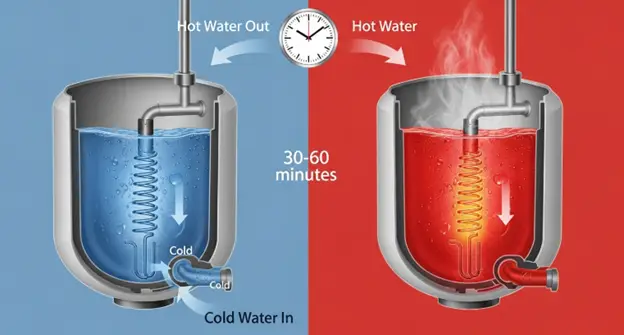
- Gas water heater: 30–60 minutes
- Tankless water heater: 10–20 seconds (instant hot water)
- Heat pump water heater: 2–3 hours
- Solar water heater: Several hours (depends on sunlight)
In most homes, a standard tank water heater will take 30 to 80 minutes to fully heat up, depending on the system and conditions.
What Determines How Long It Takes for a Water Heater to Heat Up?
Multiple variables influence heating time. Understanding these can help you diagnose delays and improve efficiency.
Tank Size and Capacity
Water heater size directly affects heating duration:
- 30-gallon tank: heats faster but runs out quicker
- 50-gallon tank: balanced option for most households
- 80-gallon tank: longer heating time but more hot water
Larger tanks require more time to heat but offer higher capacity.
Type of Water Heater
Different systems heat water at different speeds:
- Electric: slower heating, consistent output
- Gas: faster heating, quicker recovery
- Tankless: instant hot water
- Solar: dependent on sunlight
- Hybrid (heat pump): energy-efficient but slower
Incoming Water Temperature
Cold groundwater significantly increases heating time.
- Winter: slower heating
- Summer: faster heating
In colder climates, heating time can increase by 20–30%.
Heater Power (Wattage or BTU Rating)
Higher power equals faster heating:
- Electric units: measured in watts
- Gas units: measured in BTUs
A higher rating reduces overall wait time.
Sediment Buildup in Tank
Over time, minerals accumulate at the bottom of the tank.
Effects include:
- Slower heat transfer
- Reduced efficiency
- Increased heating time
Distance From Heater to Faucet
Even if water is hot, long pipes delay delivery.
This affects perceived heating time, not actual heating.
How Long Does It Take for a Water Heater to Heat Up Based on Type? (Detailed Breakdown)
How Long Does It Take for an Electric Water Heater to Heat Up?
Electric heaters typically take 60–80 minutes to heat a full tank.
- Heating rate: ~20 gallons per hour
- Slower recovery time
- Ideal for smaller households
If partially depleted, reheating may take 30–40 minutes.
How Long Does It Take for a Gas Water Heater to Heat Up?
Gas systems are faster, taking 30–60 minutes.
- High BTU output
- Faster recovery between uses
- Suitable for large families
How Long Does It Take for a Tankless Water Heater to Heat Up?
Tankless heaters provide hot water almost instantly (10–20 seconds).
- No storage tank
- On-demand heating
- Limited by flow rate
Ideal for modern, energy-efficient homes.
How Long Does It Take for a Heat Pump Water Heater to Heat Up?
Heat pump systems take 2–3 hours.
- Extremely energy-efficient
- Best for warm climates
- Slower but cost-effective long-term
How Long Does It Take for a Solar Water Heater to Heat Up?
Solar heaters depend on sunlight exposure.
- Can take several hours
- Performance varies by weather
- Often paired with backup systems
Water Heater Heating Time Comparison Table
| Type of Water Heater | Time to Heat Full Tank | Recovery Time | Efficiency | Best For |
| Electric | 60–80 mins | Slow | Medium | Small homes |
| Gas | 30–60 mins | Fast | High | Families |
| Tankless | Instant | Continuous | Very High | On-demand use |
| Heat Pump | 2–3 hours | Slow | Very High | Energy saving |
| Solar | Varies | Slow | Eco-friendly | Sunny regions |
How to Reduce Water Heater Heating Time
If your system feels slow, these proven steps can significantly improve performance.
Step 1: Check Your Thermostat Settings
Set your heater to 120°F (49°C).
- Prevents overheating
- Maintains efficiency
- Ensures safety
Step 2: Flush the Tank Regularly
Sediment buildup slows heating.
- Flush annually
- Improves heat transfer
- Extends lifespan
Step 3: Insulate Your Tank and Pipes
Heat loss reduces efficiency.
- Use insulation blankets
- Wrap exposed pipes
- Maintain consistent temperature
Step 4: Upgrade to a Higher Capacity or Faster Unit
If your system is outdated or undersized:
- Consider gas or tankless options
- Improve recovery time
- Reduce waiting
Step 5: Reduce Distance to Usage Points
Install a recirculation pump:
- Delivers instant hot water
- Eliminates pipe delay
- Improves convenience
Why Is Your Water Heater Taking Too Long to Heat Up? (Common Problems)
If heating takes longer than usual, check for these issues:
Faulty Heating Element (Electric)
Causes slow or incomplete heating.
Broken Dip Tube
Mixes cold water with hot water.
Gas Burner Issues
Reduces heating efficiency.
Thermostat Malfunction
Leads to inconsistent temperatures.
Sediment Overload in Tank
Acts as insulation, blocking heat transfer.
Undersized Water Heater for Household Needs
Cannot keep up with demand.
For professional inspection and repairs, trusted providers like Residential Plumbing Goose Creek can diagnose and fix these issues efficiently.
How Long Should You Wait Between Showers?
Recovery time depends on heater type:
- Gas heater: 30–40 minutes
- Electric heater: 45–60 minutes
Example: A 50-gallon tank can handle 2–3 consecutive showers before needing reheating.
Tips to Get Hot Water Faster in Your Home
Want instant results? Try these expert tips:
- Install a hot water recirculation pump
- Use point-of-use heaters near faucets
- Insulate plumbing lines
- Upgrade to smart water heater systems
These improvements reduce wait time and increase efficiency.
When to Replace Your Water Heater
Most systems last 8–12 years. Consider replacement if:
- Heating time increases significantly
- Water temperature fluctuates
- Rust or leaks appear
- Energy bills rise
Newer models offer faster heating and better efficiency.
FAQs About How Long It Takes for a Water Heater to Heat Up
How long does it take for a 40-gallon water heater to heat up?
Typically 30–60 minutes, depending on whether it’s gas or electric.
How long does it take for a 50-gallon water heater to heat up?
Usually 40–80 minutes, with gas heaters being faster.
How long does it take for a water heater to heat up after reset?
Around 30–60 minutes, depending on system type.
Why is my water heater taking longer than usual to heat up?
Common causes include sediment buildup, faulty components, or aging equipment.
Does turning up the thermostat make water heat faster?
No. It increases the final temperature, not heating speed.
Is gas or electric water heater faster?
Gas heaters heat water faster due to higher energy output.
How can I make my hot water last longer?
Reduce usage, upgrade fixtures, and maintain your system regularly.
Do tankless water heaters run out of hot water?
No, but they may struggle if multiple outlets run simultaneously.
Conclusion: Understanding How Long It Takes for a Water Heater to Heat Up
So, how long does it take for a water heater to heat up? The answer depends on your system, but the key takeaways are clear:
- Gas heaters are fastest for traditional tanks
- Electric heaters are slower but reliable
- Tankless systems provide instant hot water
- Maintenance and setup significantly impact performance
By understanding your system and applying the right optimizations, you can reduce wait times, improve efficiency, and enjoy consistent hot water whenever you need it.