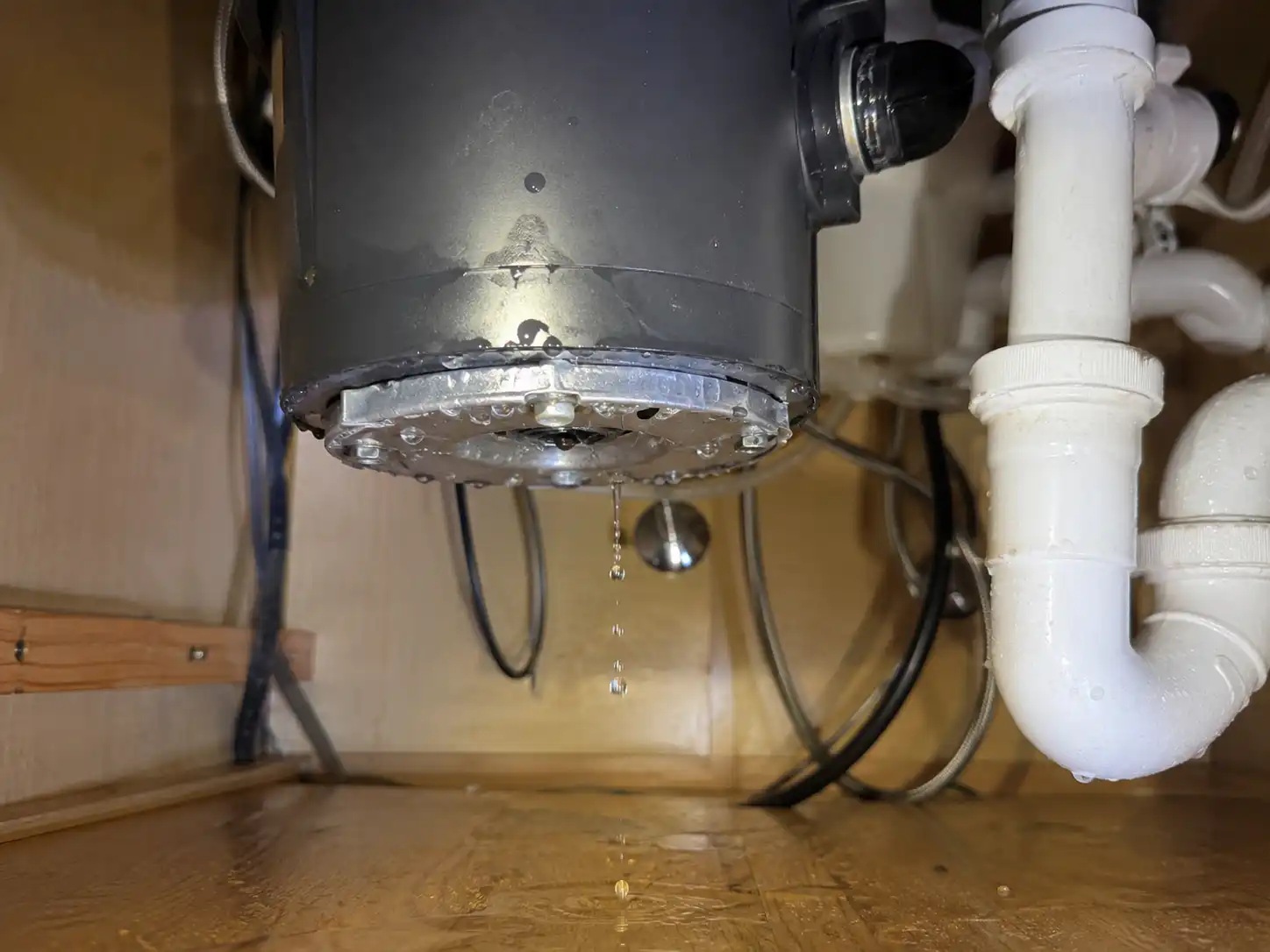
Finding a puddle under the sink is frustrating, and tracing it back to the garbage disposal usually means bad news. A leak from the top or the sides of a disposal often comes down to a loose connection you can tighten. A leak from the bottom is different. When water drips from the lowest point of the unit, it has almost always found its way through the internal seals, and that points to a problem no wrench can fix.
Here is what a bottom leak actually means and how to confirm it before you spend money on the wrong repair.
Confirm the Leak Is Really From the Bottom
Water travels. A drip that lands on the floor under the disposal may have started higher up and run down the housing. Before you conclude the worst, dry the entire unit with a towel, then run a colored liquid test. Put a stopper in the sink, fill it with water tinted by a few drops of food coloring, then pull the stopper and watch where the colored water shows up first.
If the color appears at the sink flange up top, the mounting seal is the issue. If it shows at the side where the dishwasher hose or the drain pipe connects, that fitting is loose. But if the tinted water beads up and drips from the very bottom of the metal housing, the leak is internal, and that changes everything.
What a Bottom Leak Tells You
The bottom of a disposal houses the motor and the seals that keep water in the grinding chamber and out of the motor below it. Over years of use, those internal seals dry out, crack, and fail. Once they do, water from every grind cycle seeps down past the flywheel and out the bottom. There is no external gasket to replace and no bolt to snug up.
This is why a bottom leak almost always means the disposal has reached the end of its service life. Most residential units last around eight to twelve years, and internal seal failure tends to show up right around that age. A unit leaking near its motor is also a shock hazard once water reaches the electrical components.
Rule Out the Cheaper Fixes First
Before you replace anything, make sure the leak is not a repairable kind. The sink flange at the top can leak when the plumber’s putty that seals it dries out. The rubber gasket where the disposal locks into the mounting ring can slip or flatten. And the connection where the dishwasher drain hose clamps on can loosen over time.
All three of those show up higher on the unit and can be resealed or tightened. Only a genuine bottom-housing leak is the terminal kind. Running the food-coloring test carefully is what separates a fifteen-minute fix from a full replacement.
Do Not Ignore It While You Decide
A slow bottom leak may seem minor, but the water pooling under your sink swells the cabinet floor, feeds mold, and can travel to the drain line connections and loosen them too. If you also notice the sink draining slowly on top of the leak, clearing a kitchen sink that will not drain should happen alongside addressing the unit itself. Turn off the disposal at the breaker until it is repaired or replaced.
Repair or Replace
For a bottom-housing leak, replacement is the answer nearly every time. The cost of a new disposal plus proper installation is lower than what you would spend chasing an internal seal that cannot be reliably fixed. A professional garbage disposal repair and installation in Goose Creek makes sure the mounting seal, the drain connection, and the electrical are all done to code, so the new unit does not start leaking from a bad install.
If your current unit is only a few years old and still under warranty, keep the paperwork handy. Some manufacturers cover internal seal failure within the warranty period. Either way, once you have confirmed a bottom leak, plan the new disposal installation rather than pouring money into a unit that has already told you it is finished.