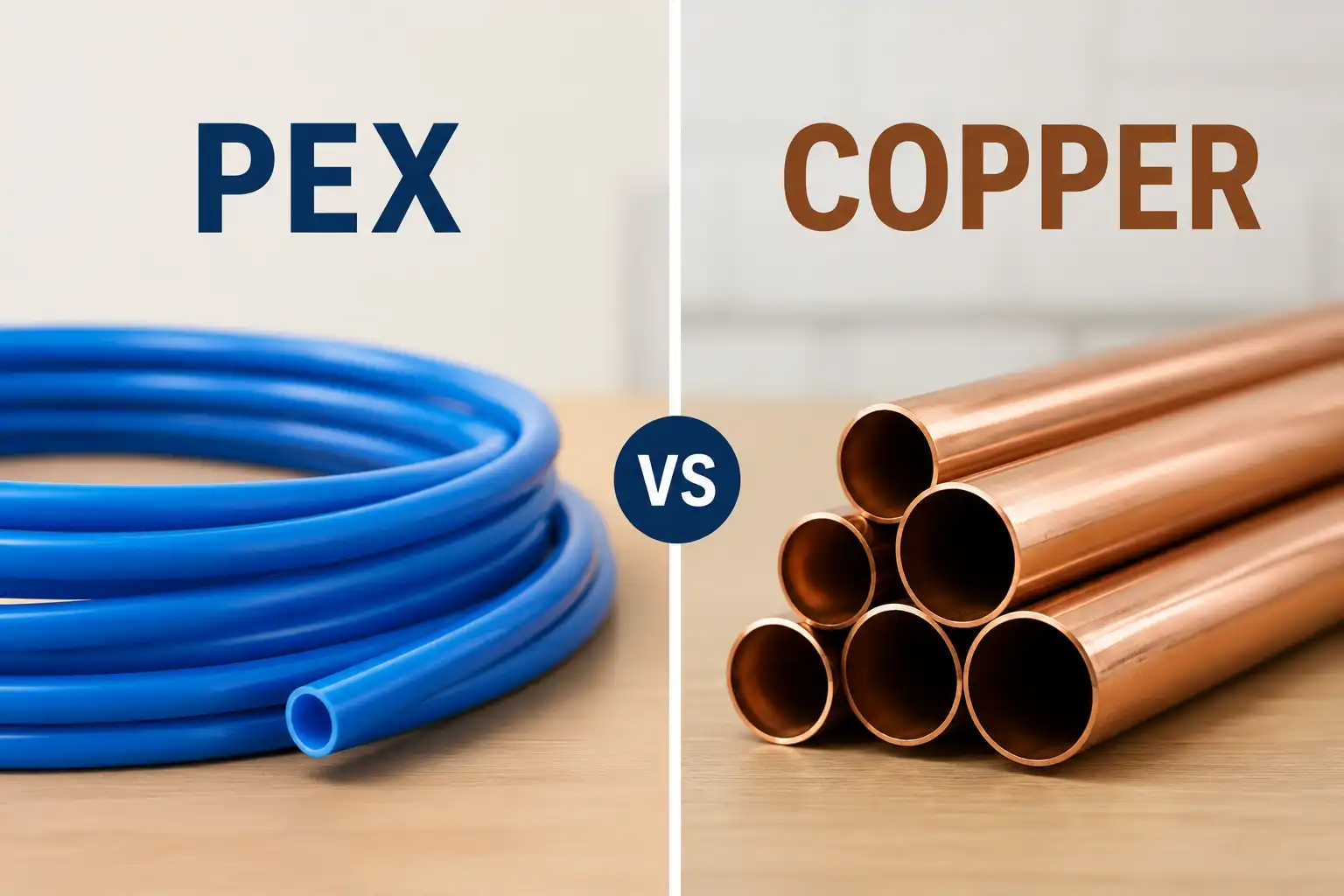
If you are repiping a home in Goose Creek, Hanahan, or anywhere near the Charleston coast, the first choice you face is the pipe itself. For most homes it comes down to two options: PEX, a flexible plastic tubing, or copper, the metal pipe that has been in walls for decades. Both carry clean water and both are approved by code. The difference shows up in how they handle our salt air, our water, our summer heat, and your budget.
We install both at Mueller’s Plumbing Service, so we have no reason to push one over the other. What follows is the honest comparison we give our own customers in Berkeley, Charleston, and Dorchester counties.
Why the coast changes the answer
Inland, this is mostly a cost and preference question. On the coast, the environment gets a vote.
Ocean wind carries tiny salt particles inland. Those particles settle on outdoor surfaces, drift through vents, and collect on pipe joints, fixtures, and the metal parts of water heaters. Salt is hygroscopic, which means it pulls moisture out of the air and holds it. That keeps metal damp longer than it would stay in a dry inland town, and damp metal corrodes faster.
Salt speeds up corrosion in another way too. Chloride ions from the salt break down the thin protective layer that normally forms on copper and other metals. Once that layer is compromised, corrosion spreads, often inside a wall or crawl space where nobody sees it until a stain appears on the ceiling. This is the pinhole leak story we see over and over in older coastal homes.
PEX is a plastic. Salt air and humidity do not corrode it. That single fact is why PEX has become the common choice for homes close to the water.
Corrosion and water chemistry
Copper is a good pipe, and in the right conditions it lasts a very long time. The problem is that our conditions are not always right for it. Water that runs acidic, or water carrying a lot of chlorine, slowly eats at copper from the inside. Add salt air on the outside and copper faces attack from both directions. The result is pitting and, eventually, pinhole leaks.
PEX does not corrode from acidic or chlorinated water the way copper does, and it does not build up scale as easily. For a coastal home on municipal water, that is a real advantage over the life of the system.
Copper does hold one edge here worth naming. It resists chlorine better than some early PEX did, and it can be run outdoors and exposed to sunlight, which PEX cannot. For the water lines inside your walls, though, the corrosion question favors PEX in this climate.
Freezing and burst risk
South Carolina winters are mild, but we get cold snaps, and an unprotected pipe in an attic or exterior wall can freeze. When water freezes it expands, and a rigid copper pipe can split.
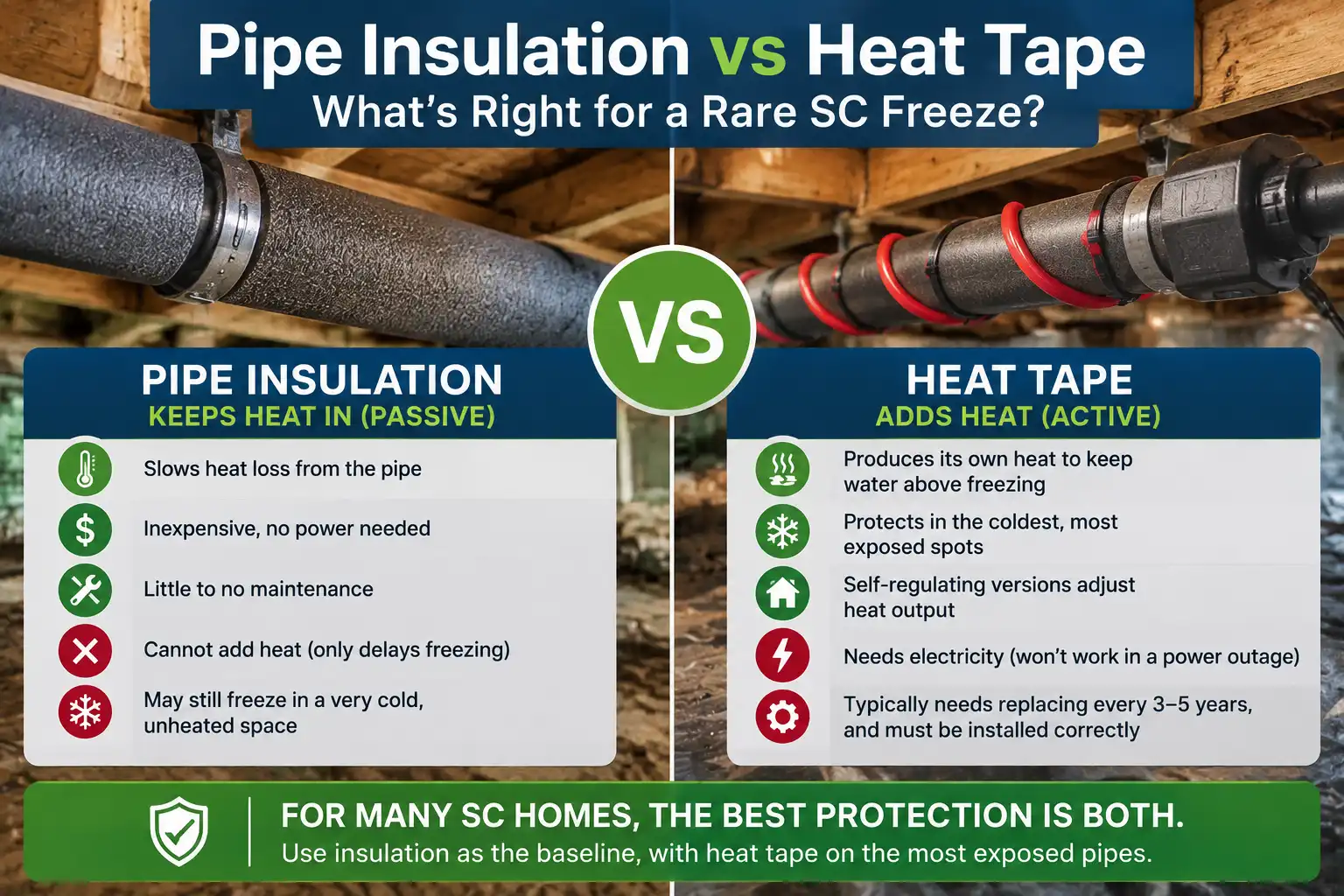
PEX flexes. It can expand as the water inside it freezes and usually returns to shape, which makes it far less likely to burst in a cold snap. This does not mean you can skip insulating pipes in exposed spots, but it does give you a margin that copper does not.
Cost and installation
Copper costs more, both for the material and the labor. Copper has to be cut, cleaned, and soldered at every joint, which is skilled, slow work. PEX runs in long flexible lengths that bend around framing, so it needs fewer fittings and installs faster. Across a whole house, PEX usually costs noticeably less than copper for the same job.
Faster installation also means less time with your water shut off and fewer walls opened, which matters when the work is happening in your home.
Lifespan
This is the one category where copper clearly wins on paper. Copper can last 50 to 70 years in good conditions. PEX is generally rated for 25 to 50 years. In a dry inland home with balanced water, copper may well outlive PEX.
On the coast, the gap narrows. Copper that is being attacked by salt air and aggressive water often does not reach its full lifespan, while PEX keeps going because the same conditions do not affect it. The pipe that lasts longest is the one that is not corroding, and near the water that is usually PEX.
Taste and other small differences
Some homeowners notice a faint metallic taste from copper or a slight plastic taste from new PEX that fades over the first weeks. Copper runs a little louder at high pressure, while PEX is quieter. Copper resists rodents and ultraviolet light better. These are minor points next to corrosion and cost, but they come up, so they are worth knowing.
Which one we recommend near the coast
For most homes in Goose Creek and the surrounding coastal area, PEX is the better fit. It shrugs off the salt air and humidity that shorten the life of metal pipe here, it resists our water chemistry, it handles a cold snap without splitting, and it costs less to install. That combination is hard to beat within a few miles of the water.
Copper still has its place. If you want the longest possible lifespan, you like the proven track record of metal, and your situation calls for it, copper is a solid choice, especially for any exposed outdoor runs where PEX cannot go.
The right answer depends on your specific home: its age, its current pipes, your water, and your budget. That is a call best made after someone looks at the actual system.
If you are weighing a repipe in Goose Creek, North Charleston, Hanahan, Summerville, or the greater Charleston area, Mueller’s Plumbing Service can walk your home, explain what we see, and give you a straight recommendation. Call us at (843) 572-8522 to set up a visit.