When a shower drips, swings between hot and cold, or gets hard to turn, the problem is inside the shower valve. The question is whether the fix is a simple cartridge swap or a full valve replacement, and the answer changes the cost and the scope of the job significantly. Knowing which one you are facing helps you plan before opening the wall.
How a Shower Valve Works
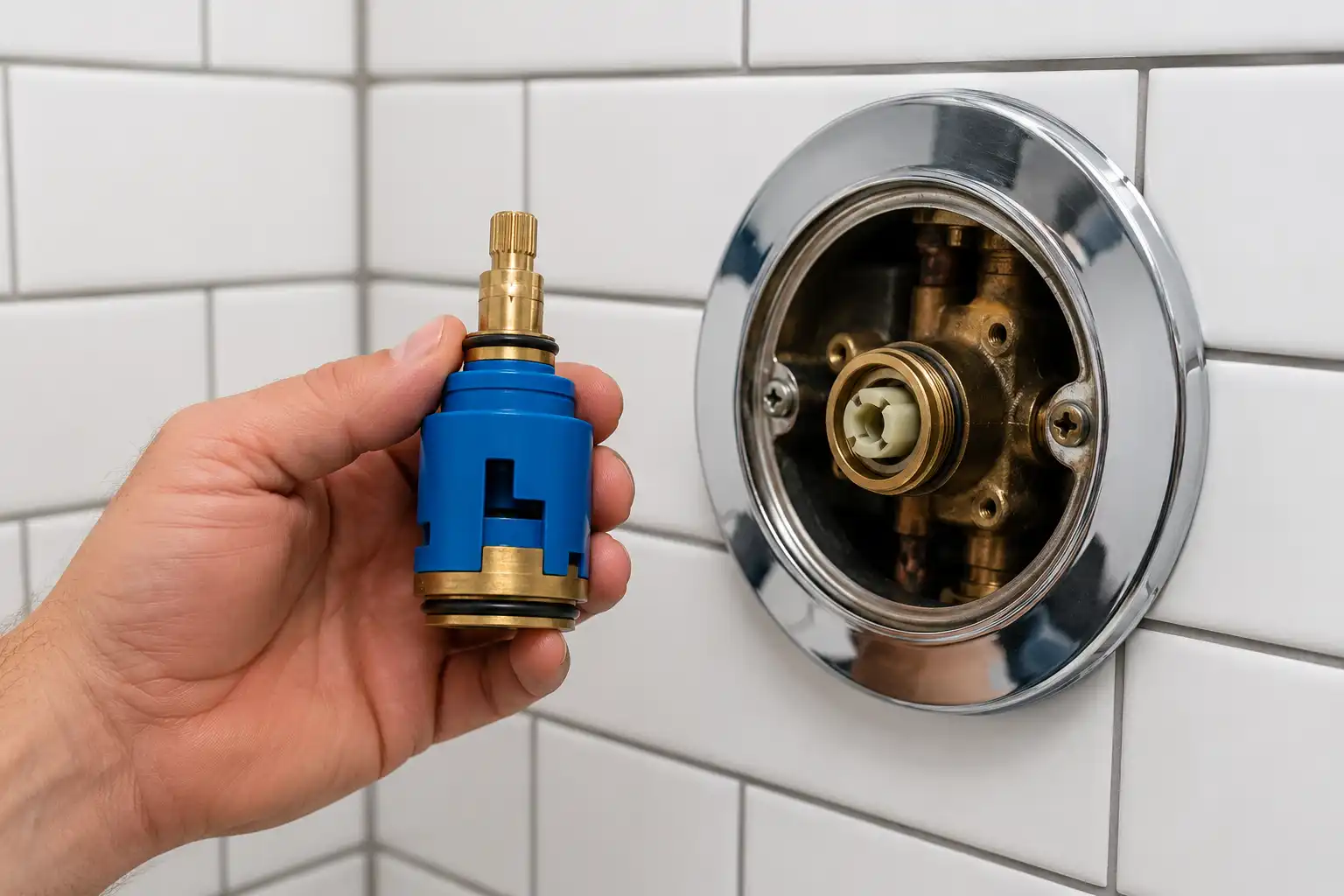
Behind the shower handle sits a valve body plumbed into the hot and cold supply lines. Inside that valve is a cartridge, a replaceable insert that controls how much hot and cold water mixes and flows. Most modern showers use a pressure-balancing or thermostatic cartridge that keeps the temperature steady when someone flushes a toilet elsewhere. The valve body is fixed in the wall. The cartridge is the moving part that wears out.
When a Cartridge Swap Fixes It
The large majority of shower problems come down to a worn cartridge, and replacing it is the far cheaper fix. Signs that point to the cartridge include a shower that drips after being shut off, a handle that has become stiff or loose, temperature that fluctuates or will not get hot enough, and reduced flow from the showerhead when the rest of the house has normal pressure. In all of these, the valve body is fine and only the insert needs changing. The job usually does not require opening the wall, since the cartridge pulls out from the front behind the handle and trim.
When the Whole Valve Needs Replacing
A full valve replacement is a bigger job and is needed in fewer situations. The valve body itself is cracked or corroded and leaking inside the wall. The valve is so old that replacement cartridges are no longer made for it. There is a leak behind the wall that shows up as water damage on the ceiling below or the adjacent room. Or you are upgrading an old two-handle setup to a modern single-handle pressure-balancing valve. Because the valve body is soldered or connected to the supply lines inside the wall, replacing it means opening the wall behind or in front of the shower, which is why it costs more and takes longer.
How to Tell Which You Need
If the shower drips, swings temperature, or the handle feels wrong but there is no sign of water inside the wall, start with the cartridge. If you see water staining on the ceiling or wall below the shower, hear water running behind the wall with everything off, or the valve body is visibly corroded when the trim comes off, the valve itself is the problem. A leak inside the wall is the clearest sign that a cartridge swap will not be enough.
Planning the Job
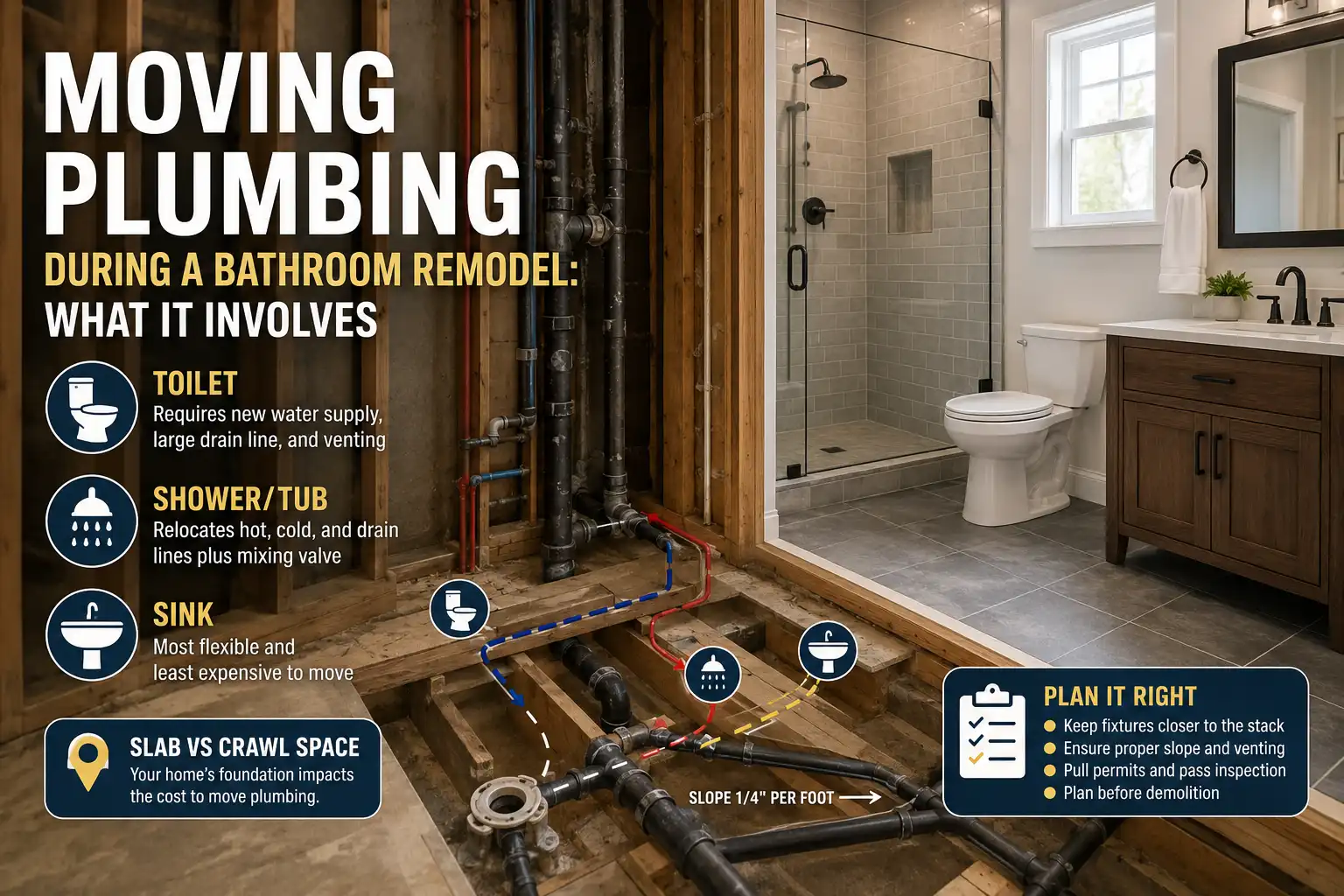
If a diverter is part of the complaint, for example water coming from both the tub spout and the showerhead at once, that points to a separate part, and a leaking tub spout diverter is worth reading alongside the valve question. And if the shower work is happening as part of a larger renovation, folding it into the plumbing side of a bathroom remodel is more efficient than doing it twice.
A cartridge is a modest repair and a valve is a wall-opening job, so getting the diagnosis right saves both money and unnecessary demolition. Professional shower valve replacement in Goose Creek identifies which one you actually need and does the work without turning a cartridge swap into a full tear-out.