Opening the dishwasher to find standing water in the bottom is a common problem with a short list of causes. In most kitchens the dishwasher drains through a line that connects to either the garbage disposal or the sink drain, often by way of an air gap on the countertop. When water backs up, the blockage is usually at one of those connection points rather than inside the dishwasher itself.
Start With the Simple Checks
Before tracing the drain path, rule out the quick fixes. Confirm the cycle actually completed and try running a rinse-and-drain cycle. Check the filter at the bottom of the tub, which traps food debris and clogs over time. And look for a kinked drain hose behind or under the unit, since a crimped hose stops drainage cold. If the water still sits after those checks, the blockage is in the drain path outside the dishwasher.
The Garbage Disposal Connection
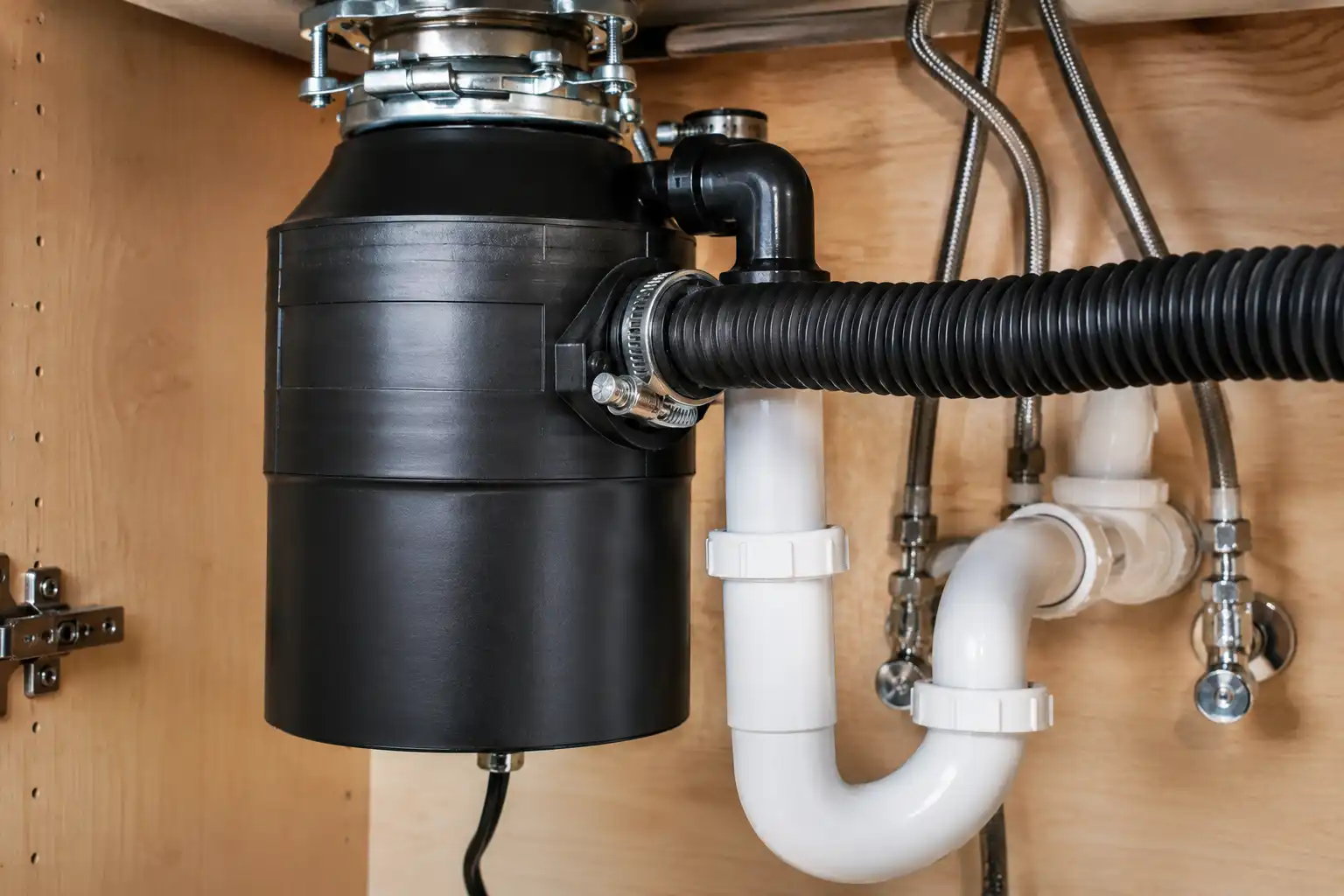
In kitchens with a disposal, the dishwasher drain hose almost always connects to the side of the disposal at an inlet called the knockout port. When a disposal is installed, that inlet has a plastic knockout plug that must be removed before the dishwasher line is connected. If it was left in place during a recent install, the dishwasher has nowhere to drain. This is one of the most common reasons a dishwasher stops draining right after a new disposal goes in.
The second cause is a clog. Food debris collects where the dishwasher hose meets the disposal, and if the disposal itself is packed or partially jammed, the dishwasher cannot push water through it. Run the disposal with cold water first. A disposal that is backed up will often show a slow sink too, and clearing a kitchen sink that will not drain frequently fixes the dishwasher at the same time.
The Air Gap Connection
Many kitchens have a small cylindrical fitting mounted on the countertop next to the faucet. That is the air gap, and it stops dirty sink water from siphoning back into the dishwasher. Water passing through it can carry debris that collects inside, and a clogged air gap blocks the drain and sometimes spills onto the counter during a cycle.
Clearing it is simple. Twist off the cap, lift out the cover, check the inside for buildup, clean out any debris, and reassemble it. If the air gap is clear but the dishwasher still will not drain, the blockage has moved downstream.
When the Clog Is Deeper
If the disposal grinds clean, the air gap is clear, and the filter and hose check out, the blockage is further down the drain line. At that point the methods to try before calling a plumber are worth working through. Keep the chemical drain openers out of it, though, since they can sit against the dishwasher’s rubber components and rarely clear a food-based clog anyway.
Prevent the Backup From Returning
Most dishwasher drainage problems trace back to what goes down the sink. Scraping plates before loading keeps food debris out of the drain path, and the same foods that should never go down the disposal are the ones that collect at the dishwasher connection. Running hot water at the sink before starting a cycle helps clear the shared line, and cleaning the dishwasher filter monthly stops debris from migrating into the hose.
When to Bring in a Plumber
A dishwasher that will not drain after you have cleared the filter, the air gap, and the disposal points to a problem in the drain line or the disposal inlet that needs a closer look. If a recent install is the cause, or the branch drain is blocked past the fittings, professional dishwasher installation and drain service in Goose Creek sorts the connection and gets the unit draining right.