If you’ve invested in a water softener, you expect better water quality, fewer stains, and smoother-feeling skin but how do you actually know it’s doing its job? Many homeowners wonder about this after installation because the changes can be subtle at first.
Learning how to tell if water softener is working is essential for maintaining water quality, protecting appliances, and avoiding expensive hard water damage. This guide breaks down everything you need to know using simple tests, clear signs, and expert-level insights.
Short Answer — How to Tell if Water Softener is Working?
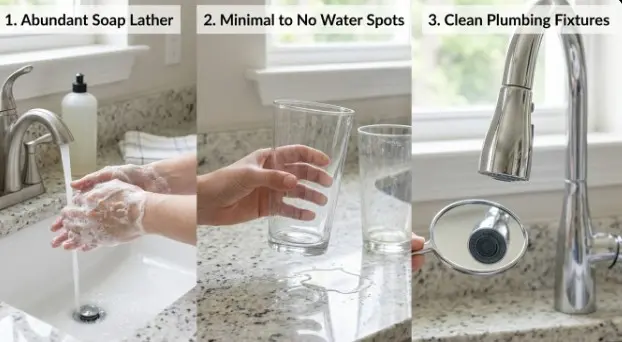
Quick Signs Your Water Softener is Working Properly
- Soap lathers easily in showers and sinks
- No white scale buildup on faucets or tiles
- Skin feels softer after bathing
- Glassware comes out clean without spots
- Water feels smoother or “slippery”
- Reduced soap and detergent usage
These early indicators are often noticeable within days of proper system operation.
What Does a Water Softener Actually Do?
To understand performance, you first need to understand function.
How a Water Softener System Works
A water softener uses a process called ion exchange:
- Hard water enters the system
- Calcium and magnesium ions are trapped
- They are replaced with sodium or potassium ions
- Softened water exits the system for household use
This process removes the minerals responsible for scale buildup and soap inefficiency.
Why Water Softeners Are Important for Home Water Quality
A properly working system:
- Prevents scale buildup in pipes
- Extends appliance lifespan
- Improves cleaning efficiency
- Reduces detergent and soap usage
How to Tell if Water Softener is Working?
Once installed, there are multiple ways to confirm performance.
Physical Signs Your Water Softener is Working
- No chalky white residue on faucets
- Shower doors stay clean longer
- No soap scum in sinks and bathtubs
Cleaning Performance Indicators
- Soap lathers quickly with minimal effort
- Less detergent needed for laundry
- Dishes come out streak-free
Water Feel and Skin Changes
- Skin feels smoother after showers
- Hair feels softer and less dry
- Water feels “silky” or slightly slippery
Appliance Performance Improvements
- No scale in kettles or coffee machines
- Dishwasher runs more efficiently
- Water heater maintains performance longer
Common Problems When Water Softener is NOT Working
If your system fails, hard water signs return quickly.
Signs of Hard Water Returning
- White mineral spots on fixtures
- Soap not lathering properly
- Dry skin and dull hair
Mechanical Issues in the System
- Salt bridge formation in tank
- Resin bead exhaustion
- Clogged resin bed
Regeneration Cycle Failure
- System not regenerating on schedule
- Incorrect timer settings
- Low salt levels in brine tank
Guide to Checking If Your Water Softener is Working
Step 1 — Check Soap Lather Test
Compare soap behavior in different areas of your home. If foam forms quickly, your softener is working correctly.
Step 2 — Inspect for Hard Water Stains
Check faucets, sinks, and shower doors for white scaling or residue buildup.
Step 3 — Test Water Hardness Level
Use home test strips to measure hardness before and after softener treatment.
Step 4 — Check Salt Levels in the System
Ensure the brine tank has enough salt and no blockages are forming.
Step 5 — Monitor Appliance Performance
Observe dishwashers, washing machines, and kettles for scale reduction and improved efficiency.
Comparison Table — Working vs Not Working Water Softener
| Feature | Working Water Softener | Not Working Water Softener |
|---|---|---|
| Soap Lather | Rich and quick | Weak and slow |
| Water Spots | None or minimal | Frequent spotting |
| Skin Feel | Soft and smooth | Dry and itchy |
| Appliance Scaling | No buildup | Visible scale formation |
| Laundry Results | Soft clothes | Stiff fabrics |
| Water Hardness Level | Low | High |
| Maintenance Alerts | Normal cycles | Frequent issues |
Reasons Why Water Softeners Stop Working Properly
Low Salt Levels in Brine Tank
Without salt, ion exchange cannot occur effectively.
Resin Bed Exhaustion or Damage
Resin beads lose effectiveness over time and require replacement.
Incorrect System Settings
Improper regeneration timing reduces system efficiency.
Clogged Injectors or Valves
Blockages restrict water flow through the system.
Hard Water Overload Beyond System Capacity
Excessively hard water can overwhelm undersized systems.
How to Maintain a Water Softener for Best Performance
Regular Salt Refilling Practices
Keep salt levels consistent to ensure proper regeneration.
Cleaning the Brine Tank Periodically
Remove sludge or salt buildup every few months.
Scheduling Regeneration Cycles Correctly
Ensure cycles match household water usage.
Checking Resin Tank Health
Inspect for wear or contamination.
Annual Professional Inspection
A technician can optimize performance and prevent breakdowns.
Sub-Questions People Also Ask About Water Softener Performance
How long does it take for a water softener to start working?
Usually within 24–72 hours after installation and first regeneration cycle.
Can a water softener stop working suddenly?
Yes, due to salt issues, power failure, or mechanical blockage.
Why is my water softener not making water soft anymore?
Often due to low salt, resin failure, or incorrect settings.
Does soft water feel slippery?
Yes, this is a normal effect caused by reduced mineral content.
How do I test water hardness at home?
Use simple test strips or digital hardness testers.
Can old plumbing affect water softener performance?
Yes, old pipes may still release minerals or affect water flow.
What happens if you don’t add salt to a water softener?
The system stops removing hardness minerals effectively.
Health and Safety Considerations
Is Soft Water Safe to Drink?
Yes, in most cases it is safe, though it contains small sodium levels.
Sodium Levels in Softened Water Explained
Softened water replaces calcium with sodium, but levels are generally low.
When to Consult a Water Treatment Professional
- Persistent hard water symptoms
- System malfunction signs
- Unusual water taste or smell
Preventing Water Softener Problems in the Future
Routine System Inspections
Check system components regularly.
Using High-Quality Salt
Prevents buildup and improves efficiency.
Preventing Salt Bridges and Mushing
Break up hardened salt formations in the tank.
Monitoring Water Hardness Regularly
Ensures system is performing correctly.
Upgrading Older Water Softener Systems
Modern systems are more efficient and reliable.
FAQs About How to Tell if Water Softener is Working?
What is the fastest way to know if a water softener is working?
Check soap lather and absence of water spots.
Why does my water feel the same after installing a softener?
It may not have completed a regeneration cycle yet.
How often should a water softener regenerate?
Typically every 3–7 days depending on usage.
Can I test water hardness without a kit?
Yes, through soap lather and visual scale tests.
Does a working water softener remove all minerals?
No, it removes hardness minerals like calcium and magnesium.
How long do water softeners last?
Usually 10–15 years with proper maintenance.
Why is there still scale with a water softener installed?
It may be undersized or not functioning properly.
Do all water softeners feel the same when working?
Most create a similar smooth or “silky” water feel.
Conclusion — How to Tell If Your Water Softener is Working Effectively
Understanding how to tell if water softener is working comes down to observing real-world signs, testing water hardness, and maintaining the system properly.
Key Takeaways
- Soft water should improve cleaning and reduce scaling
- Soap performance is one of the best indicators
- Regular maintenance ensures consistent results
Final Thoughts
A properly functioning water softener protects your home, improves water quality, and extends appliance life. By monitoring performance regularly and addressing issues early, you can ensure long-term efficiency and reliable soft water throughout your home.