If you’ve opened your water softener and noticed water sitting inside the salt tank, you’re not alone. Many homeowners immediately assume something is wrong but that isn’t always the case.
Understanding should there be water in my water softener salt tank is important because the answer depends on how your system operates. Some water is normal, but too much (or too little) can signal an issue that affects your home’s water quality, appliance lifespan, and plumbing efficiency.
This guide breaks everything down in a clear, expert way so you can quickly identify whether your system is working properly or needs attention.
Short Answer — Should There Be Water in My Water Softener Salt Tank?
Yes, a small amount of water in your water softener salt tank is completely normal. However, too much or too little water can indicate a problem with the system’s brine cycle or internal components.
In most homes including those in areas like Goose Creek where hard water is common the brine tank naturally holds a few inches of water to dissolve salt and create the solution needed for regeneration.
What the Water Softener Salt Tank Actually Does
To understand water levels, you first need to understand the tank’s job.
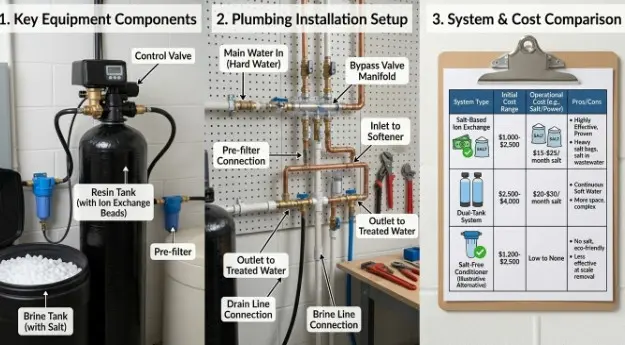
Understanding the Brine Tank Function
The brine tank is responsible for:
- Storing salt used to create brine solution
- Mixing salt and water to regenerate resin beads
- Removing hardness minerals like calcium and magnesium from water
Without this process, your water softener cannot function properly.
Why Water Is Needed in the Salt Tank
Water plays a critical role because it:
- Dissolves salt to form brine
- Supports the ion exchange process
- Enables efficient regeneration cycles
Without water, salt cannot activate and the system cannot soften water effectively.
Should There Be Water in My Water Softener Salt Tank?
Normal Water Levels in the Brine Tank
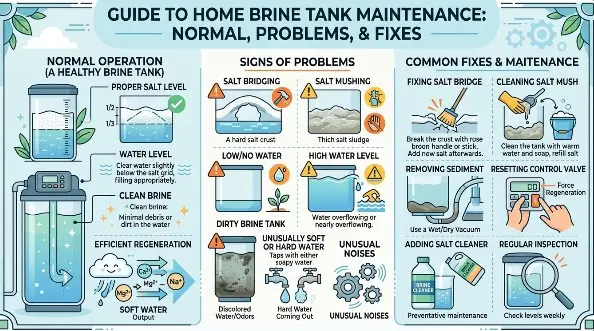
A properly working system will usually show:
- A small amount of standing water at the bottom
- Water level rising and falling during regeneration
- Salt sitting above the water line (not fully submerged)
This is exactly how most residential systems are designed to operate.
When Water Levels Become a Problem
You may have an issue if:
- The tank is completely full of water
- Salt is constantly submerged and turning into a solid mass
- Regeneration cycles are not drawing water properly
These signs usually indicate a blockage or mechanical failure.
Common Reasons for Water in the Salt Tank
Understanding the cause helps prevent unnecessary repairs.
Normal Regeneration Cycle Activity
During normal operation:
- The system fills the tank with water periodically
- Salt dissolves to create brine
- Water level resets after each cycle
Clogged or Faulty Float Valve
If the float valve fails:
- Water cannot drain properly
- Excess water builds up in the tank
Blocked Brine Line or Injector
A blockage may:
- Stop brine from being drawn out
- Leave stagnant water in the tank
Incorrect System Settings or Timer Issues
Improper settings can lead to:
- Overfilling or under-draining
- Missed regeneration cycles
How to Check Water Levels in Your Salt Tank
Step 1 — Open and Inspect the Brine Tank
- Check how deep the water is
- Inspect salt condition (dry, wet, or clumped)
Step 2 — Observe Salt Bridge Formation
- Look for hardened crust on top
- Confirm salt is dissolving properly
Step 3 — Test Water Softener Regeneration Cycle
- Run a manual cycle
- Watch water fill and drain behavior
Step 4 — Inspect Float Valve and Brine Line
- Ensure float moves freely
- Check for calcium or debris buildup
Step 5 — Evaluate System Performance
- Test water hardness in your home
- Look for scale buildup in fixtures, especially in homes around Goose Creek where mineral-heavy water is common
Normal vs Problematic Water Levels in Salt Tank
| Feature | Normal Condition | Problem Condition |
|---|---|---|
| Water Level | Small amount at bottom | Tank full of water |
| Salt Condition | Loose and dissolving | Hard crust or clumping |
| System Performance | Soft water produced | Hard water returning |
| Regeneration Cycle | Works properly | Interrupted or failed |
| Maintenance Needs | Low | Frequent intervention |
Effects of Incorrect Water Levels in Salt Tank
Reduced Water Softener Efficiency
When the system isn’t functioning properly:
- Ion exchange becomes ineffective
- Hard water returns to your home
Salt Bridge Formation
- Hard crust prevents proper salt dissolution
- System falsely reads tank as full of salt
Increased Appliance Scaling
- Limescale builds in water heaters
- Dishwashers and washing machines lose efficiency
Higher Maintenance Costs
- More repairs required
- Shortened system lifespan
How to Fix Water Problems in a Water Softener Salt Tank
Break Up Salt Bridges
- Carefully break hardened salt formations
- Restore proper salt flow
Clean the Brine Tank
- Drain old water and residue
- Rinse thoroughly before refilling
Check and Clean Float Valve
- Ensure smooth movement
- Remove buildup or debris
Flush Brine Line and Injector
- Clear clogs affecting water flow
- Restore suction during regeneration
Reset or Adjust System Settings
- Correct regeneration timing
- Ensure proper cycle frequency
Sub-Questions People Also Ask
Is it normal for water to be at the bottom of a salt tank?
Yes, a small amount is normal and required for brine formation.
How much water should be in a water softener brine tank?
Typically a few inches at the bottom.
Why is my water softener salt tank full of water?
Usually due to valve issues, blockages, or timer problems.
How do I know if my brine tank is working properly?
Check for proper salt dissolution and effective soft water output.
Can too much water in the salt tank damage the system?
Yes, it can lead to salt clumping and system inefficiency.
How often should a brine tank refill with water?
It refills during each regeneration cycle automatically.
H3: What happens if the salt tank runs dry?
The system stops producing soft water effectively.
Does hard water affect salt tank performance?
Yes, high mineral content can impact overall system efficiency.
FAQs About Should There Be Water in My Water Softener Salt Tank?
Should there be water in my water softener salt tank all the time?
No, only a small amount should remain between cycles.
Why is my salt tank not draining water properly?
It may be due to clogged lines or faulty valves.
Can I manually remove water from the brine tank?
Yes, but the underlying issue should still be fixed.
How do I fix a flooded water softener salt tank?
Check float valve, injector, and brine line for blockages.
Does a full salt tank mean the system is broken?
Not always, but it usually indicates a malfunction.
How long does water stay in a brine tank?
It changes with each regeneration cycle.
Can cold weather affect water levels in the salt tank?
Yes, freezing conditions can impact system performance.
When should I call a professional for salt tank issues?
If problems persist after basic cleaning and inspection.
Conclusion — Understanding Water Levels in Your Water Softener Salt Tank
Key Takeaways
- A small amount of water is normal in the brine tank
- Excess water usually signals a blockage or system issue
- Regular maintenance prevents performance problems
Final Thoughts
Monitoring your water softener is essential for long-term performance and plumbing protection. Homeowners in areas like Goose Creek, where hard water is common, should pay close attention to salt tank conditions to avoid costly repairs and ensure consistent soft water throughout the home.