Hard water is one of the most common household water issues, yet many homeowners do not recognize the warning signs until plumbing fixtures, appliances, and pipes begin showing damage. In Goose Creek, hard water problems are especially common because groundwater naturally contains minerals like calcium and magnesium. Over time, these minerals build up inside plumbing systems and around household fixtures, creating expensive maintenance problems.
Understanding the signs of hard water early can help protect your home, improve water quality, and reduce long-term repair costs—especially when it comes to maintaining your Residential Plumbing Goose Creek systems. Whether you are noticing white stains on faucets, dry skin after showers, or cloudy dishes coming out of the dishwasher, these are often clear indicators of mineral buildup in your water supply. Identifying the root cause early is the first step toward solving the problem and preventing further damage to your plumbing fixtures and appliances.
Short Answer — What Are the Signs of Hard Water?
The most common signs of hard water include white mineral buildup on faucets, soap scum in bathrooms, dry skin, dull hair, cloudy dishes, reduced water pressure, and appliances wearing out faster than normal. These issues occur because hard water contains high levels of dissolved minerals that leave residue behind after water evaporates.
Common Signs of Hard Water You Should Never Ignore
Several symptoms clearly indicate mineral-heavy water in your home:
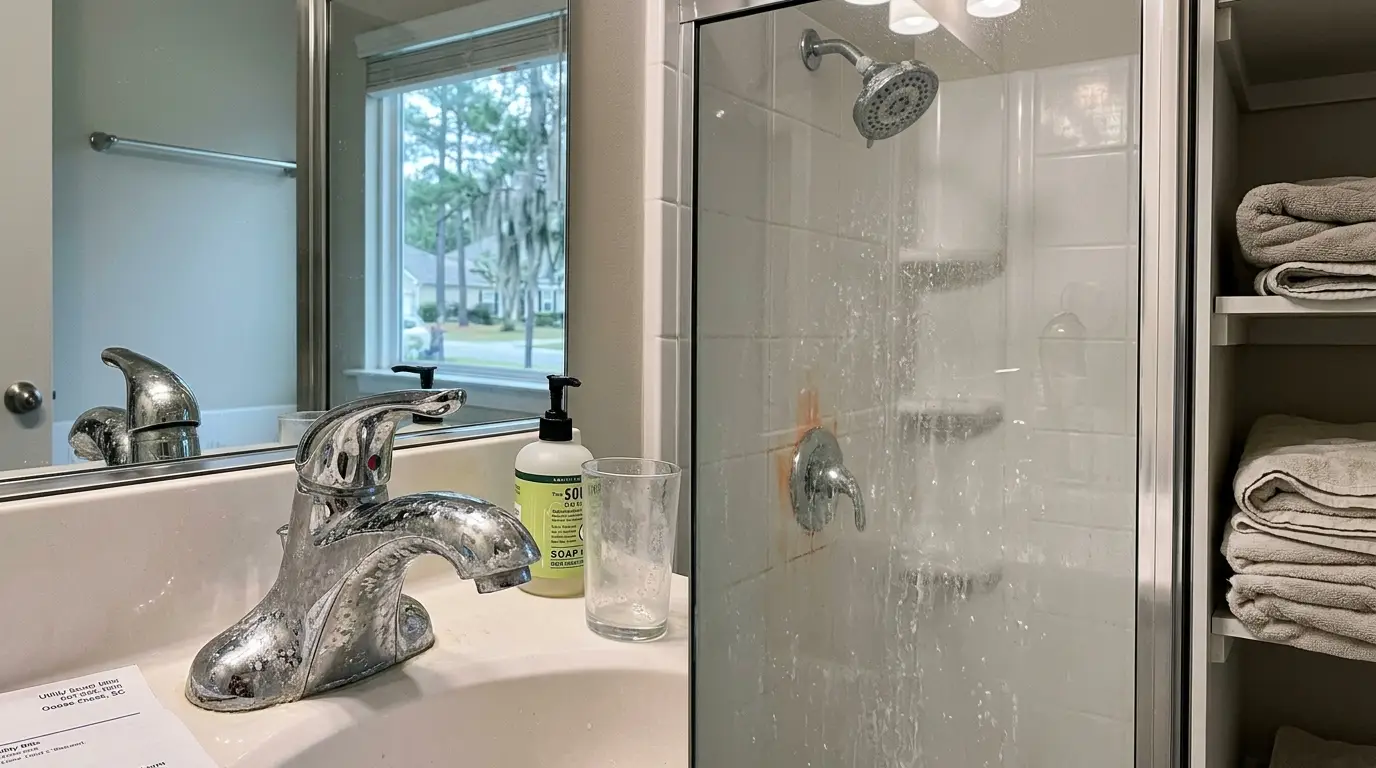
- White chalky buildup on showerheads and faucets
- Soap scum on tubs, sinks, and shower glass
- Dry or itchy skin after bathing
- Dull, brittle hair
- Low water pressure caused by scaling inside pipes
- Water spots on dishes and glassware
- Stiff laundry and faded fabrics
- Metallic or unusual water taste
- Shortened lifespan of appliances like dishwashers and water heaters
Why Hard Water Is Common in Goose Creek Homes
Homes in Goose Creek often experience hard water because groundwater travels through mineral-rich rock and soil before reaching residential plumbing systems. This process increases calcium and magnesium levels, which gradually accumulate inside pipes, fixtures, and appliances.
What Is Hard Water?
Hard water refers to water containing elevated levels of dissolved minerals, mainly calcium and magnesium. While these minerals are not usually dangerous to drink, they can create serious household maintenance problems.
Understanding Hard Water Minerals
Calcium Deposits
Calcium leaves behind visible white residue known as limescale. This buildup is commonly found on faucets, sinks, and showerheads.
Magnesium Buildup
Magnesium contributes to soap scum formation and reduces soap effectiveness during cleaning and bathing.
Total Dissolved Solids (TDS)
Hard water often has a higher TDS level, meaning more dissolved minerals are present in the water supply.
How Hard Water Forms
Hard water forms naturally when groundwater passes through limestone, chalk, or gypsum deposits underground. During this process, water absorbs minerals before entering municipal or residential plumbing systems.
Hard Water vs Soft Water
Soft water contains very low mineral concentrations, making it easier for soap to lather and rinse away cleanly. Hard water, on the other hand, leaves residue behind and creates scaling throughout the home.
Signs of Hard Water on Faucets and Fixtures
One of the easiest ways to identify hard water is by checking faucets and plumbing fixtures.
White Crusty Residue
Minerals dry on surfaces and create visible white buildup around taps and drains.
Mineral Scaling Around Taps
Scaling can slowly restrict water flow and reduce fixture efficiency.
Showerhead Clogging
Mineral deposits can block spray holes, leading to uneven water pressure.
Signs of Hard Water in Bathrooms
Bathrooms often show the earliest signs of mineral buildup.
- Soap scum coating shower walls
- Cloudy glass shower doors
- Bathtub residue that becomes difficult to clean
Signs of Hard Water in Kitchen Appliances
Kitchen appliances are heavily affected by mineral-rich water.
Coffee Maker Scaling
Mineral buildup inside coffee makers reduces efficiency and affects taste.
Dishwasher Spotting
Cloudy dishes and white spots are classic hard water indicators.
Reduced Appliance Efficiency
Dishwashers and ice makers may work harder due to internal scaling.
Signs of Hard Water in Laundry
Hard water can damage fabrics over time.
- Towels feel rough instead of soft
- Clothes fade faster
- Detergent does not rinse completely
Signs of Hard Water Affecting Skin and Hair
Minerals can leave residue on the body after bathing.
- Dry, itchy skin
- Hair feeling sticky or brittle
- Increased irritation after showers
Signs of Hard Water Inside Plumbing Pipes
Hard water buildup inside plumbing can become costly.
- Reduced water pressure
- Pipe narrowing from mineral accumulation
- Increased plumbing repair expenses
What Causes Hard Water Problems?
Several factors contribute to hard water issues in residential homes.
High Mineral Concentration in Water Supplies
Groundwater naturally absorbs minerals before entering municipal systems.
Aging Plumbing Systems
Older pipes collect mineral buildup faster, worsening water flow restrictions.
Lack of Water Softening Systems
Without treatment systems, minerals continue accumulating throughout the home.
Seasonal Changes in Water Quality
Water mineral concentration can fluctuate during different seasons.
Guide to Testing for Hard Water
Testing your water is the best way to confirm hardness levels.
Step 1 — Look for Visible Mineral Deposits
Inspect faucets, showerheads, and sinks for white residue.
Step 2 — Check Soap Lather Performance
If soap does not lather easily, hard water may be the cause.
Step 3 — Inspect Appliances and Plumbing
Look for reduced efficiency or unusual buildup around appliances.
Step 4 — Use a Home Hard Water Test Kit
Affordable water hardness kits provide quick mineral-level readings.
Step 5 — Get Professional Water Testing in Goose Creek
Professional testing gives accurate measurements and customized treatment recommendations.
Hard Water vs Soft Water
| Feature | Hard Water | Soft Water |
|---|---|---|
| Mineral Content | High calcium & magnesium | Low mineral content |
| Soap Lather | Poor | Excellent |
| Appliance Lifespan | Reduced | Longer |
| Skin & Hair Effects | Dryness and irritation | Softer feel |
| Pipe Scaling | Common | Rare |
| Water Spots | Frequent | Minimal |
| Laundry Results | Stiff fabrics | Softer clothes |
| Maintenance Costs | Higher | Lower |
How Hard Water Damages Your Home Over Time
Hard water damage often develops gradually but becomes expensive if ignored.
Plumbing System Damage
Mineral scaling restricts water flow and increases pipe stress.
Water Heater Efficiency Loss
Sediment buildup forces water heaters to work harder, increasing energy costs.
Appliance Wear and Tear
Dishwashers, washing machines, and coffee makers lose efficiency faster.
Increased Utility Bills
Restricted plumbing systems consume more energy and water.
Cleaning Challenges Throughout the Home
Soap scum and water stains require more frequent cleaning.
Best Solutions for Hard Water Problems
Installing a Water Softener
Water softeners are among the most effective solutions for hard water treatment.
Salt-Based Systems
These systems remove calcium and magnesium through ion exchange.
Salt-Free Systems
Salt-free conditioners reduce scaling without removing minerals entirely.
Whole-House Softeners
Whole-home systems protect all plumbing fixtures and appliances simultaneously.
Descaling Plumbing Fixtures
Regular descaling removes mineral buildup from faucets and showerheads.
Using Hard Water Cleaning Products
Specialized cleaners help dissolve stubborn limescale and soap scum.
Regular Maintenance for Appliances
Routine cleaning extends appliance lifespan and improves efficiency.
When to Call a Water Treatment Professional in Goose Creek
If scaling becomes severe or water pressure drops significantly, professional treatment may be necessary.
Preventing Hard Water Buildup in the Future
Preventive maintenance reduces long-term damage and repair costs.
Routine Plumbing Inspections
Regular inspections catch scaling problems early.
Flushing Water Heaters Regularly
Flushing removes mineral sediment before it hardens.
Cleaning Faucets and Showerheads
Routine cleaning prevents buildup accumulation.
Monitoring Water Quality Annually
Annual testing helps track changing mineral levels.
Choosing the Right Water Filtration System
Modern filtration and softening systems improve water quality significantly.
Signs You Need a Water Softener Immediately
You may need a water softener if you notice:
- Persistent white residue throughout the home
- Frequent appliance repairs
- Constant skin irritation after bathing
- Increasing water bills
- Poor water pressure in multiple fixtures
People Also Ask About Signs of Hard Water
Can hard water make your skin itchy?
Yes. Mineral residue can remain on the skin and contribute to dryness and irritation.
Does hard water damage washing machines?
Yes. Mineral buildup inside washing machines reduces efficiency and shortens lifespan.
How can I tell if my water is hard or soft?
Visible scaling, soap scum, and cloudy dishes are common indicators of hard water.
Is hard water dangerous to drink?
Hard water is generally safe to drink, although excessive minerals may affect taste.
Why does hard water leave white stains?
Calcium deposits remain behind when water evaporates.
Can hard water clog pipes?
Yes. Mineral scaling gradually narrows plumbing pipes and reduces water flow.
FAQs About Signs of Hard Water
What are the first signs of hard water?
The earliest signs usually include water spots, soap scum, and mineral buildup around faucets.
Can hard water affect hair loss?
Hard water may contribute to dryness and hair breakage, although it is not a direct cause of hair loss.
How expensive is hard water damage?
Costs vary, but untreated hard water can lead to expensive plumbing and appliance repairs.
Are hard water stains permanent?
Most stains can be removed with proper descaling products.
How often should water hardness be tested?
Annual testing is recommended for most households.
Does boiling water remove hardness?
Boiling only removes temporary hardness and does not solve major mineral issues.
What appliances are most affected by hard water?
Water heaters, dishwashers, washing machines, and coffee makers are heavily impacted.
Is a water softener worth it for hard water problems?
Yes. A water softener can improve appliance lifespan, water efficiency, and overall household comfort.
Conclusion — How to Handle Signs of Hard Water Effectively
Recognizing the signs of hard water early can help homeowners avoid costly plumbing damage, appliance failures, and ongoing cleaning frustrations. In Goose Creek, mineral-rich water is a common issue, making proactive water treatment especially important for protecting household systems.
Installing a reliable water softener, maintaining appliances regularly, and testing water quality annually can significantly reduce mineral buildup and improve everyday water use. Cleaner plumbing, softer laundry, healthier skin, and longer-lasting appliances are all long-term benefits of addressing hard water problems before they become severe.