A sewage smell in your home is always telling you something. Sometimes the message is minor, like a drain you have not used in weeks needs a quick water flush. Sometimes the message is urgent, like a cracked sewer line leaking gases into your living space. The challenge is that the smell itself does not always tell you which scenario you are in, which is why most Goose Creek homeowners ignore it longer than they should.
This article walks through the 6 actual causes of sewage smells in residential drains, how to diagnose which one you have, the health risks involved, and what to do about each. If you have been smelling something and wondering whether it is serious, this is how you find out.
Quick Diagnosis Based on Smell Pattern
Here is the quick reference based on when and where you smell the odor in your home.
| Smell Pattern | Likely Cause | Urgency |
| Only from rarely-used drain | Dry P-trap (water evaporated) | Low – easy fix |
| After heavy rain or wind | Blocked or damaged vent stack | Medium – schedule soon |
| Rotten egg smell throughout home | Sewer line damage or venting failure | High – call plumber |
| Near toilet base only | Wax ring failure | Medium – fix before leak worsens |
| Persistent after cleaning drains | Biofilm buildup deep in lines | Medium – professional cleaning |
| With yard depressions or wet spots | Main sewer line break | High – urgent repair needed |
| Only on septic system homes | Septic tank or drain field issue | High – contact septic service |
Use this table as a starting point. The sections below cover each cause in more detail so you can confirm what is actually happening.
Cause 1: Dry P-Trap (The Easiest Fix)
Every drain in your home has a P-trap, which is the curved pipe section that holds a small amount of water at all times. That water acts as a barrier, blocking sewer gases in the drain line from rising up into your home. When a drain goes unused for weeks, the water in the P-trap evaporates. Once the barrier is gone, sewer gas flows freely up through the dry drain.
This happens most often in guest bathrooms, laundry room floor drains, basement utility sinks, or any drain in a part of the home nobody uses regularly. The smell will only be near that specific drain, and it starts after a period of inactivity.
The fix takes 10 seconds. Pour a cup of water down the drain. The P-trap refills, the barrier is restored, and the smell disappears within a few minutes. To prevent recurrence, run a bit of water down rarely-used drains once every 3 to 4 weeks. That is it.
If the smell returns within a few days of filling the trap, the P-trap itself may be cracked or leaking, which is a repair issue rather than a maintenance issue.
Cause 2: Blocked or Damaged Plumbing Vent Stack
Your home’s plumbing has vent pipes that run up through the roof. These vents equalize pressure in the drain system, letting waste water flow smoothly and allowing sewer gases to escape harmlessly into the air outside. When a vent gets blocked (usually by leaves, bird nests, or debris) or damaged, gases that should exit through the roof instead push back down through drains in your home.
The signs of a vent problem include gurgling drains when water runs elsewhere, slow drainage even when lines are not clogged, and sewage smells that appear or get worse during heavy wind or rain. The smell often comes from multiple drains rather than just one.
Fixing this requires roof access and knowledge of your plumbing vent layout. It is usually a plumber job unless you are comfortable on a ladder and know what you are looking for. Common fixes include clearing debris from the vent opening, snaking the vent from the roof to clear internal blockages, or repairing damaged vent sections.
Gurgling drains often indicate a venting issue, and the pattern of the gurgle reveals what is happening inside your drain system. Our article on the 48-hour warning signs of plumbing emergencies covers what specific sounds and patterns mean about your system’s condition.
Cause 3: Biofilm Buildup Deep in the Lines
Over time, a slimy layer of bacteria, food residue, soap, grease, and organic waste coats the inside of your drain pipes. This biofilm becomes a breeding ground for bacteria that produce hydrogen sulfide gas, which is the rotten-egg-smell sewer gas. Even when drains are flowing fine, biofilm can produce enough gas to create a persistent odor.
Biofilm-driven smells are usually worst in kitchen drains (grease and food) and bathroom drains (hair, soap, skin oils). The smell tends to be mild but constant, and basic DIY drain cleaning does not fully resolve it because the biofilm is coating surface area that surface-level flushing cannot reach.
For minor biofilm issues, running hot water through the drain regularly, followed by a cup of baking soda and a cup of white vinegar, can help. For persistent odors, professional drain cleaning with snaking or hydro jetting physically removes the biofilm layer from the pipe walls. Chemical cleaners are not the right tool here because they do not clean pipe surfaces effectively.
For persistent biofilm smells, the right cleaning method matters. Our comparison of hydro jetting vs drain snaking for Goose Creek drains covers when each method actually removes biofilm versus just clearing flow.
Cause 4: Wax Ring Failure at Toilet Base
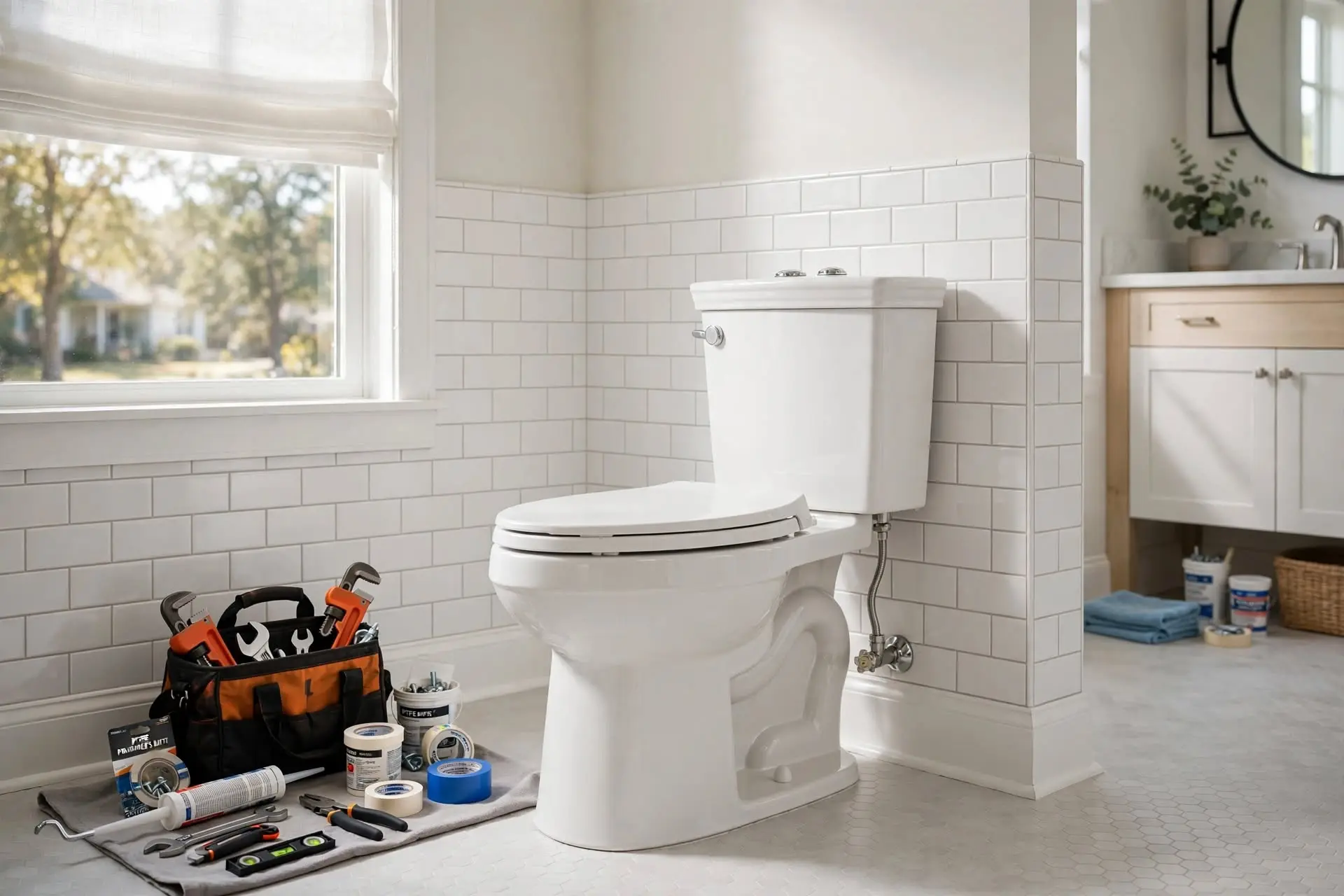
Every toilet sits on a wax ring that creates a seal between the toilet base and the drain flange in the floor. This seal prevents sewer gases from escaping around the toilet and into the bathroom. When the wax ring deteriorates or the toilet shifts on its base (usually because floor bolts have loosened), the seal fails and gases leak into the room.
Signs of a wax ring failure include a sewage smell concentrated near the toilet base, a slight rocking or movement when you sit on the toilet, water stains on the floor around the toilet base, or peeling flooring near the toilet. The smell is usually strongest in the specific bathroom affected.
A wax ring replacement is a moderate DIY job or a quick plumber visit. The toilet needs to be removed, the old wax ring cleaned off, a new one installed, and the toilet reset. Parts cost under $10 and the job takes about an hour. Most homeowners prefer to have a plumber do it because the toilet is heavy and needs to be lifted without breaking the porcelain or the flange.
Cause 5: Sewer Line Damage (Serious Issue)
If the smell is widespread, persistent, and does not match any of the causes above, the main sewer line serving your Goose Creek home may be damaged. Cracks, collapsed sections, root intrusion creating openings, or disconnected joints can all allow sewer gases and sometimes actual waste to escape under your home or in your yard.
Additional signs of sewer line damage include wet or soft spots in your yard over the line path, unusually green or fast-growing grass in a specific strip (which is essentially fertilizer from the leak), backing up drains throughout the home, and gurgling sounds from multiple fixtures.
This is not a DIY fix. Sewer line damage requires professional diagnosis, usually through a camera inspection, and the repair depends on the type and location of damage. Minor cracks may be repairable with trenchless methods. Collapsed or severely damaged sections usually require excavation. Costs range from $1,500 for minor repairs to $15,000 or more for full line replacement.
If you suspect sewer line issues, the age of your Goose Creek home is a strong factor in what type of damage is likely. Our guide to plumbing problems by Goose Creek home age covers which eras have the most sewer line failure risk.
Cause 6: Septic System Problems (Septic-Only Homes)
If your Goose Creek home is on a septic system rather than connected to city sewer, persistent sewage smells can indicate septic issues rather than drain problems. A full septic tank, a failing drain field, or damaged tank components can all produce smells that come up through your home’s drains.
Specific signs of septic problems include smells concentrated near the septic tank location, soggy or unusually green patches in the drain field area, slow drains throughout the home, and sewage backing up into the lowest drains in the house.
Septic issues require a septic service rather than a general plumber. Pumping is the most common solution and costs $300 to $600 for most residential tanks. Drain field repairs or replacements are much more involved and can cost $5,000 to $20,000 depending on the system.
Health Risks of Long-Term Sewer Gas Exposure
Sewer gas is not just unpleasant. It contains hydrogen sulfide, methane, carbon dioxide, and various other compounds that cause real health effects with prolonged exposure. Short-term exposure to low levels causes headaches, fatigue, dizziness, and respiratory irritation. Higher concentrations or long-term exposure can cause nausea, memory problems, and breathing difficulties.
Sewer gas is also flammable at high concentrations and can become an explosion hazard. Methane is the primary concern in this respect. This is rare in residential situations but is why you should never have an open flame near a strong sewer gas smell.
The practical takeaway is that you should not ignore a persistent sewer smell. A dry P-trap smell that clears in an hour is harmless. A smell that persists for days or weeks is exposing your household to gases that do not belong inside your home. Address it promptly.
Get Your Sewer Smell Diagnosed Properly
If you have tried the basic fixes like filling P-traps and the smell persists, or if the smell is strong enough that it makes you uncomfortable being in certain parts of your home, it is time to bring in a professional. We can run a camera inspection of your main line, test your vent stack, check wax rings on toilets, and identify exactly where the gases are coming from.
Call Mueller’s Plumbing Service at (843) 572-8522 to schedule a sewer smell inspection, or visit our drain cleaning service page for more on what we cover. A proper diagnosis costs a fraction of what guessing wrong and replacing unaffected components costs. Goose Creek homeowners who catch sewer issues early almost always save thousands compared to waiting.