Most plumbing repairs we handle in Goose Creek could have been prevented with 30 minutes of seasonal maintenance. Homeowners do not usually skip maintenance on purpose. They skip it because they do not know what to check, when to check it, or what to actually look for. This checklist solves that. It is built specifically for South Carolina homes, taking into account the humidity, hard water, hurricane exposure, and mild winters that shape how plumbing actually ages in our region.
Print this checklist, mark your calendar, and work through it with the seasons. The tasks are simple, they take minutes each, and they catch problems while they are still cheap to fix.
Spring Maintenance (March to May)
Spring is when you recover from any winter damage and get the home ready for heavy summer usage. Start outside and work inward.
| ☐ | Inspect all outdoor hose bibs for cracks, drips, or frost damage from winter |
| ☐ | Test outdoor spigots under full pressure and watch for leaks at the wall connection |
| ☐ | Check your sprinkler system for broken heads, leaks, or zones that are not turning on |
| ☐ | Walk your yard after a run and look for soggy spots that indicate an underground line leak |
| ☐ | Inspect your washing machine supply hoses for cracks, bulges, or soft spots |
| ☐ | Drain a few gallons from your water heater tank to flush out winter sediment buildup |
| ☐ | Test every toilet by adding a few drops of food coloring to the tank and checking the bowl 15 minutes later for leaks |
| ☐ | Verify your sump pump works by pouring water into the pit and watching the pump cycle on and off |
Summer Maintenance (June to August)
Summer brings heavy water usage, intense humidity, and hurricane season. Your plumbing gets stressed in ways that do not happen the rest of the year.
| ☐ | Check under every sink for slow drips, water stains, or warped cabinet bottoms |
| ☐ | Inspect your water heater area for any sign of pooling, rust streaks, or dampness |
| ☐ | Clean your garbage disposal by running ice cubes and citrus peels through it monthly |
| ☐ | Look at all visible pipes in the basement, crawl space, or utility area for condensation or corrosion |
| ☐ | Test water pressure at multiple faucets to catch any gradual drop |
| ☐ | Check the exterior of your home for damaged caulk around pipe penetrations |
| ☐ | Review your hurricane plumbing prep before peak storm season hits |
| ☐ | Inspect gutter downspouts and make sure they are directing water away from the foundation and any buried lines |
Hurricane prep is a full checklist on its own. Before the first named storm, walk through our Goose Creek hurricane season plumbing prep guide to protect your home.
Fall Maintenance (September to November)
Fall is about preparing for the cold snaps that occasionally hit South Carolina. Our winters are mild, but the few freezing nights we do get catch homes off guard every year.
| ☐ | Disconnect and drain all outdoor hoses, then store them in a garage or shed |
| ☐ | Shut off water to outdoor spigots from the interior shutoff valve if your home has one |
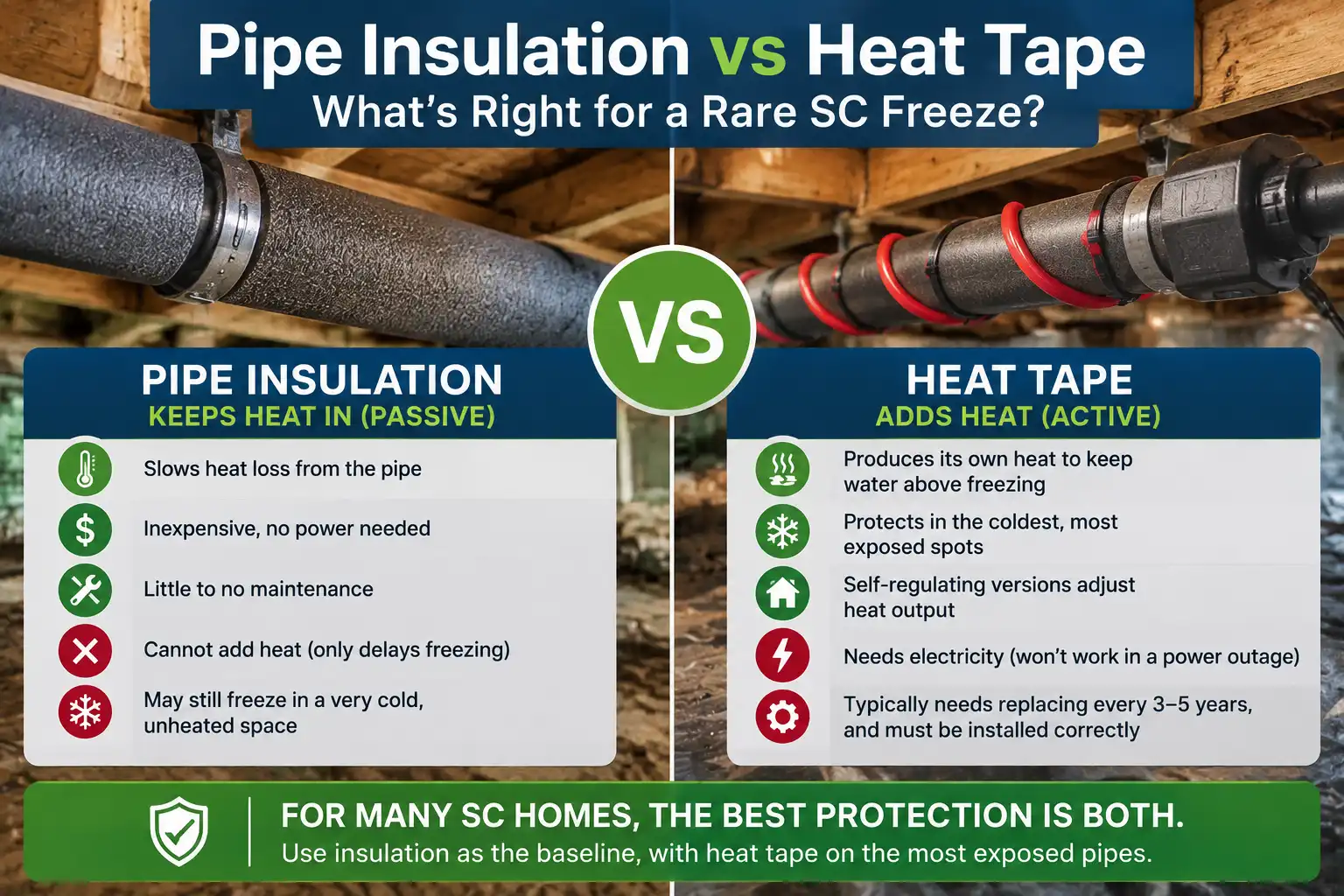
| ☐ | Insulate any exposed pipes in unheated areas like crawl spaces, garages, or attics |
| ☐ | Cover outdoor hose bibs with foam faucet covers (inexpensive at any hardware store) |
| ☐ | Flush your water heater fully to remove a full year of sediment accumulation |
| ☐ | Test the water heater’s pressure relief valve by lifting the handle briefly and confirming it releases water and reseats |
| ☐ | Check attic insulation around any plumbing that runs through the space |
| ☐ | Locate and label your main water shutoff valve so every adult in the home knows where it is |
Winter Maintenance (December to February)
South Carolina winters do not demand much, but they do demand attention during cold snaps. A single overnight freeze can crack a pipe in an uninsulated wall or crawl space and flood your home within hours.
| ☐ | When temperatures drop below 28 degrees, let one faucet drip overnight to keep water moving through the line |
| ☐ | Open cabinet doors under sinks on exterior walls so warm air can reach the pipes |
| ☐ | Keep interior heat at a minimum of 55 degrees even if you are traveling |
| ☐ | Check all exposed pipes for frost or ice buildup on the coldest mornings |
| ☐ | Clear any snow or ice from around outdoor vent pipes for your water heater or furnace |
| ☐ | Listen for unusual sounds in the plumbing, like hissing, banging, or water running when everything is off |
| ☐ | After any hard freeze, inspect under sinks and in the basement for new leaks or damp spots |
| ☐ | Have your water heater’s anode rod inspected if the unit is more than 5 years old |
If a cold snap hits unexpectedly, our guide on preventing burst pipes during a South Carolina winter walks you through exactly what to do in the first few hours.
Year-Round Monthly Checks
These small habits, done monthly, catch the slow-developing problems that seasonal checklists might miss between visits.
| ☐ | Compare your water bill to the previous month and note any unexplained jumps |
| ☐ | Walk through every room and do a 30-second visual inspection of all fixtures and exposed pipes |
| ☐ | Run hot water at every faucet for a minute to keep traps active and prevent sewer gas buildup |
| ☐ | Check the caulk and grout around tubs, showers, and sinks for cracks or gaps |
| ☐ | Run your garbage disposal even if you have not used it, to keep the seals and blades moving |
| ☐ | Pour water into any floor drains that rarely see use (laundry, basement, utility) to keep the P-traps sealed |
A sudden jump in your monthly bill is often the earliest sign of a hidden leak. Our article on the top 5 culprits behind water bill spikes in Goose Creek helps you identify the leak source before the damage spreads.
Annual Deep Maintenance
Once a year, dedicate a weekend to the tasks that are easy to overlook but add years to your plumbing system’s life.
| ☐ | Have your water heater fully flushed by a licensed plumber (or do it yourself if you are comfortable) |
| ☐ | Schedule a professional inspection of your main sewer line with a camera if your home is more than 25 years old |
| ☐ | Test your pressure regulator and confirm water pressure is within the 40 to 80 psi range |
| ☐ | Inspect the anode rod in your water heater and replace it if more than 50 percent has corroded |
| ☐ | Check all shutoff valves in the home by turning them fully and confirming they still work smoothly |
| ☐ | Replace any old braided supply lines on toilets, sinks, or washing machines that are approaching 10 years of service |
| ☐ | Walk your property and locate any buried shutoff boxes, cleanouts, or septic access points, and make sure they are accessible |
What to Do With This Checklist
Print this page and keep it somewhere you will actually see it. Inside a utility closet, on the back of the laundry room door, or clipped to your home maintenance binder. Set a calendar reminder at the start of each season to walk through the tasks.
If you find anything during a walkthrough that looks wrong, do not wait. Most of what ends up on our emergency call list started as something a homeowner noticed and meant to address later.
If you want help with the annual deep maintenance tasks, our full residential plumbing service covers water heater flushes, sewer line inspections, and system-wide checkups. We are based in Goose Creek and serve the entire Tri-County area. Call us at (843) 572-8522 to schedule a maintenance visit.
The homes that avoid expensive plumbing repairs are not the ones with newer fixtures. They are the ones where someone walks through a checklist like this one twice a year and catches small problems early. 30 minutes per season. That is what it takes.