Nobody wants to watch a crew dig a trench across their yard to fix a sewer line. The good news is that in most cases, they don’t have to. Trenchless sewer repair lets us fix or replace a damaged sewer line with minimal digging, less disruption to your property, and a faster turnaround than traditional excavation. Not every plumber in the area has the equipment or training for this kind of work, but our team does. We’ve been handling sewer repairs across Goose Creek and the Tri-County area for more than 30 years, and trenchless methods are part of how we get the job done right. Call us at (843) 572-8522 to find out if your line qualifies.
Trenchless sewer repair is a way to fix or replace a damaged sewer line without digging a long trench along the entire length of the pipe. Instead of excavating from one end to the other, we work through one or two small access points and use specialized equipment to either line the inside of the existing pipe or pull a new one through it.
There are two main methods, and which one we use depends on the condition of the pipe.
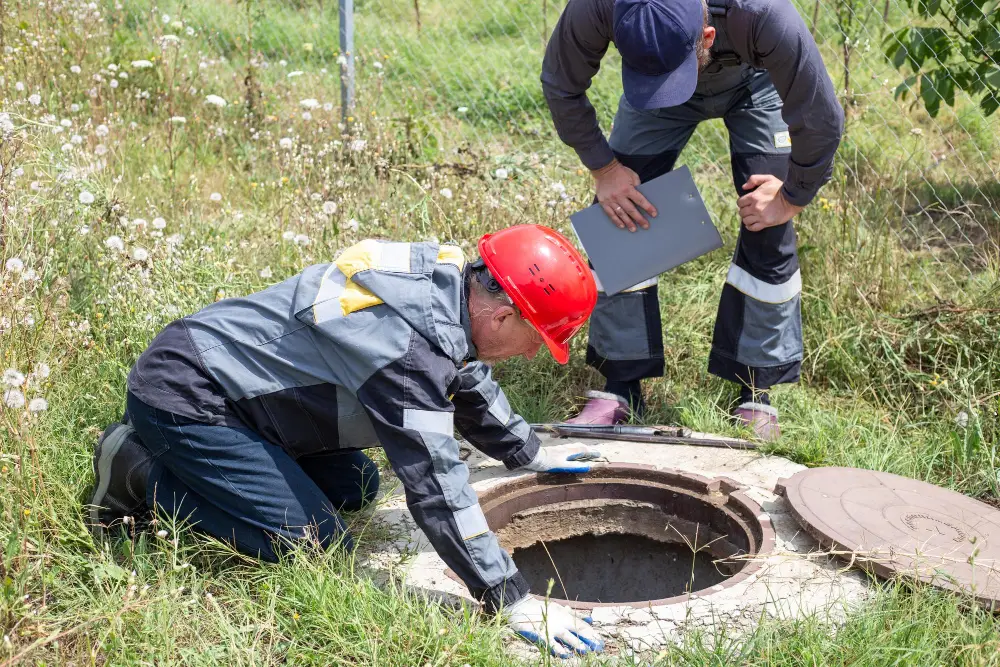
Cured-in-place pipe lining, or CIPP, involves inserting a resin-saturated liner into the existing pipe and inflating it against the pipe walls. Once the resin cures, it forms a new pipe inside the old one. The result is a smooth, corrosion-resistant liner that restores the structural integrity of the line without removing the old pipe. This method works well when the pipe is cracked, corroded, or has root intrusion but is still structurally intact enough to hold the liner in place.
Pipe bursting is used when the existing pipe needs to be fully replaced rather than lined. A bursting head is pulled through the old pipe using a cable. As it moves through, it fractures the old pipe outward into the surrounding soil and simultaneously pulls a new HDPE pipe in behind it. The old pipe is destroyed and replaced in a single pass. This method is effective even when the existing pipe has more extensive damage, as long as the pipe path itself is still accessible and intact enough to guide the equipment through.
The work happens underground. Your lawn, landscaping, driveway, and patio stay intact.
Most trenchless jobs are done in one day. Traditional excavation typically takes three to seven days depending on the length of the run.
The upfront cost of trenchless repair is comparable to traditional dig, but when you factor in the cost of restoring turf, landscaping, or hardscaping afterward, trenchless frequently costs less overall.
Because we're not digging a wide trench, there's far less risk of disturbing nearby utility lines, tree roots, or structural elements like driveways and sidewalks.
CIPP liners and HDPE pipe both have expected service lives of 50 years or more. The new pipe or liner is smoother and more resistant to root intrusion than the original clay or cast iron it replaces.
Traditional excavation near a foundation, retaining wall, or established tree can create additional risks. Trenchless work avoids most of those concerns.
Trenchless repair is not the right answer for every sewer problem, and we won’t tell you it is if it isn’t. Here’s when it works well and when it doesn’t.
Trenchless is a good fit when the pipe is cracked but still structurally intact, when root intrusion is present but the pipe hasn’t collapsed, when the damage is in a section that’s difficult to excavate (under a driveway, patio, or landscaped area), and when the overall alignment of the pipe is correct with no major belly or sag.
It’s not the right fit when the pipe has fully collapsed, when there’s a severe belly that would cause the liner to pool water rather than drain, or when the pipe needs to be completely rerouted rather than repaired in place. In those situations, traditional excavation is the more appropriate approach, and we’ll tell you that upfront.
Every trenchless job follows the same sequence of steps, and we don’t skip any of them.
We start by feeding a high-definition camera through the line to assess the condition of the pipe, identify the location of the damage, and confirm that trenchless repair is a viable option.
Before lining or bursting, the pipe needs to be clear. We hydro jet the line to remove debris, grease buildup, and root material so the liner or bursting head can move through without obstruction.
For lining, the resin-saturated liner is pulled into position through an access point. For bursting, the bursting head and new pipe are set up at the entry point and pulled through the old pipe path.
For CIPP, the liner is inflated and held in place while the resin cures. For pipe bursting, the new pipe is pulled through in a continuous pass as the old pipe is fractured outward.
Once the liner has cured or the new pipe is in place, we run the camera through again to confirm the work is seated correctly and the line is flowing properly.
The full process typically takes one day for a standard residential run.
Trenchless repair costs vary based on the length of the pipe, the method used, and the access required. Here are the ranges homeowners in Goose Creek can expect.
When you compare those figures to the cost of traditional excavation plus yard restoration, trenchless repair is often the more cost-effective option for the total job. We provide a written estimate after the camera inspection. If trenchless isn’t the right fit for your line, we’ll tell you before quoting it.
CIPP liners are rated for 50 years or more under normal residential use. HDPE pipe used in pipe bursting carries a similar expected service life. Both materials resist corrosion and are far more resistant to root intrusion than the clay and cast iron pipes they typically replace.
We back our trenchless work with a warranty that covers both materials and labor. The specific terms depend on the method used and the scope of the job. We go over warranty details with you before work begins so there are no surprises.
EXCELLENTTrustindex verifies that the original source of the review is Google. I hired Muller's Plumbing to fix the plumbing in my shower and they were great. Very professional, polite, worked looked great, arrived on time and worked in a timely fashion. I would hire them again.Posted onTrustindex verifies that the original source of the review is Google. Knowledgeable and ready to get it done. Made the whole process of dealing with the insurance co, leak detection, restoration company SEAMLESS. Took all the stress away from a very stressful problem.Posted onTrustindex verifies that the original source of the review is Google. I needed to have a plumber come out on a Friday afternoon to check on a possible water leakage and Mueller Plumbing was able to come out in a timely manner and able to find the issue and fixed it quickly. Highly Recommend.Posted onTrustindex verifies that the original source of the review is Google. They were the only company in goose creek that would help us in a timely fashion. They shuffled around a few things to make sure my restaurant was able to stay open! We will use them again!Posted onTrustindex verifies that the original source of the review is Google. Grant installed our water heater a few years back, so I called him when we needed work done recently. He is very knowledgeable about the work he does, and he likes to make sure you are good to go before he leaves! One thing I would recommend, as with any company, make sure you are clear on pricing and what your quote covers.Posted onTrustindex verifies that the original source of the review is Google. I had Mr. Mueller come all the way out from Goose Creek to fix a burst pipe. He came and fix it quickly. I would recommend him to others, as he was honest in his work.Posted onTrustindex verifies that the original source of the review is Google. Grant is polite and an expert in his craft. I called him about a leak under my house and felt immediately reassured. He responds to calls with a degree of professionalism and motivation unmatched by most other tradesmen, and I feel utterly certain that he will be my plumber of choice for the foreseeable future.Posted onTrustindex verifies that the original source of the review is Google. Mueller Plumbing did an amazing job replacing a water heater in my mother's house. Clean, fast service. Very professionalPosted onTrustindex verifies that the original source of the review is Google. Had the pleasure of working with Mr. Mueller today to replace my kitchen faucet, his service was excellent and quick. Highly recommend to anyone and based of other reviews the consensus is nothing but good things to say all around. Will definitely be calling him again with any future issues.
Trenchless sewer repair requires specific equipment and training that not every plumbing company invests in. We have both. Our team is experienced with pipe lining and pipe bursting in residential settings across Goose Creek and the surrounding communities. We’re a family-owned company with more than 30 years of local experience, and we give honest assessments rather than recommending the most expensive option just because it’s available. If your sewer line qualifies for trenchless repair, we’ll say so. If it doesn’t, we’ll tell you that too and explain why.
It depends on the job, but in many cases, yes. The per-foot cost of trenchless materials is comparable to traditional excavation, but you avoid the cost of restoring turf, landscaping, and hardscaping that gets disrupted by a full dig. We give you both cost estimates when both options apply so you can make an informed decision.
Trenchless repair works well on pipes that are damaged but still structurally intact. A camera inspection is the only reliable way to determine if your line qualifies. We do the inspection before quoting the work.
For pipe lining, a resin-saturated liner is pulled into the pipe through a small access point, inflated against the pipe walls, and left to cure into a new pipe inside the old one. For pipe bursting, a bursting head fractures the old pipe outward as it’s pulled through, with new pipe following directly behind it. Both methods require only small access points rather than a full trench.
Pipe lining does reduce the interior diameter slightly because the liner adds a layer to the inside of the pipe. In practice, this reduction is small enough that it doesn’t affect flow for most residential lines. Pipe bursting replaces the old pipe with a new one of the same diameter, so there’s no reduction.
Warranty terms vary based on the method used and the scope of the repair. We cover both labor and materials and go over the specific warranty terms with you before the job begins.
Let’s ask something to us! Reach out I’d love to hear about your question about our services.
