A shower that won’t get hot, runs too hot with no middle ground, or has a handle that barely adjusts temperature anymore has a valve problem. The shower valve is the assembly inside the wall that controls water temperature and pressure. When it wears out or fails, adjusting the handle doesn’t produce the results it should. Our team replaces shower valves and cartridges across Goose Creek and the Tri-County area, including all major brands and valve types. Call us at (843) 572-8522 to schedule a repair.
Shower valve problems develop gradually in most cases. By the time the issue is obvious, the valve has been declining for a while.
If turning the handle to its full hot or cold position doesn't produce the temperature it used to, the cartridge inside the valve has worn and is no longer responding to handle position the way it should.
If the water shifts suddenly from hot to cold or vice versa while you're in the shower without any change to the handle, this is usually a pressure-balancing issue inside the valve. The cartridge or valve body is no longer maintaining consistent pressure balance as supply pressure fluctuates.
A showerhead that drips continuously when the valve is fully off means the cartridge isn't sealing closed completely. The drip wastes water and indicates the internal seal is worn.
Handle problems are often cartridge problems. A stiff handle usually means the cartridge has corroded or scaled in place. A loose handle can mean the cartridge retaining clip has failed.
When pressure is low at the shower but normal at other fixtures in the same bathroom, the restriction is inside the valve body or the shower arm connection rather than in the supply line.
Moisture staining on the ceiling below the bathroom, on an adjacent wall, or at the base of the shower enclosure can indicate a leaking valve body or a failed connection at the valve's water inlets.
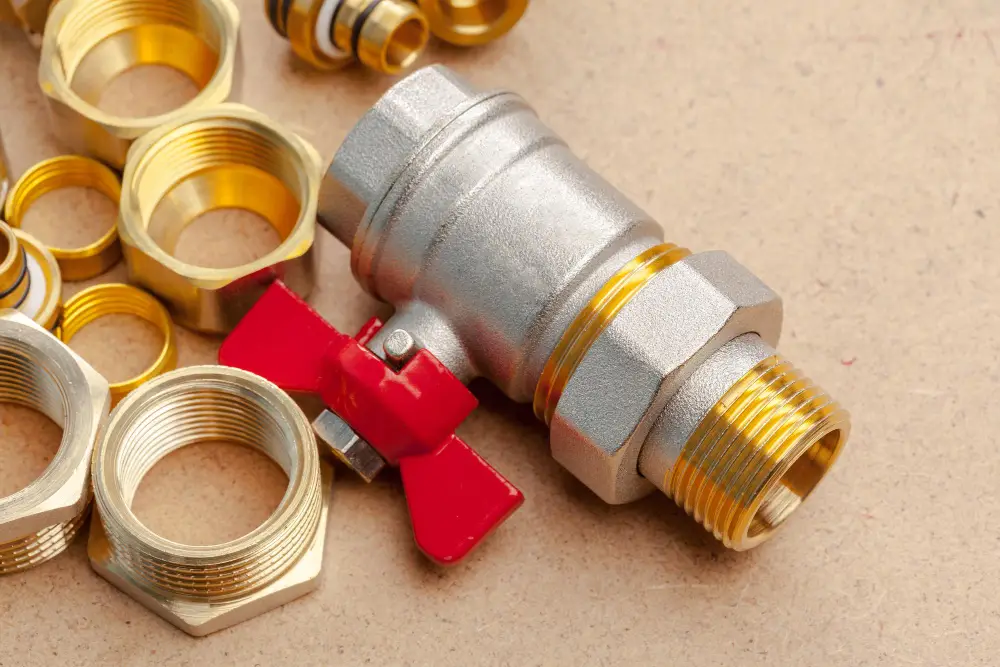
Shower valves come in several configurations, and the right replacement depends on what’s in your shower now and what the job requires.
Pressure-balancing valves are the most common type in residential showers and are required by plumbing code for new installations. They respond to changes in hot or cold supply pressure and automatically adjust to maintain a consistent mix, which prevents the sudden temperature swing you’d otherwise feel when someone flushes a toilet or runs the dishwasher. They control temperature and pressure through a single handle. Most homes built in the last 30 years have these.
Thermostatic valves allow the user to set a specific output temperature that the valve maintains automatically, regardless of supply pressure fluctuations. They’re more precise than pressure-balancing valves and are common in higher-end showers and multi-outlet shower systems. They’re also more involved to replace and typically cost more than a pressure-balancing cartridge swap.
A diverter valve redirects water between two or more outlets, typically between a tub spout and a showerhead, or between a showerhead and a hand shower. Diverters are separate from the temperature valve in most tub-shower combinations. When the diverter wears out, water splits between both outlets rather than directing fully to one. Diverter replacement is typically less involved than full valve replacement.
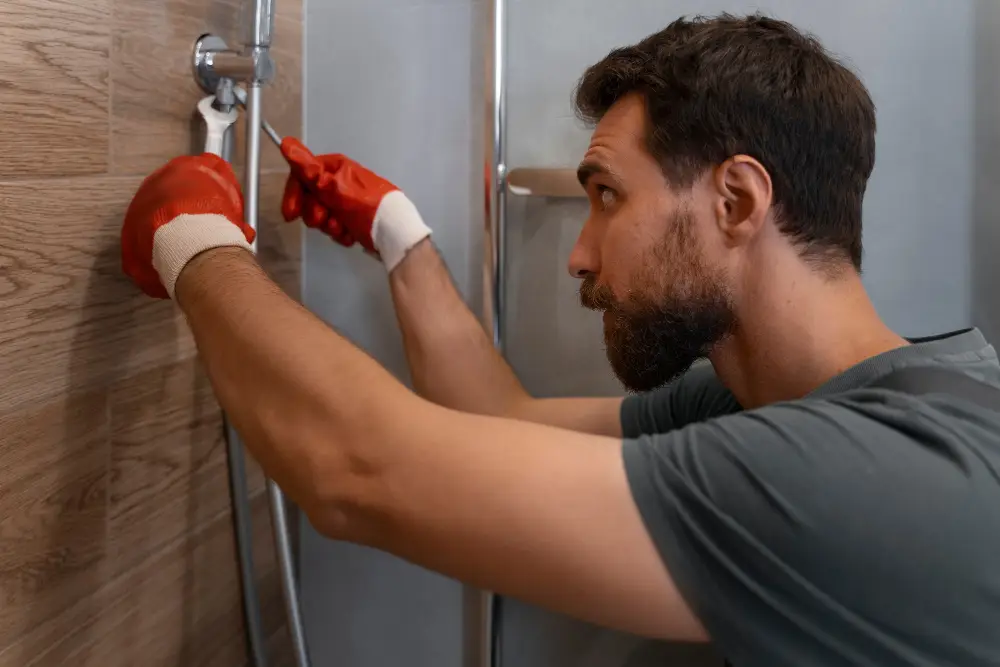
Most shower valve repairs don’t require opening the wall or replacing the entire valve body. Here’s how to think about which approach is needed.
A cartridge replacement involves removing the handle trim and pulling the cartridge out from the front of the valve body without disturbing the valve body itself or the connections behind the wall. This is the right fix for most shower valve problems, including temperature control issues, dripping when off, and handle problems. Cartridge replacement typically costs significantly less than full valve replacement.
A full valve replacement is needed when the valve body itself is cracked, corroded, or the connections at the valve inlets have failed. It requires opening the wall to access and remove the old valve body and install a new one. The trim and handle are then reinstalled on the new valve body.
We assess the valve before recommending which approach is appropriate. In most cases, a cartridge replacement resolves the problem without any wall access.
We service shower valves from all major residential brands, including Moen, Delta, Kohler, Grohe, Pfister, and American Standard. We carry cartridges for the most common Moen and Delta models in our service vehicles, which means many repairs can be completed in a single visit without waiting on a parts order.
We remove the handle trim and inspect the cartridge and valve body to confirm the cause of the problem and identify the exact cartridge or valve model needed.
We close the shutoff valves for the shower line, or the main supply if dedicated shutoffs aren’t accessible.
Depending on the repair type, we remove the decorative trim, extract the cartridge, or open the wall to access the valve body.
We install the correct replacement part for the valve brand and model, ensuring the hot and cold orientation is correct before seating the cartridge.
We restore water supply and run the shower through its full temperature range to confirm the valve is responding correctly and there are no leaks at any connection point.
Costs depend on the valve type, brand, and the scope of the repair.
We provide a written estimate after diagnosing the valve. The cost is confirmed before any parts are ordered or work begins.
South Carolina plumbing code requires that new shower valve installations include anti-scald protection, either through a pressure-balancing valve or a thermostatic valve with temperature limiting capability. This prevents water from reaching dangerously high temperatures at the showerhead in the event of a pressure change.
If you’re replacing an older shower valve that didn’t have pressure-balancing capability, the replacement will include it as part of the installation. We install only code-compliant valves and set the temperature limit appropriately before the job is complete.
EXCELLENTTrustindex verifies that the original source of the review is Google. I hired Muller's Plumbing to fix the plumbing in my shower and they were great. Very professional, polite, worked looked great, arrived on time and worked in a timely fashion. I would hire them again.Posted onTrustindex verifies that the original source of the review is Google. Knowledgeable and ready to get it done. Made the whole process of dealing with the insurance co, leak detection, restoration company SEAMLESS. Took all the stress away from a very stressful problem.Posted onTrustindex verifies that the original source of the review is Google. I needed to have a plumber come out on a Friday afternoon to check on a possible water leakage and Mueller Plumbing was able to come out in a timely manner and able to find the issue and fixed it quickly. Highly Recommend.Posted onTrustindex verifies that the original source of the review is Google. They were the only company in goose creek that would help us in a timely fashion. They shuffled around a few things to make sure my restaurant was able to stay open! We will use them again!Posted onTrustindex verifies that the original source of the review is Google. Grant installed our water heater a few years back, so I called him when we needed work done recently. He is very knowledgeable about the work he does, and he likes to make sure you are good to go before he leaves! One thing I would recommend, as with any company, make sure you are clear on pricing and what your quote covers.Posted onTrustindex verifies that the original source of the review is Google. I had Mr. Mueller come all the way out from Goose Creek to fix a burst pipe. He came and fix it quickly. I would recommend him to others, as he was honest in his work.Posted onTrustindex verifies that the original source of the review is Google. Grant is polite and an expert in his craft. I called him about a leak under my house and felt immediately reassured. He responds to calls with a degree of professionalism and motivation unmatched by most other tradesmen, and I feel utterly certain that he will be my plumber of choice for the foreseeable future.Posted onTrustindex verifies that the original source of the review is Google. Mueller Plumbing did an amazing job replacing a water heater in my mother's house. Clean, fast service. Very professionalPosted onTrustindex verifies that the original source of the review is Google. Had the pleasure of working with Mr. Mueller today to replace my kitchen faucet, his service was excellent and quick. Highly recommend to anyone and based of other reviews the consensus is nothing but good things to say all around. Will definitely be calling him again with any future issues.
We’re familiar with the valve brands used in homes across Goose Creek and carry parts for the most common models in the area. We assess the valve before recommending a fix so you know if a cartridge swap will resolve the problem or if wall access is actually needed. Our team is family-owned, licensed in South Carolina, and has been serving Goose Creek homeowners for more than 30 years. Call us at (843) 572-8522 to schedule.
A cartridge replacement typically runs $150 to $350. Full valve body replacement requiring wall access runs $400 to $900 or more. We confirm the cost in writing after the diagnosis and before starting work.
For a cartridge replacement, no. The cartridge is accessed from the front through the handle trim opening. A full valve body replacement does require opening the wall behind the shower, though in many cases access can be made from an adjacent room or closet rather than through the tile.
A cartridge replacement typically takes one to two hours. A full valve body replacement with wall access takes longer, often three to five hours depending on the access situation.
In most cases, yes. If the valve body is intact and undamaged, replacing the cartridge restores full valve function without the cost or disruption of replacing the entire valve assembly.
Modern pressure-balancing and thermostatic valves have anti-scald protection built in. Older shower valves, particularly those installed before the mid-1990s, may not. When we replace an older valve, the replacement includes anti-scald protection as required by current South Carolina plumbing code.
Let’s ask something to us! Reach out I’d love to hear about your question about our services.
