Most homeowners don’t think about their plumbing until something fails. By that point, the repair is reactive and the damage is already done. A home plumbing inspection takes the opposite approach: a licensed plumber goes through the entire system, identifies what’s in good shape, flags what needs attention, and puts it all in a written report you can act on. Our team provides full home plumbing inspections across Goose Creek and the Tri-County area with written reports after every visit. Call us at (843) 572-8522 to schedule yours.
A plumbing inspection isn’t just for homebuyers. There are several situations where having a licensed plumber go through the full system makes practical sense.
This is the most time-sensitive situation. A standard home inspection covers a lot of ground quickly, but plumbing gets limited attention. The inspector will run faucets and check for visible leaks, but they won’t scope the sewer line, test the water heater’s condition thoroughly, or assess pipe materials throughout the home. In a house that’s 20 or 30 years old, the difference between what the home inspector catches and what a plumbing inspection reveals can be significant.
A sewer line in bad shape, polybutylene pipe throughout the home, or a water heater near the end of its service life are findings that affect the purchase decision. Discovering them before closing gives you options. Discovering them after closing means you own the repair.
A pre-listing plumbing inspection gives sellers a clear picture of what a buyer’s inspector is likely to find. Addressing known issues before listing avoids renegotiation surprises. Sellers who have documentation of a recent inspection can include it in the disclosure package, which builds buyer confidence and supports the asking price.
Homes older than 30 years that haven’t had a plumbing inspection in years are worth reviewing. Pipe materials age, water heaters degrade, PRVs fail gradually, and sewer lines accumulate root growth without producing obvious symptoms until the problem is advanced. An annual or periodic inspection catches these issues at the stage where they’re maintenance items rather than emergency repairs.
A home plumbing inspection from our team goes beyond a visual walkthrough. Here’s what’s included in every inspection.
We test every faucet, toilet, shower, and tub for proper function, adequate flow, and signs of leakage at the supply and drain connections. We also test every accessible shutoff valve to confirm it operates correctly and seals fully.
We assess the water heater for signs of corrosion, sediment buildup, and age-related wear. We check the T&P relief valve, the anode rod condition where accessible, the flue connection on gas units, and the overall installation for code compliance.
We identify the pipe materials present in the home. Galvanized steel, polybutylene, and lead pipe are materials that have known failure profiles and affect the long-term risk picture. We note the condition of visible copper and PVC and flag any signs of corrosion, pinhole leaks, or past repairs that warrant further attention.
A camera is fed through the sewer line to inspect the interior of the pipe for root intrusion, cracks, bellied sections, joint separation, and blockages. The sewer scope is one of the most valuable parts of the inspection because sewer line damage produces no obvious symptoms inside the home until the line is significantly compromised. We record the full run and flag any findings with the distance from the access point.
We run every fixture and verify that drains are clearing at the expected rate. Slow drains that affect multiple fixtures point to a main line issue. Isolated slow drains point to local fixture blockage.
We measure the incoming water pressure at the hose bib and record the reading. Pressure above 80 PSI is outside the recommended range for residential plumbing and indicates the PRV is absent or failing.
We check the PRV for age, proper function, and output pressure. A PRV older than 10 to 15 years is worth replacing proactively even if it appears to be working.
If the home has a sump pump, we fill the pit and confirm the pump activates at the correct float level, drains the pit completely, and shuts off properly.
On homes with gas service, we visually inspect accessible gas line connections for signs of corrosion, improper support, or fittings that should be addressed.
We test all exterior faucets and check for frost-free stem installation, which matters in a region where cold snaps can cause freeze damage to standard bibs.
Every inspection produces a written report delivered after the visit. The report includes the following.
Findings are grouped into three categories: safety or urgent issues needing immediate attention, maintenance items to address in the near term, and items to monitor over time.
Any condition worth flagging is documented with a photograph so you can see exactly what we’re describing.
The camera recording is provided so you have a visual record of the pipe interior. For real estate transactions, this video is often shared directly with the buyer’s agent or the seller’s team.
For each flagged item, we include a general cost range so you have a working number for planning before making any decisions.
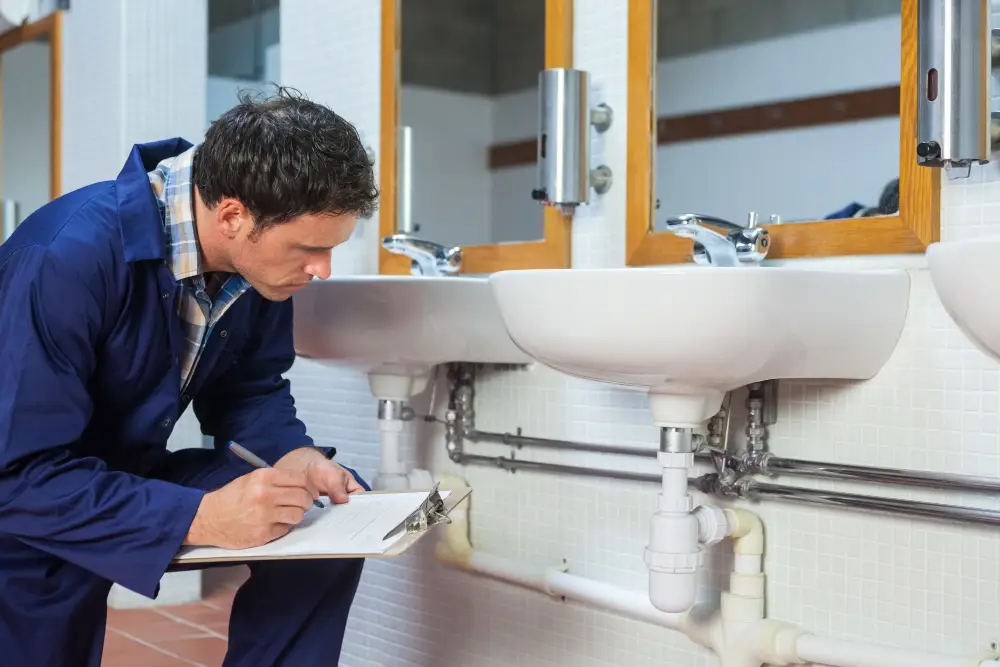
These two services serve different purposes and one doesn’t replace the other.
A standard home inspection is a general review conducted by a certified home inspector covering structural elements, electrical, HVAC, roofing, and plumbing at a surface level within a single visit. The plumbing portion typically covers visible pipes, fixture operation, and water heater condition. The sewer line is almost never scoped, pipe materials are rarely assessed in detail, and water pressure is rarely measured.
A plumbing inspection conducted by a licensed plumber goes deeper into the plumbing system specifically. The sewer scope is included, pipe materials and condition are assessed throughout, water pressure is measured and evaluated against code, and every plumbing component gets full attention.
For any home older than 20 years, getting both a standard home inspection and a separate plumbing inspection is the more complete approach.
A full residential plumbing inspection in Goose Creek typically runs between $300 and $600 depending on the size of the home and the length of the sewer line run. The sewer camera scope is included in the inspection fee rather than billed as a separate service.
If repairs are booked with us based on the inspection findings, the inspection fee is often applied toward the repair cost. Ask about this when you schedule.
Some of the most valuable findings from a plumbing inspection are the ones homeowners had no reason to suspect. Here are the conditions that come up regularly in Goose Creek homes.
Installed widely from the late 1970s through the mid-1990s, polybutylene degrades and fails from the inside out. Many insurance companies flag homes with polybutylene still in place.
Homes built before 1970 with original galvanized supply lines often have significant corrosion and scale inside the pipes that restricts flow and leads to failures.
A water heater 12 or more years old is at elevated risk. Finding and replacing it proactively costs less than addressing the water damage from an unexpected tank failure.
Root growth in the sewer line can be significant before it produces symptoms inside the home. A camera inspection finds it before it becomes a backup.
Incoming pressure above 80 PSI stresses every fixture, appliance, and connection in the home. A missing PRV is a finding worth addressing before it contributes to leaks and appliance failures.
Unpermitted plumbing work or repairs done with improper materials sometimes shows up in inspections. These findings matter for homebuyers because they can affect insurability or future permit applications.
EXCELLENTTrustindex verifies that the original source of the review is Google. I hired Muller's Plumbing to fix the plumbing in my shower and they were great. Very professional, polite, worked looked great, arrived on time and worked in a timely fashion. I would hire them again.Posted onTrustindex verifies that the original source of the review is Google. Knowledgeable and ready to get it done. Made the whole process of dealing with the insurance co, leak detection, restoration company SEAMLESS. Took all the stress away from a very stressful problem.Posted onTrustindex verifies that the original source of the review is Google. I needed to have a plumber come out on a Friday afternoon to check on a possible water leakage and Mueller Plumbing was able to come out in a timely manner and able to find the issue and fixed it quickly. Highly Recommend.Posted onTrustindex verifies that the original source of the review is Google. They were the only company in goose creek that would help us in a timely fashion. They shuffled around a few things to make sure my restaurant was able to stay open! We will use them again!Posted onTrustindex verifies that the original source of the review is Google. Grant installed our water heater a few years back, so I called him when we needed work done recently. He is very knowledgeable about the work he does, and he likes to make sure you are good to go before he leaves! One thing I would recommend, as with any company, make sure you are clear on pricing and what your quote covers.Posted onTrustindex verifies that the original source of the review is Google. I had Mr. Mueller come all the way out from Goose Creek to fix a burst pipe. He came and fix it quickly. I would recommend him to others, as he was honest in his work.Posted onTrustindex verifies that the original source of the review is Google. Grant is polite and an expert in his craft. I called him about a leak under my house and felt immediately reassured. He responds to calls with a degree of professionalism and motivation unmatched by most other tradesmen, and I feel utterly certain that he will be my plumber of choice for the foreseeable future.Posted onTrustindex verifies that the original source of the review is Google. Mueller Plumbing did an amazing job replacing a water heater in my mother's house. Clean, fast service. Very professionalPosted onTrustindex verifies that the original source of the review is Google. Had the pleasure of working with Mr. Mueller today to replace my kitchen faucet, his service was excellent and quick. Highly recommend to anyone and based of other reviews the consensus is nothing but good things to say all around. Will definitely be calling him again with any future issues.
We give honest reports rather than ones designed to generate repair work. If the system is in good shape, we say so. If something needs attention, we explain what it is, why it matters, and what the realistic cost range looks like. Our team is family-owned, licensed in South Carolina, and has been serving Goose Creek homeowners for more than 30 years. Reports are delivered in writing after every inspection, and we’re available to answer questions about the findings after you’ve had time to review them.
A full residential plumbing inspection in Goose Creek runs between $300 and $600. The sewer camera scope is included. If repairs are booked based on the findings, the inspection fee is often applied toward the repair cost.
A standard home inspection covers plumbing at a surface level. It typically doesn’t include a sewer scope, detailed pipe material assessment, or water pressure measurement. For a home older than 20 years, a separate plumbing inspection provides information the general inspection won’t.
A full home plumbing inspection takes two to three hours depending on the size of the home and the length of the sewer run. We provide the written report and sewer video after the visit.
Yes. The sewer camera scope is included in every full home plumbing inspection we conduct. The full run is recorded and the video is provided as part of the report.
Yes, particularly for older homes. A pre-listing inspection identifies issues before a buyer’s inspector finds them, which gives the seller time to address or price them appropriately rather than dealing with renegotiation after an offer is accepted.
Let’s ask something to us! Reach out I’d love to hear about your question about our services.
